
₹59,000.00
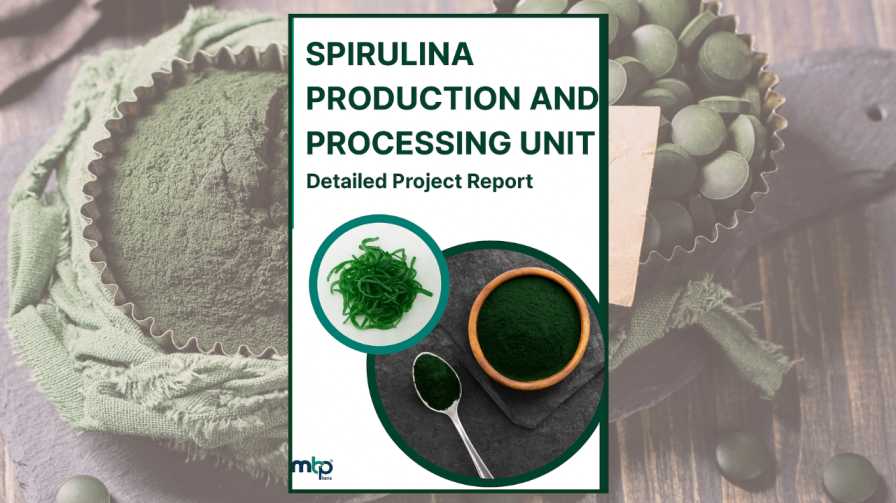
Launch a Spirulina Processing unit with a bank-ready DPR or fund-ready Business Plan. Includes market sizing, competition & pricing, technical/ops design (raceway/PBR), compliance, and 5-year financials. Delivery: 12–15 working days.
Spirulina production and processing refers to the cultivation, harvesting, drying, and conversion of spirulina biomass into value-added products such as spirulina powder, tablets, capsules, flakes, extracts, and fortified food ingredients. Spirulina is a blue-green microalgae (Arthrospira platensis) widely recognized as a superfood due to its exceptionally high protein content, essential amino acids, vitamins, minerals, antioxidants, and bioactive compounds. It is extensively used in nutraceuticals, functional foods, pharmaceuticals, cosmetics, animal feed, and health supplements.
Spirulina contains over 60-70% protein, along with phycocyanin, chlorophyll, iron, calcium, beta-carotene, and essential fatty acids. Due to its nutrient density and digestibility, spirulina is widely consumed as a dietary supplement for immunity enhancement, detoxification, weight management, sports nutrition, and malnutrition control. It is also used in fortified foods, beverages, cosmetic formulations, aquaculture feed, and poultry feed.
Spirulina production is primarily carried out using controlled cultivation systems such as open raceway ponds or closed photobioreactor systems. The manufacturing process involves culture preparation, controlled algae growth, harvesting through filtration or centrifugation, washing, drying at low temperatures, pulverization, and hygienic packaging. Advanced technologies such as paddle wheel raceway ponds, tubular photobioreactors, spray drying, freeze drying, and tablet compression systems are used to ensure high purity, nutrient retention, and consistent quality. Strict monitoring of pH, temperature, light intensity, and contamination is essential throughout the process.
India has emerged as a significant producer of spirulina due to favorable climatic conditions, low production cost, skilled manpower, and increasing demand from domestic nutraceutical and export markets. Government initiatives promoting nutrition, wellness, and alternative protein sources have further supported the growth of spirulina production units across the country.
Growth Drivers
Market Size & Outlook
Global Market:
India Market:
Option A — Detailed Project Report (DPR)
Bank-ready feasibility covering:
Industry & Market: demand across nutraceuticals, F&B, cosmetics; domestic/export cues; price bands
Competition & Positioning: product formats (powder/tablets/capsules), phycocyanin prospects, pack sizes, brand gaps
Technical & Operations: cultivation route (raceway ponds vs photobioreactor), inoculum plan, harvesting (flocculation/filtration), dewatering, washing, drying (low-temp/spray), milling, QA/QC, utilities, layout & manpower
Financial Model (5 years): capex/opex, throughput, yields, waste/loss assumptions, break-even, cash flow, sensitivity (price/capacity)
Compliance & Risk: FSSAI & labeling, pollution control norms, GMP/HACCP outline, risk mitigations
Implementation Plan: procurement & setup timeline, KPIs, and governance
Option B — Business Plan
Strategic, fund-ready plan covering:
Company & Offering: value proposition (powder/capsules/phycocyanin), SKUs, pricing ladders
GTM & Channels: B2B bulk, private label, D2C online, export readiness, partnerships
Operations & Team: delivery model, SOPs, capacity ramp-up, org & hiring roadmap
Financial Forecasts (3–5 years): unit economics, P&L, cash flow, scenarios
Growth & Risk Plan: milestones, expansion playbook, and mitigations
Format: PDF (print-ready). Editable Files available as add-on.
Which plan should I choose — DPR or Business Plan?
Choose DPR for feasibility + lender/subsidy documentation. Choose Business Plan for strategy, GTM, and investor storytelling. Many clients do both.
Is spirulina production a viable business?
Yes. Continuous growth in demand for superfoods, dietary supplements, and alternative proteins ensures strong long-term potential.
What are the major end-use industries?
Nutraceuticals, functional foods, pharmaceuticals, cosmetics, animal feed, aquaculture, and export markets.
Are bank loans and funding options available?
Yes. The project reports are structured to support MSME loans, agri-processing finance, and investor funding proposals.
What approvals are required?
FSSAI registration, factory license, pollution control approvals, nutraceutical compliance, and export certifications where applicable.
Do you cover raceway ponds and photobioreactors (PBR)?
Yes. We assess both and tailor the technical section to your chosen route, scale, and budget.
Do you include licenses and standards?
Yes—FSSAI & labeling, basic GMP/HACCP outline, and relevant pollution-control norms with a practical checklist.
Can you help with vendor shortlisting and quotations?
Yes—via Assisted Machinery Buying Program (AMBP) we compare specs/quotes and support negotiations (separate service).
Can I target phycocyanin extraction later?
We can map an upgrade path; full extraction line feasibility can be scoped as a customization.
Is funding guaranteed?
No—funding decisions rest with third parties. Your DPR/BP is built to typical evaluator expectations to support your case.
No. 401, Pushpak Business Hub, Wakad, Pune, MH 411057
Terms & Conditions | Privacy Policy | Cookie Policy | Disclaimer | © Meticulous Business Plan 2026
Powered by MappedSkills Marketing