₹59,000.00
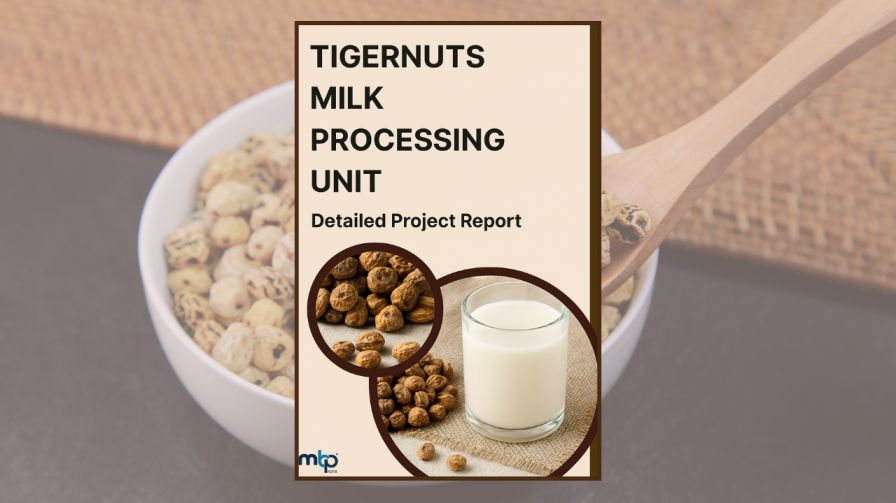
Launch a Tigernuts (Chufa) Milk unit with a bank-ready DPR or fund-ready Business Plan. Includes market sizing, pricing & channels, process/ops design, compliance, and 5-year financials tailored to your city. Delivery: 12–15 working days.
Tigernuts milk processing refers to the production of a plant-based beverage derived from tigernuts (Cyperus esculentus), a nutrient-dense tuber known for its natural sweetness, high fiber content, and rich nutritional profile. Tigernuts milk is a naturally lactose-free, gluten-free, and cholesterol-free beverage, making it highly suitable for health-conscious consumers, vegans, lactose-intolerant individuals, and those following plant-based diets. The product is widely consumed as a dairy alternative and functional beverage due to its digestive, cardiovascular, and energy-boosting benefits.
Tigernuts milk can be broadly classified based on formulation and end use. By product type, it includes plain tigernuts milk, flavored tigernuts milk (vanilla, cocoa, dates, cinnamon), sweetened and unsweetened variants, and fortified tigernuts milk enriched with calcium, vitamins, or protein. By application, tigernuts milk is used as a direct beverage, dairy substitute in cereals and smoothies, ingredient in bakery and dessert products, and base material for fermented and functional drinks.
The manufacturing process typically includes tigernut cleaning, soaking, grinding, slurry extraction, filtration, homogenization, pasteurization or UHT treatment, cooling, and aseptic packaging. Advanced processing technologies such as high-pressure homogenization, continuous pasteurization systems, and aseptic filling lines are increasingly adopted to enhance shelf life, improve texture, and ensure microbial safety. Proper quality control, hygienic handling, and standardized formulations are essential to maintain consistent taste and nutritional value.
Tigernuts milk is widely consumed in health beverage markets, plant-based food segments, nutraceutical formulations, and functional nutrition products. It is particularly valued for its high dietary fiber, resistant starch, magnesium, potassium, and natural sugars that provide sustained energy release. India has emerging potential in tigernuts milk processing due to growing demand for dairy alternatives, increasing awareness of gut health, and expanding urban consumption of plant-based beverages, while global demand is driven by clean-label trends and vegan lifestyles.
Growth Drivers
Market Size & Outlook
Global Market:
India Market:
Option A — Detailed Project Report (DPR)
Bank-ready feasibility covering:
Industry & Market: plant-based dairy trends, demand drivers (vegan, lactose-free, clean label), domestic/import cues, price bands & pack sizes (200–1000 ml; RTD vs concentrates)
Competition & Positioning: comparison vs almond/oat/soy/coconut; taste/texture positioning; premium vs value plays
Technical & Operations: raw tuber sourcing (local/contract/import), sorting/cleaning, soaking & hydration, wet milling/grinding, optional enzymatic treatment, filtration/decanting, standardization & fortification (vitamins/minerals), homogenization, thermal route (HTST pasteurization for chilled or UHT for shelf-stable), aseptic/HDPE/Tetra filling, utilities, CIP, hygiene zoning, layout & manpower
QA/QC: stability, viscosity, TSS, fat/protein, microbiology, sensory; shelf-life trials; allergen & “nut-free tuber” note (educational labeling)
Financial Model (5 years): capex/opex by section, yields & loss factors, break-even, cash flow, sensitivity (raw tuber price, power tariff, realization)
Compliance & Risk: FSSAI standards & labeling for plant-based beverages, HACCP/GMP outline, packaging migration/barrier checks, PCB norms; risk mitigations (shelf-life, sourcing variability)
Implementation Plan: procurement & setup timeline, KPIs, governance & SOPs
Is tigernuts milk processing a viable business?
Yes. Increasing demand for plant-based, lactose-free, and functional beverages supports strong growth potential.
What are the major end-use segments?
Health beverages, dairy alternatives, smoothies, nutraceutical drinks, and vegan food products.
Are bank loans and funding options available?
Yes. The project reports are structured to support MSME loans, term loans, and investor funding proposals.
What approvals are required?
FSSAI registration, food safety compliance, labeling regulations, factory license, and pollution control approvals are required.
No. 401, Pushpak Business Hub, Wakad, Pune, MH 411057
Terms & Conditions | Privacy Policy | Cookie Policy | Disclaimer | © Meticulous Business Plan 2026
Powered by MappedSkills Marketing