
₹59,000.00
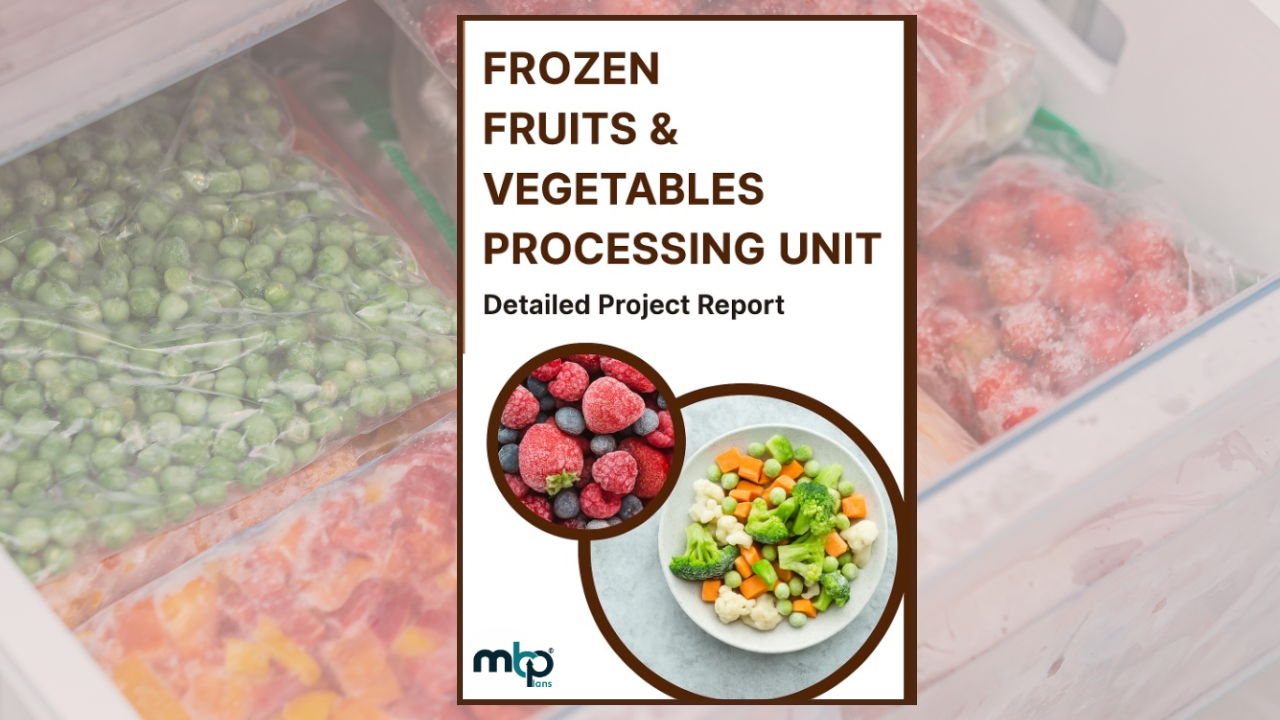
Set up a Frozen Fruits & Vegetables unit with a bank-ready DPR or a fund-ready Business Plan. Includes market sizing, pricing & channels, process/ops design (IQF/blast), compliance, and 5-year financials. Delivery: 12–15 working days.
Frozen fruits and vegetables processing refers to the preservation of fresh fruits and vegetables through controlled freezing techniques to retain their natural color, texture, flavor, and nutritional value while significantly extending shelf life. This processing method involves rapid freezing of freshly harvested produce at very low temperatures, which prevents microbial growth and enzymatic activity, ensuring year-round availability of seasonal produce. Frozen fruits and vegetables are considered essential components of modern food supply chains due to their convenience, safety, and minimal nutritional loss.
Frozen fruits and vegetables are broadly classified based on product type and processing method. By product type, the category includes frozen fruits such as mango, berries, banana, pineapple, papaya, strawberry, and mixed fruit blends, as well as frozen vegetables such as peas, corn, beans, carrot, broccoli, cauliflower, spinach, and mixed vegetable assortments. By processing method, products include Individually Quick Frozen (IQF) products, block frozen products, blanched frozen vegetables, and ready-to-cook frozen food formats.
The manufacturing process typically includes raw material procurement, washing, sorting, grading, peeling, cutting, blanching (for vegetables), rapid freezing using IQF or blast freezing technology, packaging, and cold storage. Advanced freezing technologies such as IQF tunnels, spiral freezers, and cryogenic freezing systems are widely used to maintain product integrity and prevent ice crystal damage. Strict cold chain management, hygienic processing conditions, and food-grade packaging are critical to ensure product quality and compliance with domestic and international food safety standards.
Frozen fruits and vegetables are widely used in household cooking, food service establishments, ready-to-eat meals, smoothies, bakery fillings, dairy products, baby foods, institutional catering, and export markets. Their convenience, reduced preparation time, minimal food waste, and consistent quality have made them highly preferred by urban consumers and food manufacturers. India has strong advantages in frozen fruits and vegetables processing due to abundant agricultural production, expanding cold chain infrastructure, and increasing government support for food processing and exports.
Growth Drivers
Market Size & Outlook
Global Market:
India Market:
Option A — Detailed Project Report (DPR)
Bank-ready feasibility covering:
Industry & Market: retail/HORECA demand, seasonal sourcing windows, domestic/export cues, price bands & pack sizes
Competition & Positioning: SKU gaps (berries, peas, veg mixes), private label vs brand, quality cues (drip loss, piece integrity)
Technical & Operations: raw material intake, sorting/washing/peeling/cutting, blanching (for veg), freezing route (IQF tunnel vs blast/freezer room—pros/cons), glazing, metal detection, packing (FFS/pillow/bags), cold storage & dispatch, utilities, layout & manpower, QA/QC (micro, temperature logs)
Financial Model (5 years): capex/opex by section, throughput & yields, cold-chain costs, break-even, cash flow, sensitivity (raw prices, power tariff, realization)
Compliance & Risk: FSSAI & labeling, HACCP/GMP outline, cold-chain and PCB norms, risk mitigations (temperature abuse, supply variability)
Implementation Plan: procurement & setup timeline, KPIs, governance & SOPs
Option B — Business Plan
Strategic, fund-ready document covering:
Company & Offering: SKU strategy (peas, veg mixes, cut fruits, berries), sizing/pack variants, pricing ladders
GTM & Channels: modern retail, HORECA, institutional, D2C/marketplaces, private label/export, distributor strategy & SLAs
Operations & Team: sourcing strategy (farmers/FPOs), inventory norms, cold-chain logistics, org & hiring roadmap
Financial Forecasts (3–5 years): unit economics, P&L, cash flow, scenarios
Growth & Risk Plan: product extensions, city expansion, mitigations
Format: PDF (print-ready). Editable Files available as add-on.
Which plan should I choose — DPR or Business Plan?
Choose DPR for feasibility + lender/subsidy documentation. Choose Business Plan for GTM, channels, and investor narrative. Many clients opt for both.
Do you cover whole, albumen, and yolk powders?
Yes—we scope to your chosen SKUs and can compare functionality and pricing implications.
Is pasteurization mandatory?
Yes—pasteurization/standardization and HACCP controls are critical; we document a practical compliance checklist.
Do you handle shelf-life and packaging choices?
Yes—barrier requirements, nitrogen flushing, pack sizes, and labeling norms are addressed.
Can you help with equipment vendors and quotes?
Yes—via Assisted Machinery Buying Program (AMBP) we shortlist vendors (breakers, pasteurizers, evaporators, spray dryers, packing), compare specs/quotes, and support negotiations (separate service).
Is funding guaranteed?
No—funding decisions rest with third parties. Your DPR/BP is structured to typical evaluator expectations to support your case.
No. 401, Pushpak Business Hub, Wakad, Pune, MH 411057
Terms & Conditions | Privacy Policy | Cookie Policy | Disclaimer | © Meticulous Business Plan 2026
Powered by MappedSkills Marketing