₹59,000.00
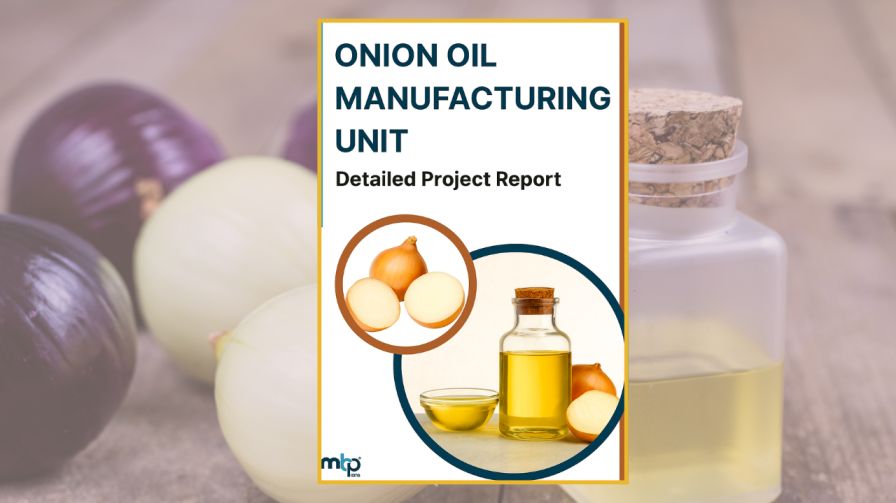
Set up an Onion Hair Oil manufacturing unit with a bank-ready DPR or a fund-ready Business Plan. Includes market sizing, pricing & channels, process/ops design, compliance (Cosmetics Rules, BIS hair-oil spec), and 5-year financials. Delivery: 12–15 working days.
Onion oil manufacturing refers to the extraction and processing of oil from onions using methods such as steam distillation or solvent extraction, primarily to obtain onion essential oil and onion oleoresin. Onion oil is a high-value natural product widely used for its strong flavor, aroma, and bioactive properties across food processing, pharmaceuticals, cosmetics, personal care, and nutraceutical applications. It plays an important role as a natural flavoring agent and functional ingredient in modern formulations.
Onion oil and onion extracts are broadly classified based on form and application. By product type, they include onion essential oil, onion oleoresin, and onion extract concentrates. By application, these products are used in savory food formulations, sauces, seasonings, meat products, ready-to-eat foods, pharmaceuticals, hair care products, skincare formulations, and traditional medicine. Onion oil is particularly valued for its antimicrobial, antioxidant, and anti-inflammatory properties.
The manufacturing process typically involves cleaning and slicing fresh onions, followed by controlled drying and extraction through steam distillation or solvent extraction systems. The extracted oil is then purified, concentrated, filtered, and packed under controlled conditions. Advanced extraction technologies such as continuous distillation units, low-temperature extraction, and closed-loop solvent recovery systems are used to enhance yield, preserve volatile compounds, and ensure consistent quality.
Onion oil is extensively used in the food industry to impart authentic onion flavor without handling fresh onions, improving consistency and shelf life. In pharmaceuticals and cosmetics, it is used for scalp health, hair growth formulations, antimicrobial products, and herbal preparations. India holds a strong position in onion oil manufacturing due to abundant onion production, low raw material cost, and growing demand from export markets. Globally, demand is driven by clean-label food trends, natural ingredient adoption, and rising use of botanical extracts.
Growth Drivers
Market Size & Outlook
Global Market
Option A — Detailed Project Report (DPR)
Bank-ready feasibility covering:
Industry & Market: demand drivers (ingredient-led hair care, anti-hair fall), domestic/D2C/HORECA salon cues, price bands & pack sizes (50–250 ml)
Competition & Positioning: mass vs premium, clean-label claims, private label opportunities
Technical & Operations:
Formulation approach: onion extract/juice concentrate or macerate; carrier oils (e.g., coconut, sesame, almond), optional essential oils/fragrances; antioxidants & preservatives (as applicable)
Process line: raw prep → infusion/extraction → heating & mixing → maturation (if used) → filtration/polishing → bulk QC → filling & capping → labeling & packing
Utilities & Layout: mixing kettles (SS with agitator), inline filters, transfer pumps, jacketed vessels (optional), filling machines, nitrogen headspace (optional), CIP/hygiene zoning, manpower plan, basic GMP
QA/QC: appearance, odor, density, acid/peroxide values, stability, micro (as applicable), packaging compatibility
Financial Model (5 years): capex/opex by section, throughput & yields, break-even, cash flow, sensitivity (oil prices, fragrance cost, realization)
Compliance & Risk: Cosmetics Rules, 2020 manufacturing licence & inspections; BIS IS 7123:2019 Hair Oils specification reference; labeling declarations per Cosmetics Rules; risk mitigations (rancidity, claim substantiation) drugscontrol.orgInternet ArchiveArtixio
Implementation Plan: procurement & setup timeline, KPIs, SOPs, and governance
Optional module: Onion essential oil (steam distillation/CO₂) as a separate feasibility add-on if you want to produce an aroma fraction in-house. A.G. OrganicaResearchGateIJCRT
Option B — Business Plan
Strategic, fund-ready document covering:
Company & Offering: SKU strategy (classic/strengthening/anti-frizz), pricing ladders, claims & messaging
GTM & Channels: D2C store, marketplaces, salons, modern retail, distributor model & SLAs; performance marketing mix
Operations & Team: vendor strategy (oils, extracts, bottles), inventory norms, batch planning, org & hiring roadmap
Financial Forecasts (3–5 years): unit economics, P&L, cash flow, scenarios
Growth & Risk Plan: line extensions (shampoo, serum), export readiness, mitigations
Format: PDF (print-ready). Editable Files available as add-on.
Is onion oil manufacturing a profitable business?
Yes. Strong demand from food, pharmaceutical, and cosmetic industries ensures steady domestic and export opportunities.
What are the major end-use industries?
Food processing, seasonings, pharmaceuticals, cosmetics, personal care, nutraceuticals, and export markets.
Are bank loans and funding options available?
Yes. The project reports are structured to support MSME loans, term loans, and investor funding proposals.
What approvals are required?
FSSAI registration (for food grade), factory license, pollution control approvals, and export certifications where applicable.
No. 401, Pushpak Business Hub, Wakad, Pune, MH 411057
Terms & Conditions | Privacy Policy | Cookie Policy | Disclaimer | © Meticulous Business Plan 2026
Powered by MappedSkills Marketing