
₹59,000.00
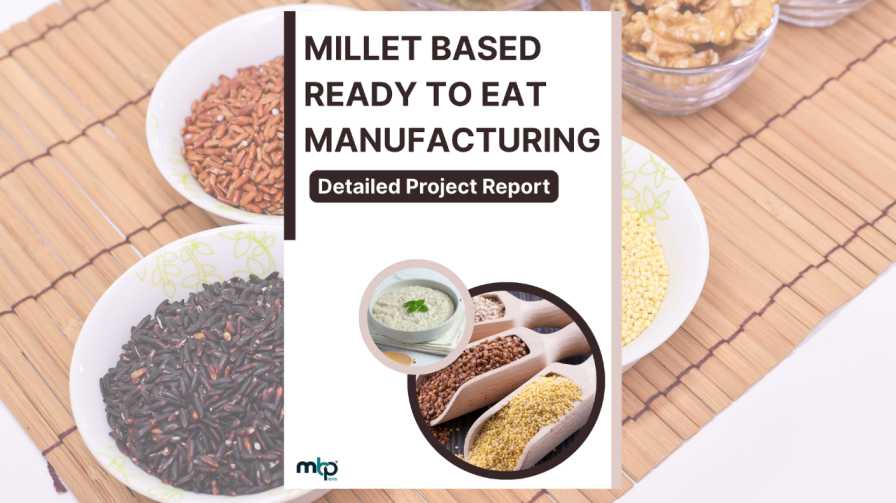
Build an Millet based Ready-To-Eat Food Manufacturing line with a bank-ready DPR or fund-ready Business Plan—market & pricing, material routes, process/ops design, compliance/claims guidance, and 5-year financials. Delivery:
📄 Download Free Sample Report →
The millet-based ready-to-eat (RTE) food manufacturing sector sits at the convergence of three powerful forces reshaping the global food industry: rising health consciousness, government-mandated food system transformation, and accelerating demand for convenient, clean-label nutrition. Millets ancient grains cultivated across South Asia and Africa for millennia have re-emerged as a category of global strategic importance following the United Nations’ declaration of 2023 as the International Year of Millets, India’s ambitious Shree Anna mission, and the mainstreaming of millet ingredients by multinational FMCG companies. Meticulous Business Plans presents this investor-grade project report for entrepreneurs, agri-food industrialists, and institutional investors evaluating entry into this high-growth, policy-supported processing segment.
Product and Industry Overview
Millet-based ready-to-eat food manufacturing encompasses the processing of nutrient-dense millet grains including pearl millet (bajra), finger millet (ragi), sorghum (jowar), foxtail millet, proso millet, and barnyard millet into value added consumer products designed for immediate or near-instant consumption. These products address the growing urban demand for convenience foods that do not compromise nutritional integrity a gap that refined grain-based products have consistently failed to fill.
Millets contain 3-5 times more dietary fibre than refined grains and offer 20-30% higher protein bioavailability. Their low glycemic index (GI of 54 and below) has increased adoption among the 537 million global diabetic population, particularly in Asia-Pacific. This nutritional profile, combined with gluten-free status and alignment with clean-label consumer expectations, positions millet RTE products as a structurally differentiated food category rather than a passing trend.
Product Classification
Millet-based RTE products span a broad spectrum of categories, enabling manufacturers to develop diversified portfolios:
| Category | Product Examples | Primary Consumer Segment |
| Extruded Snacks | Millet puffs, chips, rings, namkeen | Health-conscious urban snackers |
| Instant Meal Mixes | Dosa, idli, khichdi, upma, pongal mix | Urban households, working professionals |
| Breakfast Cereals | Millet flakes, muesli, porridge | Health and fitness segment |
| Health Bars & Bites | Protein bars, energy bites | Sports nutrition, gym segment |
| Millet Pasta & Noodles | Ragi noodles, jowar pasta | Children, gluten-intolerant consumers |
| Millet Rotis & Flatbreads | Ready-to-eat chapati, roti | HoReCa, institutional buyers |
| Millet Beverages | Ragi malt, fortified millet drinks | Maternal nutrition, senior health |
Manufacturing Process Overview
The production process for millet-based RTE foods varies by product category but follows a logical sequence of grain processing and value-addition steps:
The total capital expenditure covers land, food-grade civil construction, and machinery including cleaning and grading machines, dehuskers, mills, blenders, roasters or extruders, packaging systems, and quality inspection tools, along with pre-operative and regulatory costs.
Applications
Growth Drivers
Market Size and Global Outlook
The Millet Based Packaged Food Market was valued at USD 52.84 million in 2025 and is expected to grow at a CAGR of 10.2% from 2026 to 2032, reaching nearly USD 104.28 million by 2032. The broader millets market provides the macro context: the global millets market was valued at USD 15.3 billion in 2024 and is projected to reach USD 23.4 billion by 2034, growing at a CAGR of 4.4%.
With gross margins of 40-50% and net margins of 15-20% among the highest in Indian agri-processing, the millet-based food manufacturing sector presents an exceptional profitability and growth opportunity.
India Market
India is the world’s largest millet producer, contributing over 41% of total global millet production across more than 36 million hectares of cultivation. This domestic raw material base creates a structural cost advantage unavailable to international competitors. Key millet-growing states Rajasthan, Karnataka, Andhra Pradesh, Maharashtra, and Gujarat, offer direct farm to factory procurement pathways that reduce raw material costs and strengthen supply chain resilience.
The India Ready-to-Eat Food Market was valued at USD 4.98 billion in 2024 and is projected to reach USD 10.63 billion by 2032, growing at a CAGR of 10.07%. Millet-based RTE products are among the fastest-growing sub-categories within this market, supported by government procurement integration, FSSAI-compliant product development, and organised retail expansion.
Target Customers
The project reports provide detailed insights into:
These reports offer a comprehensive feasibility analysis along with suitable business models and structured implementation plans.
Why is the demand for millet-based RTE foods increasing?
Growing health awareness, government promotion of millets, increasing demand for convenient healthy foods, rising urban lifestyles, and consumer preference for gluten-free and nutritious products are driving market growth.
Which millet varieties are commonly used?
Commonly used millets include:
What products can be manufactured?
Popular products include:
Is FSSAI registration mandatory?
Yes. Every food manufacturing unit in India must obtain the appropriate FSSAI license before commercial production and comply with food safety standards.
Who are the target customers?
Potential customers include:
What investment is generally required?
Investment depends on production capacity, automation level, product range, and location. Small-scale units require significantly lower investment than fully automated commercial plants.
Is the business profitable?
Yes. With increasing consumer demand for healthy convenience foods, strong branding, quality assurance, and efficient distribution, millet-based RTE food manufacturing offers attractive long-term profitability.

No. 401, Pushpak Business Hub, Wakad, Pune, MH 411057
Terms & Conditions | Privacy Policy | Cookie Policy | Disclaimer | © Meticulous Business Plan 2026
Powered by MappedSkills Marketing