
₹59,000.00
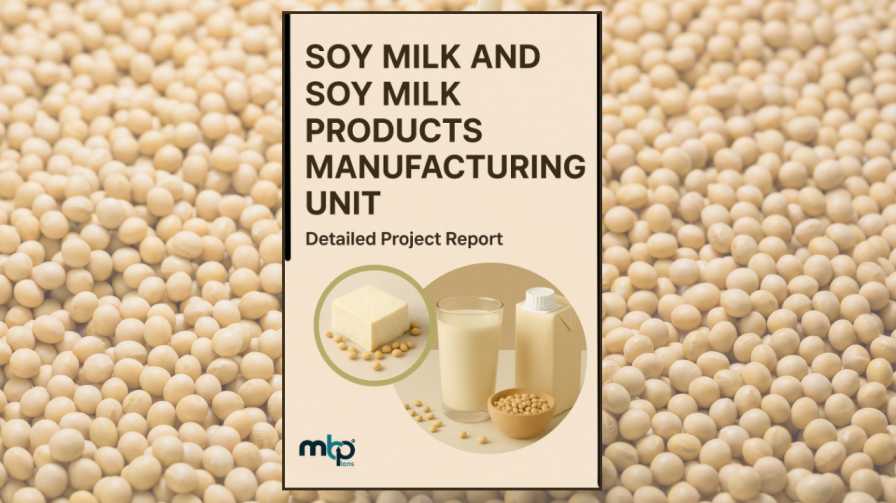
Set up a Soy Milk and Soy Milk Products Manufacturing unit with a bank-ready DPR or fund-ready Business Plan. Includes market sizing, pricing & channels, materials/process design, compliance & labeling, and 5-year financials. Delivery: 12–15 working days.
Soy milk manufacturing refers to the processing of soybeans into a plant-based liquid beverage through controlled soaking, grinding, cooking, filtration, and homogenization processes. Soy milk is widely consumed as a dairy alternative due to its high protein content, lactose-free nature, and nutritional profile comparable to animal milk. It is a core ingredient in plant-based diets and is extensively used across food, beverage, nutraceutical, and functional food applications.
Soy milk products include plain soy milk, flavored soy milk, fortified soy milk, tofu, soy yogurt, soy cream, soy ice cream, and soy-based beverages. The manufacturing process typically involves soybean cleaning, soaking, wet grinding, heat treatment to inactivate anti-nutritional factors, filtration, homogenization, fortification, and aseptic packaging. Modern processing technologies ensure improved taste, extended shelf life, and enhanced nutritional stability. Enzyme treatment and ultra-high temperature (UHT) processing are commonly adopted for premium soy milk products.
Soy milk is preferred by lactose-intolerant consumers, vegans, health-conscious individuals, and populations with dairy allergies. It is widely used in ready-to-drink beverages, infant nutrition, bakery, confectionery, and food service applications. India has strong potential for soy milk manufacturing due to increasing adoption of plant-based diets, rising urban health awareness, and growing availability of soybeans in key agricultural regions.
Growth Drivers
Market Size & Outlook
Global Market:
Indian Market:
India soy beverages market size in 2026 is estimated at USD 36.09 million, growing from 2025 value of USD 31.58 million with 2031 projections showing USD 70.33 million, growing at 14.28% CAGR over 2026-2031.
Industry & Market
Growing demand for plant-based milk, vegan diets, lactose-free products, and protein-rich beverages.
Market opportunities across retail, D2C brands, cafés, bakeries, hotels, hospitals, and foodservice.
Market sizing, segmentation (classic, flavoured, protein-fortified), pricing tiers, and competitor mapping.
Consumer trends: clean-label, low-sugar, fortified, kids-friendly, ready-to-drink formats.
Positioning & Product Routes
Soy Milk Variants: classic plain, sweetened, unsweetened, flavoured (vanilla, chocolate, coffee).
Value-Added Products: soy curd, tofu, soy yoghurt, soy paneer, soy cream, soy-based beverages.
High-Protein Routes: fortified soy milk with added plant proteins, vitamin/mineral blends.
Emerging Innovations: barista soy milk, probiotic soy yoghurt, UHT soy milk (shelf-stable).
B2B Bulk Route: 5–20 litre packs for bakeries, café chains, cloud kitchens, and institutional buyers.
Technical & Operations
Detailed manufacturing technical flow:
Soybean cleaning & grading
Soaking → dehulling → grinding → slurry separation
Cooking & homogenization
Pasteurization/Sterilization (HTST/UHT)
Flavouring & formulation
Filling lines (bottles, tetra paks, pouches)
Cold chain or ambient processing line setup
Operations cover:
Utilities planning (steam, water, refrigeration)
Plant layout: raw material → processing → filling → cold room/logistics
Manpower & hygiene zoning
Equipment selection (grinders, boilers, homogenizer, pasteurizer/UHT, fillers, chillers)
QA/QC & Specifications
Physico-chemical parameters: protein %, solids, Brix, pH, viscosity, colour.
Microbiology: TPC, coliform, yeast/mould (critical for beverages).
Allergen compliance & soy protein concentration checks.
Shelf-life & stability testing (thermal stability, sedimentation, separation).
Packaging integrity for UHT, PET, glass, and pouches.
Complete batch traceability framework.
Compliance & Claims
FSSAI licensing (milk analog/plant-based beverages category).
Mandatory labeling: protein declaration, allergen warnings, ingredient list.
Claims: high-protein, lactose-free, vegan, fortified — with testing/evidence expectations.
Guidelines for HACCP, GMP, ISO 22000.
Export basics for plant-based beverages (GCC, EU, South East Asia).
Environmental and sustainability claim norms.
Financial Model (5 Years)
Capex & Opex break-up by processing stage.
Raw materials costing: soybeans, stabilizers, flavours, packaging, cold-chain.
Yield assumptions for soy milk & tofu.
5-year revenue, EBITDA, cash flow, and ROI.
Break-even point in months.
Sensitivity analysis: soybean prices, utilities, labour, selling price variations.
Implementation Plan
Machinery vendor & utility vendor framework.
Procurement → installation → commissioning timeline.
Trial production & stability validation plan.
KPIs: production efficiency, yield %, wastage %, batch failures, OEE.
SOPs: food safety, cleaning, maintenance, homogenization parameters, pasteurization logs.
Governance & audit readiness checklist.
| Select Your Report | DPR — Detailed Project Report |
|---|
Is soy milk manufacturing a viable business?
Yes. Rapid growth in plant-based beverages and increasing dairy alternatives demand ensure strong market potential.
What are the major end-use industries?
Beverages, dairy alternatives, nutraceuticals, infant nutrition, bakery, food service, and retail markets.
Are bank loans and funding options available?
Yes. The project reports are structured to support MSME loans, term loans, and investor funding proposals.
What approvals are required?
FSSAI licensing, factory license, food safety compliance, labeling regulations, and pollution control approvals are required.
No. 401, Pushpak Business Hub, Wakad, Pune, MH 411057
Terms & Conditions | Privacy Policy | Cookie Policy | Disclaimer | © Meticulous Business Plan 2026
Powered by MappedSkills Marketing