
₹59,000.00
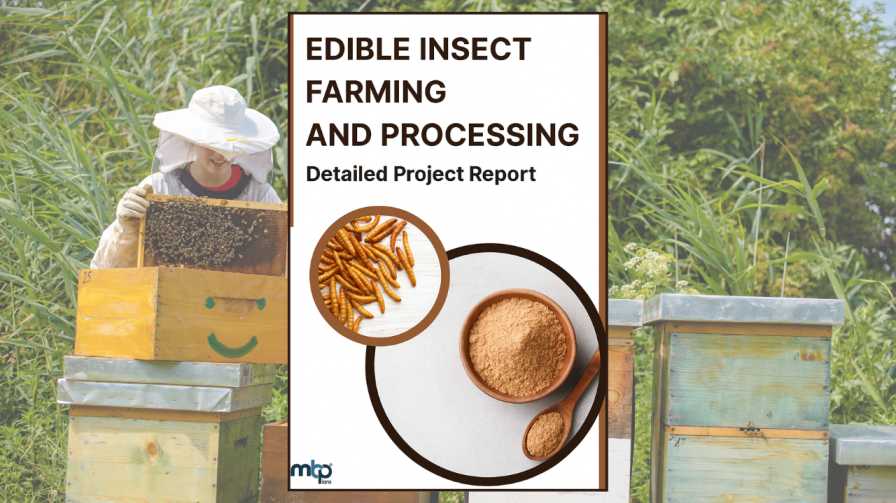
Build a Edible Insect Farming Processing line with a bank-ready DPR or fund-ready Business Plan—market & pricing, material routes, process/ops design, compliance/claims guidance, and 5-year financials. Delivery: 12–15 working days.
📄 Download Free Sample Report →
Edible insect farming and processing refer to the cultivation, harvesting, and transformation of insects into food ingredients and consumable products for human and animal nutrition. This emerging sector focuses on sustainable protein production by rearing insects such as crickets, mealworms, black soldier flies, grasshoppers, and silkworms under controlled conditions.
These systems utilize minimal land, water, and feed compared to traditional livestock, making edible insects one of the most resource-efficient and environmentally sustainable protein sources. Insects are rich in protein, essential amino acids, healthy fats, vitamins (B12), minerals (iron, zinc), and fiber, positioning them as a strong alternative to conventional protein sources.
Edible insect farming systems include controlled indoor rearing units, automated insect farms, modular container-based farms, and integrated agri-waste bioconversion systems. Advanced production setups incorporate temperature and humidity control, automated feeding systems, breeding chambers, and waste recycling processes to ensure consistent yield and quality.
The production process involves breeding and egg incubation, larval rearing under controlled conditions, feeding using organic or agri-waste substrates, harvesting at optimal growth stages, processing (drying, roasting, grinding), and packaging into various forms such as whole insects, protein powders, flours, snacks, and protein bars. Advanced technologies like IoT-enabled monitoring, AI-based growth optimization, automated climate control, and hygienic processing systems are increasingly being adopted.
Compared to traditional livestock farming, edible insect production requires significantly lower water (up to 80–90% less), emits fewer greenhouse gases, and has a much higher feed conversion efficiency. Additionally, it supports circular economy models by converting organic waste into high-value protein and fertilizer byproducts.
Edible insect products are supplied to food and beverage manufacturers, nutraceutical companies, animal feed producers (especially poultry, aquaculture, and pet food), fitness and health brands, and export markets. Growing demand for alternative protein, sustainable food systems, and functional nutrition is driving rapid expansion in this sector.
India is witnessing early-stage but accelerating growth in the edible insects industry, supported by increasing awareness of sustainable nutrition, rising protein demand, innovation in food processing, and interest from startups and research institutions. Regulatory clarity and consumer acceptance remain key factors influencing long-term growth.
Growth Drivers
Market Size & Outlook
Global Market:
India Market:
Industry & Market
Insect Species & Product Routes
Insect Farming Options:
Product Formats:
By-Products: frass (organic fertilizer), waste valorization.
Technical & Operations
QA/QC & Specifications
Financial Model (5 Years)
Implementation Plan
Is edible insect farming a profitable business?
Yes. It offers high protein yield, low land usage, and strong global demand, especially in feed and export markets.
Is insect protein allowed for human consumption?
Regulations vary by country. The DPR clearly differentiates food-grade and feed-grade models to ensure compliance.
Can this business start on a small scale?
Yes. Insect farming is modular and scalable, suitable for pilot-scale to commercial expansion.
What are the major buyers of insect protein?
Aquaculture feed companies, pet food brands, animal nutrition firms, food startups, and exporters.
Does this business require large land?
No. It is a high-density indoor farming model with low land requirements.
Are bank loans or grants available?
Yes. Projects may qualify under innovation, agri-tech, sustainability, or startup funding programs.
Does the DPR cover regulatory and export readiness?
Yes. It includes compliance guidance, labeling norms, and export documentation basics.
No. 401, Pushpak Business Hub, Wakad, Pune, MH 411057
Terms & Conditions | Privacy Policy | Cookie Policy | Disclaimer | © Meticulous Business Plan 2026
Powered by MappedSkills Marketing