-
 1 × ₹50,000.00
Subtotal: ₹50,000.00
₹59,000.00
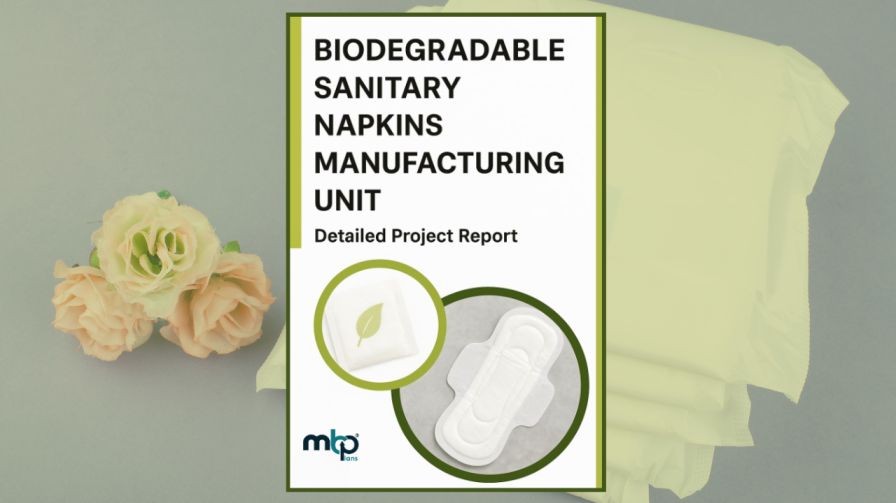
Set up a Biodegradable Sanitary Napkins unit with a bank-ready DPR or fund-ready Business Plan. Includes market sizing, pricing & channels, materials/process design, compliance & labeling, and 5-year financials. Delivery: 12–15 working days.
Entrepreneurs launching eco-friendly sanitary pads brands.
Hygiene converters adding a biodegradable line or private label.
Social impact/NGO programs seeking sustainable menstrual hygiene solutions.
Founders needing bank/investor-ready documentation.
Option A — Detailed Project Report (DPR) (bank-ready feasibility)
Industry & Market: growth drivers (sustainability, health awareness), urban/rural & e-commerce demand, price bands & pack sizes (day/night/XL).
Positioning & Competition: eco claims (biodegradable/compostable), private label vs brand, packaging cues.
Materials & BOM choices:
Topsheet: bamboo/organic-cotton nonwoven or PLA-based nonwoven.
Acquisition/Distribution layer: tissue/cellulose web.
Absorbent core: fluff pulp with bio-based SAP alternatives (or low-SAP blended approach as chosen).
Backsheet: breathable compostable film (PLA/starch blend).
Wings & leak guards: biodegradable nonwoven + elastic options.
Adhesives & release liners: hot-melt; compostable release where feasible.
Wrap & outer pack: paper/compostable film options.
Process & Operations: multi-unwind, core forming & embossing, dosing, lamination (ultrasonic/adhesive), wing cutting, edge sealing, inline QC, UV treatment/sterilization step (as applicable), stacking & packaging; utilities, layout & manpower.
QA/QC & Specs: absorbency/retention, strike-through, re-wet, tensile/peel, fit & dimensions, pH/odor checks, basic microbiology; labeling checklist for hygiene products and environmental claims substantiation.
Financial Model (5 years): capex/opex by section, throughput & yields, break-even, cash flow, sensitivity (pulp price, film cost, realization, power).
Compliance & Risk: quality & safety benchmarks for sanitary napkins, packaging/label declarations, guidance on third-party biodegradability/compostability testing for claim support, waste-handling considerations; risk mitigations (supply variability, claim compliance, QC drift).
Implementation Plan: procurement & erection timeline, pilot/validation runs, KPIs, SOPs, governance.
Option B — Business Plan (strategy & fundraising)
Company & Offering: SKU architecture (day/night/ultra-thin/maternity), pricing ladders, claims & messaging.
GTM & Channels: D2C site & subscriptions, marketplaces, modern retail/pharmacies, NGOs/institutional programs; distributor model & SLAs.
Operations & Team: vendor strategy (nonwovens, films, adhesives), inventory norms, packaging choices, org & hiring roadmap.
Financial Forecasts (3–5 years): unit economics, P&L, cash flow, scenarios.
Growth & Risk Plan: capacity ramp-up, private label contracts, export readiness, mitigations.
Format: PDF (print-ready). Editable Files available as add-on.
Share Inputs — City/location, crop mix (leafy/microgreens/herbs), system choice (NFT/DWC/aeroponics), target capacity (m² or trays), preferred channels.
Kick-off (optional) — 45-min Expert Call add-on to align tech route, yields, and channel focus.
Research & Modeling — Market, CEA ops blueprint, and financials tailored to your plan.
Draft Delivery — Review together; 1st revision free.
Final Handover — DPR/Business Plan PDF (and Editable Files if selected).
DPR: ₹59,000 — Delivery: 12–15 working days
Business Plan: ₹59,000 — Delivery: 12–15 working days
Add-ons: Customization ₹3,500 · Expert Call ₹2,500 · Editable Files ₹4,500 · Extra Revisions ₹1,500 (first revision free)
Delivery Mode: Secure email/download link. Support: Email for clarifications.
Which plan should I choose — DPR or Business Plan?
Choose DPR for feasibility + lender/subsidy documentation. Choose Business Plan for GTM, channels, and investor narrative. Many clients opt for both.
Do you cover whole, albumen, and yolk powders?
Yes—we scope to your chosen SKUs and can compare functionality and pricing implications.
Is pasteurization mandatory?
Yes—pasteurization/standardization and HACCP controls are critical; we document a practical compliance checklist.
Do you handle shelf-life and packaging choices?
Yes—barrier requirements, nitrogen flushing, pack sizes, and labeling norms are addressed.
Can you help with equipment vendors and quotes?
Yes—via Assisted Machinery Buying Program (AMBP) we shortlist vendors (breakers, pasteurizers, evaporators, spray dryers, packing), compare specs/quotes, and support negotiations (separate service).
Is funding guaranteed?
No—funding decisions rest with third parties. Your DPR/BP is structured to typical evaluator expectations to support your case.

No. 401, Pushpak Business Hub, Wakad, Pune, MH 411057
Terms & Conditions | Privacy Policy | Cookie Policy | Disclaimer | © Meticulous Business Plan 2026
Powered by MappedSkills Marketing