₹59,000.00
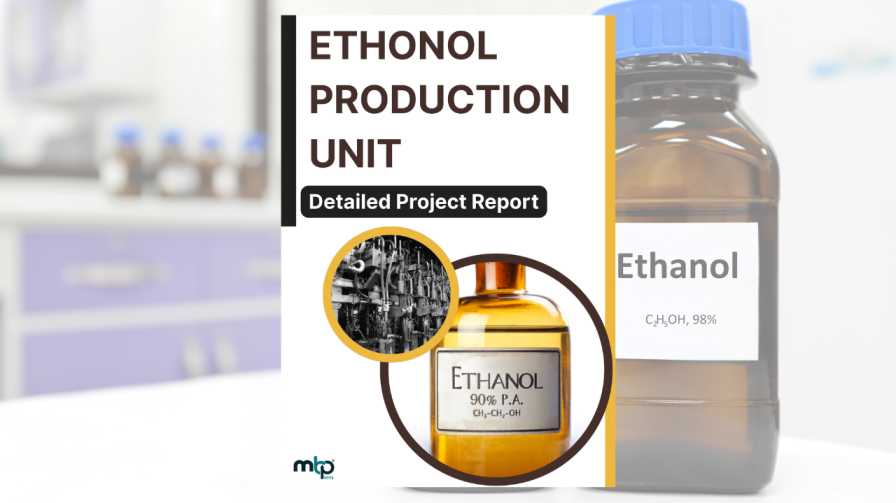
Build an Ethanol Production Unit line with a bank-ready DPR or fund-ready Business Plan—market & pricing, material routes, process/ops design, compliance/claims guidance, and 5-year financials. Delivery: 12–15 working days.
Ethanol production refers to the industrial manufacturing of ethyl alcohol through fermentation and distillation of carbohydrate- or starch-rich raw materials such as sugarcane molasses, sugarcane juice, maize, broken rice, wheat, and other biomass feedstocks. Ethanol is a versatile bio-based product widely used as a renewable fuel, industrial solvent, chemical intermediate, beverage alcohol, pharmaceutical ingredient, and sanitizer-grade alcohol. In recent years, ethanol has gained strategic importance as a clean and renewable energy source due to its role in reducing fossil fuel dependence and lowering carbon emissions.
Ethanol plays a critical role in the global energy transition, particularly through fuel ethanol blending with petrol under biofuel and decarbonization policies. Fuel-grade ethanol is blended with gasoline to produce ethanol-blended petrol (EBP), which improves combustion efficiency and reduces greenhouse gas emissions. Apart from fuel applications, ethanol is extensively used in pharmaceuticals, personal care products, cosmetics, food processing, paints, coatings, inks, and chemical manufacturing. Its biodegradability, high solvency, and renewable origin make ethanol an essential industrial input across multiple sectors.
Ethanol can be broadly classified based on raw material and end-use application. By raw material, ethanol is produced from sugar-based feedstocks (molasses, sugarcane juice), grain-based feedstocks (maize, rice, wheat), and cellulosic biomass (agricultural residues, lignocellulosic waste). By application, ethanol is classified into fuel ethanol, industrial ethanol, potable alcohol, pharmaceutical-grade ethanol, and sanitizer-grade ethanol. Fuel ethanol dominates demand due to large-scale blending mandates, while industrial and pharmaceutical ethanol serve high-value specialty applications.
The ethanol manufacturing process typically involves feedstock preparation, saccharification (for starch-based raw materials), fermentation using yeast, distillation to separate ethanol, dehydration to produce anhydrous ethanol (for fuel use), and storage. Modern ethanol plants use continuous fermentation systems, multi-pressure distillation columns, molecular sieve dehydration units, and advanced effluent treatment systems. Co-products such as distillers dried grains with solubles (DDGS), carbon dioxide, and bio-sludge enhance overall plant economics. Compliance with environmental norms, water recycling, and energy-efficient operations is critical for sustainable ethanol production.
India has emerged as one of the fastest-growing ethanol markets globally due to strong government support under the Ethanol Blended Petrol (EBP) Programme, abundant agricultural feedstock availability, and expanding distillery capacity. Policy initiatives promoting 20% ethanol blending, assured offtake by oil marketing companies, and financial incentives for distillery expansion have significantly strengthened the ethanol production ecosystem in India.
Growth Drivers
Market Size & Outlook
Global Ethanol Market:
India Market:
The India ethanol market size reached USD 3.4 Billion in 2025. Looking forward, expects the market to reach USD 11.8 Billion by 2034, exhibiting a growth rate (CAGR) of 13.95% during 2026-2034.
The project reports provide detailed insights into:
These reports offer a comprehensive feasibility analysis along with suitable business models and structured implementation plans.
Is ethanol production a profitable business?
Yes. Long-term government blending mandates, assured demand, and co-product revenues make ethanol production a stable and scalable business.
What are the major end-use sectors?
Fuel blending, pharmaceuticals, sanitizers, chemicals, personal care products, and beverages.
Are bank loans and funding options available?
Yes. Ethanol projects are eligible for term loans, government-backed financing schemes, and renewable energy funding support.
What approvals are required?
Environmental clearance, excise permissions, pollution control approvals, PESO licensing, and state-specific distillery regulations are required.

No. 401, Pushpak Business Hub, Wakad, Pune, MH 411057
Terms & Conditions | Privacy Policy | Cookie Policy | Disclaimer | © Meticulous Business Plan 2026
Powered by MappedSkills Marketing