
₹59,000.00
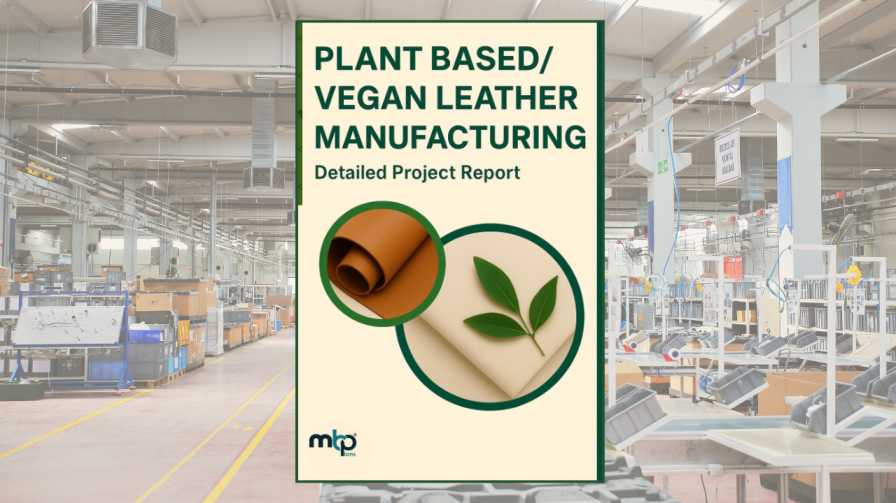
Build a Plant-Based (Vegan) Leather line with a bank-ready DPR or fund-ready Business Plan—market & pricing, material routes, process/ops design, compliance/claims guidance, and 5-year financials. Delivery: 12–15 working days.
Plant-based or vegan leather manufacturing refers to the production of sustainable leather-like materials using non-animal, renewable, and bio-based raw materials such as plant fibers, agricultural waste, fruit peels, cellulose, natural polymers, and bio-resins. Unlike conventional animal leather that involves intensive livestock farming and chemical tanning, plant-based leather offers an eco-friendly, cruelty-free, and low-carbon alternative for the fashion, footwear, automotive, furniture, and lifestyle industries.
Vegan leather is manufactured using raw materials derived from sources such as pineapple leaves (Piñatex), cactus fibers, mushroom mycelium, apple pomace, grape waste, corn starch, banana fibers, and recycled plant cellulose. Based on material composition, plant-based leather can be broadly classified into bio-coated fabrics, fiber-reinforced bio-leather, mycelium-based leather, and composite bio-leather materials. These materials replicate the texture, durability, flexibility, and aesthetic appeal of animal leather while significantly reducing environmental impact.
The manufacturing process typically includes raw material extraction, fiber processing, blending with bio-binders or natural resins, sheet formation, surface finishing, embossing, coating, and curing.
Advanced technologies such as mycelium cultivation systems, bio-polymer coating, water-based finishing, and solvent-free processing are increasingly adopted to enhance material performance and sustainability. Compared to traditional leather tanning, plant-based leather production consumes less water, generates fewer toxic effluents, and aligns with global sustainability regulations.
Plant-based leather is widely used in footwear, handbags, wallets, apparel, upholstery, automotive interiors, accessories, and luxury lifestyle products. The growing preference for ethical fashion, circular economy practices, and ESG-compliant sourcing has positioned vegan leather as a high-growth material segment globally. Leading global brands and automotive manufacturers are increasingly integrating plant-based leather into their product lines to meet sustainability commitments.
India is emerging as a promising manufacturing base for plant-based leather due to abundant agricultural residues, growing startup ecosystem, supportive government policies for sustainable materials, and rising domestic demand for eco-friendly fashion products.
Growth Drivers
• Rising global demand for cruelty-free and sustainable fashion materials
• Increasing environmental regulations against animal leather tanning
• Growth of vegan, ethical, and circular economy consumer segments
• Strong adoption by fashion, footwear, and automotive brands
• Availability of agricultural waste and bio-based raw materials
• Technological advancements in bio-materials and surface finishing
Market Size & Outlook
Global Market:
The global vegan leather market was valued at USD 67.15 million in 2022 and is projected to reach USD 122.55 million by 2030, growing at a CAGR of 7.81% during the forecast period 2024-2031
India Market:
The India vegan leather market was valued at USD 1.28 Billion in 2024 and is projected to reach USD 3.05 Billion by 2032, driven by sustainable fashion adoption, startup innovation, and export demand.
Industry & Market: demand from fashion/accessories, footwear, upholstery; brand & D2C trends; price bands and specification tiers.
Positioning & Material Routes:
Coated textiles (waterborne/bio-based coatings) on cotton/poly/nonwoven backers.
Bio-composite sheets using plant fibers (e.g., agri residues) with bio-polymers.
Emerging routes (e.g., mycelium mats or fruit/leaf waste substrates) — feasibility overview.
Technical & Operations: substrate selection, coating/lamination (knife-over-roll, transfer, or calender), curing/drying, embossing/printing, backer bonding, edge finishing, roll slitting & inspection; utilities, layout & manpower.
QA/QC & Specs: thickness & gsm, tensile/tear, abrasion (Martindale), flex/hydrolysis resistance, colour fastness, gloss, odour/VOC checks; batch traceability.
Compliance & Claims: guidance on restricted substances (e.g., PVC/phthalate/azo awareness), label language for “vegan/plant-based” claims, evidence expectations (test reports/certificates), export documentation basics.
Financial Model (5 years): capex/opex by section, throughput & yields, break-even, cash flow, sensitivity (resin/fiber prices, power tariff, realization).
Implementation Plan: vendor list framework, procurement & erection timeline, pilot runs, KPIs, SOPs, governance.
Company & Offering: SKU architecture (sheets/rolls; grades for bags, belts, footwear), % bio-based messaging and pricing ladders.
GTM & Channels: B2B to brands/exporters, private label, D2C accessories, marketplaces, distributor model & SLAs.
Operations & Team: sourcing (substrates, coatings, fibers), inventory norms, QC cadence, org & hiring roadmap.
Financial Forecasts (3–5 years): unit economics per grade, P&L, cash flow, scenarios.
Growth & Risk Plan: value-added finishes (anti-scratch, soft-touch), colour library, emboss libraries, export readiness; risk mitigations (supply variability, claim substantiation).
Format: PDF (print-ready). Editable Files available as add-on.
Is plant-based leather manufacturing a viable business?
Yes. Strong global demand for sustainable materials and premium pricing potential ensure long-term growth opportunities.
What are the major end-use industries?
Footwear, fashion accessories, apparel, furniture, automotive interiors, and lifestyle products.
Are bank loans and funding options available?
Yes. The project reports support MSME loans, green financing schemes, startup funding, and ESG-focused investments.
What approvals are required?
Factory license, pollution control approvals, material safety compliance, and export certifications (if applicable).
No. 401, Pushpak Business Hub, Wakad, Pune, MH 411057
Terms & Conditions | Privacy Policy | Cookie Policy | Disclaimer | © Meticulous Business Plan 2026
Powered by MappedSkills Marketing