Meticulous Business Plans (MBP) is a global professional business planning company that has delivered more than 5000 reports across the globe.
Our Expert’s team is working on the project of setting up a tamarind processing unit, one of the most important segments within the food additives and specialty chemicals industry and the team has prepared Business Planning Reports on the title.
MBP expert’s team has studied the market for awareness, demand, and supply of tamarind processed product, and wanted to share some helpful information about the project.
Tamarind processing involves the conversion of raw tamarind pods into cleaned, deseeded, and value-added products such as pulp, paste, concentrate, and powder through systematic processing operations. Tamarind is widely used in culinary, food processing, pharmaceutical, and beverage industries due to its distinctive sweet-sour flavor, natural acidity, and preservative properties. Raw tamarind has limited shelf life and is prone to contamination, insect infestation, and quality degradation, making organized processing essential for value addition and long-term storage.
The processing operation begins with cleaning and grading of raw tamarind pods to remove shells, dust, and foreign matter. The pods are manually or mechanically decorticated to separate the pulp from shells and fibers. Deseeding is carried out using mechanical deseeders to improve efficiency and hygiene. The pulp is then subjected to further processing such as paste formation, concentration, drying, or powdering, depending on the final product requirement. Packaging is done under hygienic conditions using moisture-proof materials to maintain quality and extend shelf life.
Earlier tamarind processing was largely manual, labor-intensive, and inconsistent in quality, leading to higher contamination risks and limited scalability. Modern tamarind processing units employ mechanized decorticators, continuous deseeding machines, pulp refining systems, and automated packaging lines. Recent advancements include vacuum concentration technology, controlled dehydration systems, and aseptic processing, which help preserve natural colour, acidity, and flavor while improving product stability.
Food safety and quality assurance are critical in tamarind processing. Advanced units incorporate stainless steel contact equipment, CIP systems, and controlled processing environments to comply with food safety standards. Quality parameters such as moisture content, acidity, microbial load, and absence of foreign matter are monitored to meet FSSAI, ISO, and export market requirements.
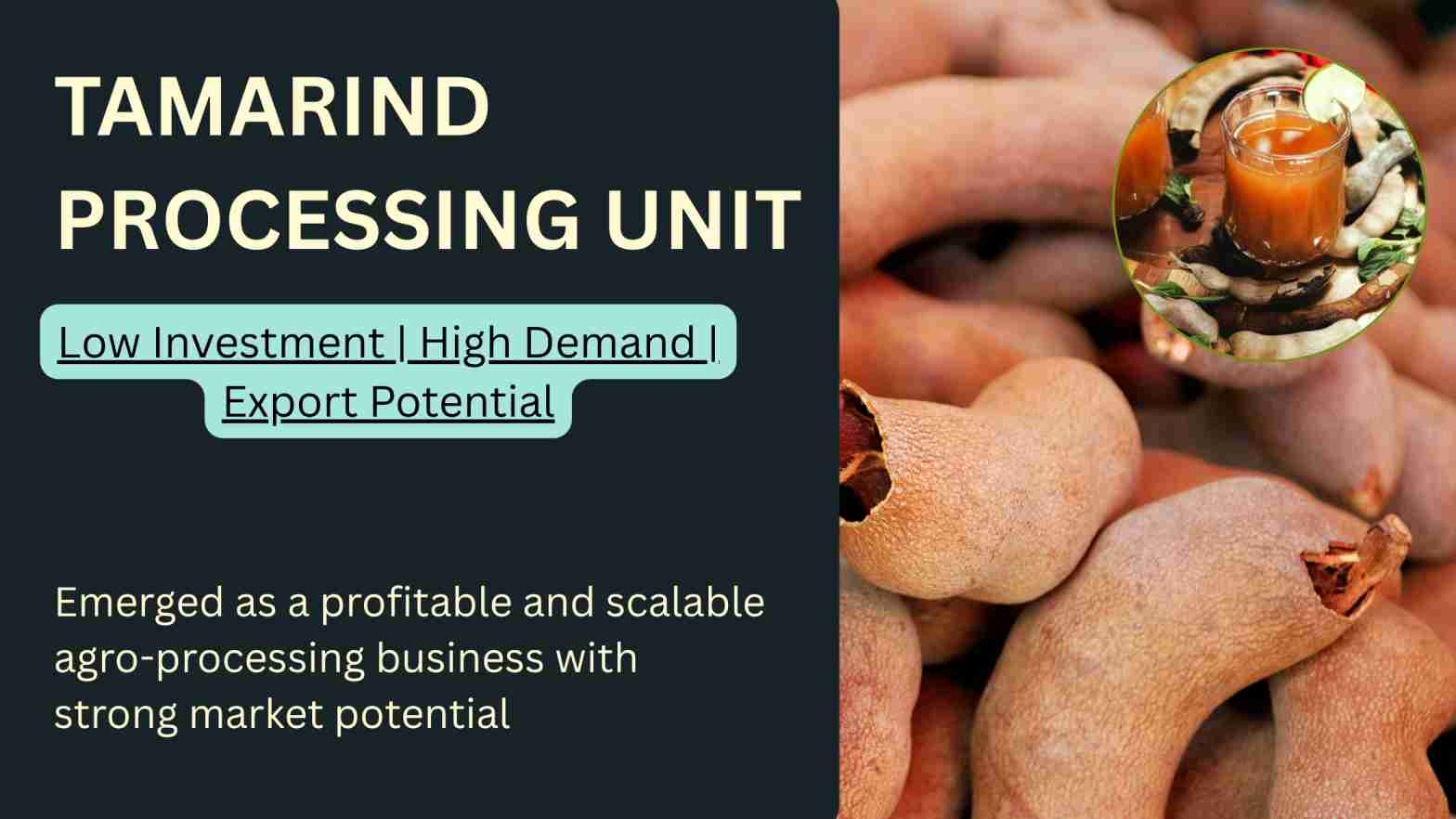
Tamarind processing units cater to domestic as well as export markets, supplying raw and processed products to food manufacturers, spice processors, hotels, restaurants, and international buyers. With increasing demand for natural souring agents, ethnic foods, and convenience products, tamarind processing has emerged as a profitable and scalable agro-processing business with strong market potential.
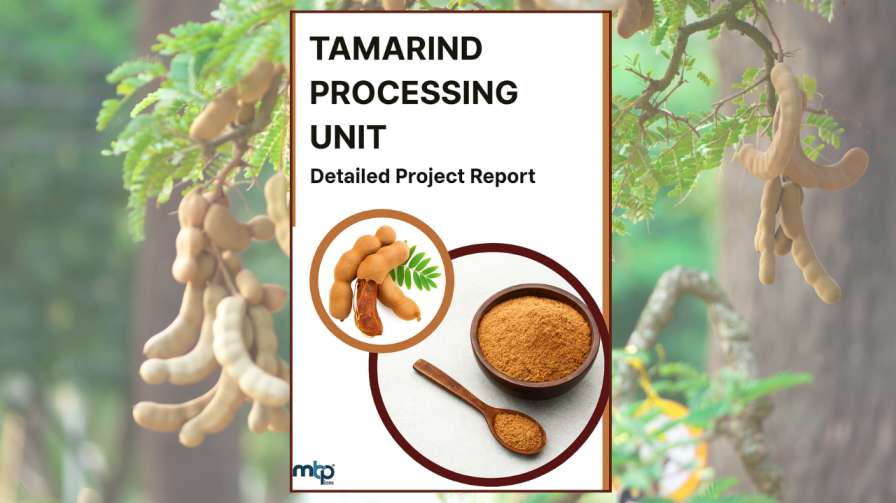
In these reports, we have analysed and explained the business opportunity for tamarind processing unit, and it can become a profitable and sustainable business if executed with proper planning, technology selection, and market strategy.
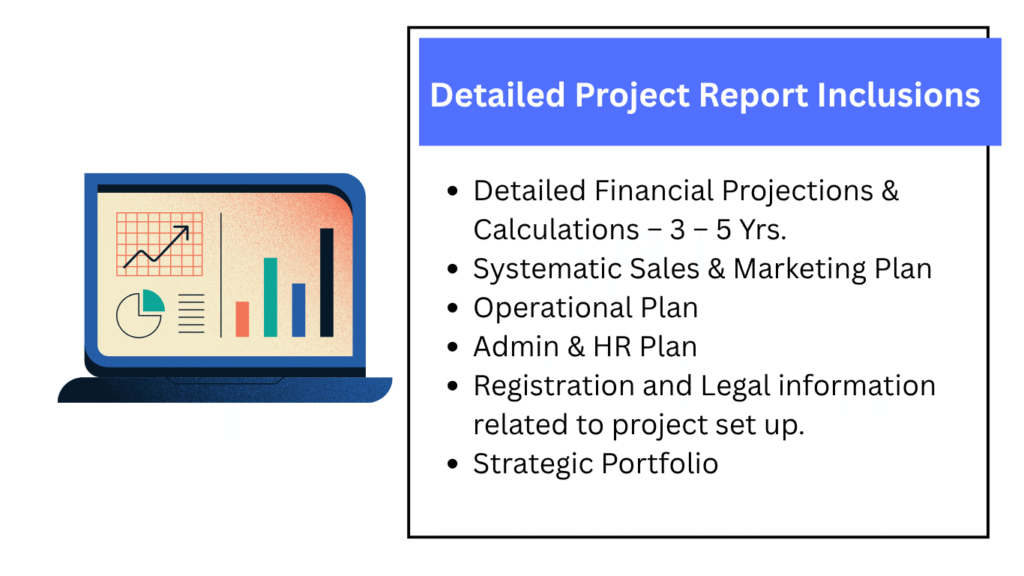
The Business Planning Reports on tamarind processing unit will help you in understanding the Industrial Overview, Market Feasibility, Technical Feasibility, Legal Feasibility, Sales Feasibility, Infrastructure Feasibility, etc. Also, emphasis on Market Position, Demand, Market Size, Statistics, Market Dynamics and Trends. These reports provide a comprehensive business feasibility analysis; Types of Business Models, and Business Plan, which helps you to decide to start up a business.
Meticulous Business Plans (MBP) is global professional business planning company and delivered more than 5000 reports across the globe.
We have experience in working with clients from US, Europe, UK, Middle East, Africa & APAC.
Our team have fair understanding of global market across the industry & domain.
The world has become highly digitalized and information is available from multiple sources and this has created confusions about authenticity of the information and also it is not available at one place.
No. 401, Pushpak Business Hub, Wakad, Pune, MH 411057
Terms & Conditions | Privacy Policy | Cookie Policy | Disclaimer | © Meticulous Business Plan 2026
Powered by MappedSkills Marketing