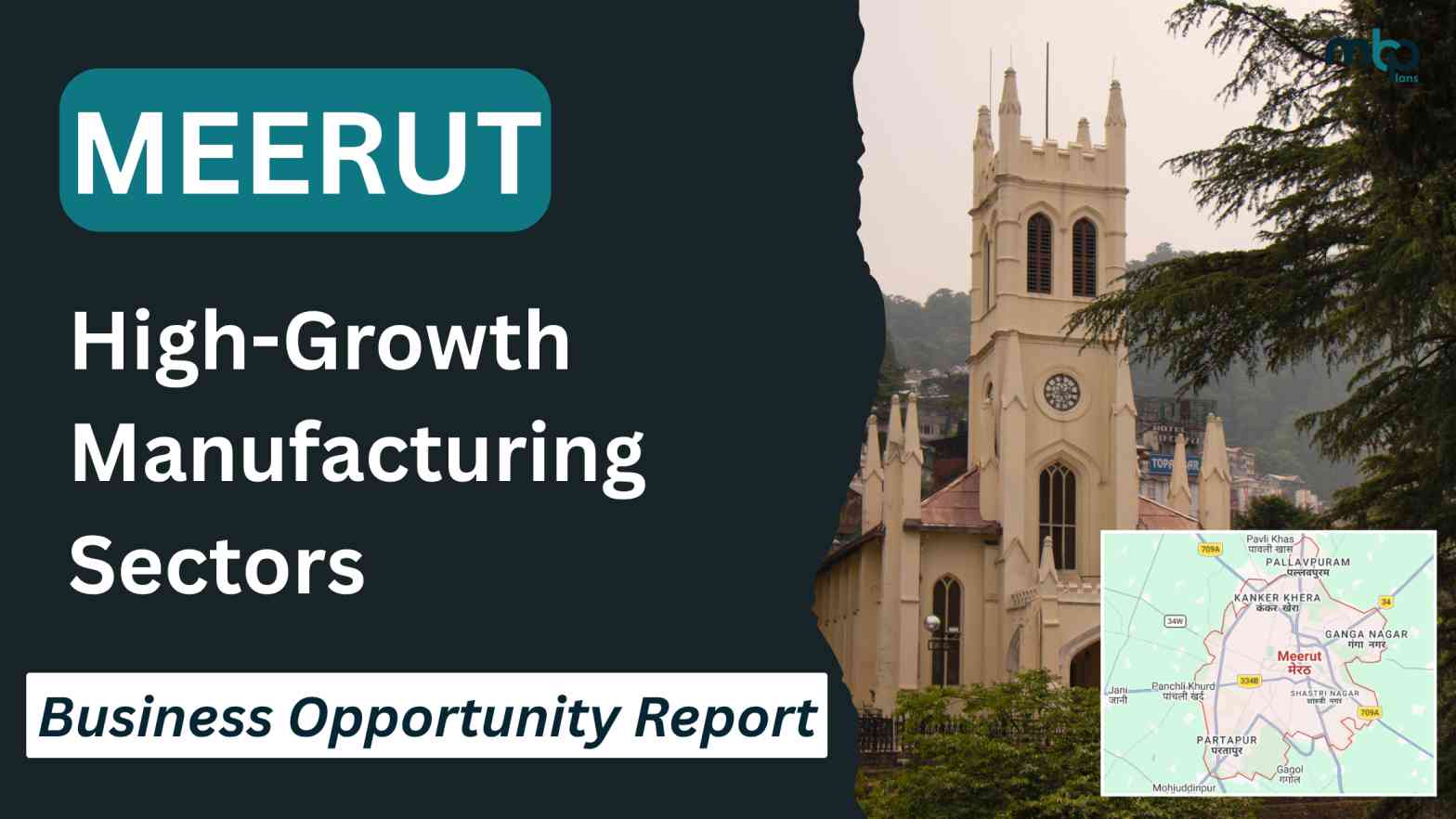
Meerut doesn’t get talked about the way Delhi, Gurugram, or even Kanpur do – but it quietly holds two national titles most people don’t know about: India’s largest scissors and cutlery manufacturing hub, and, alongside Jalandhar, the country’s largest sports goods manufacturing cluster. Add a booming gold jewellery trade, a sugar and agro-industrial base, and a fresh wave of government-backed industrial infrastructure, and Meerut in 2026 looks less like a sleepy NCR-adjacent town and more like a specialized manufacturing city that’s finally getting the connectivity and policy support to match its output.
From 300-year-old scissor workshops to the country's largest sports goods cluster, here's where the real openings are for entrepreneurs in Meerut right now.
Meerut is well connected by road, railways, and air, which has fostered the growth of industries in the city. As a hub of industrial activity, it’s famed for manufacturing sports goods, scissors, musical instruments, sugar, tyres, and pharmaceuticals – and Meerut’s scissors have even been registered under India’s geographical indication (GI). Owing to its strategic location and availability of raw materials, an otherwise agricultural town has seen a surge of industries in recent decades – chief among the drivers was Meerut’s inclusion in the National Capital Region in the 1990s, which materially changed the city’s economic fabric and helped make it one of the largest industrial hubs and fastest-growing cities in the world.
That momentum is continuing into 2026 with real infrastructure investment. The new Itayara Industrial Park, developed by UPSIDA, spans 44 hectares and offers manufacturing startups a margin money subsidy of up to 35% under the Prime Minister’s Employment Generation Programme (PMEGP), given the area’s semi-urban and rural classification. Startups with Udyam registration or DPIIT recognition get priority in plot allotment and access to smaller plots designed specifically for early-stage operations a meaningful advantage for a founder who isn’t ready to commit to a large industrial footprint on day one.
This is Meerut’s best-known claim to fame, and the scale backs it up. The sports goods cluster has more than 3,500 units, employing nearly 50,000 to 70,000 workers and producing goods worth over ₹200 crore annually, with major products spanning cricket, boxing, football, badminton, and lawn tennis equipment. The cluster mixes SMEs, largely located in the dedicated Sports Goods Complex, with household sub-contracting units spread across the city and nearby villages, and has been growing at an average annual rate of about 8% in recent years – with segments like boxing glove manufacturing growing noticeably faster. Remarkably, Meerut’s sports goods industry contributes roughly 25% of India’s total sports goods exports, and the cluster continues to draw technical support from the Process and Product Development Centre (PPDC), a central government organization dedicated to the sector.
Demand isn’t just coming from exports, either. Government sports procurement – for schools, NCC, defence sports programs, and SAI training facilities – creates natural, consistent demand for Meerut manufacturers, and the Meerut Cantonment, one of India’s largest cantonment areas, is itself a significant local buyer.
The Meerut cluster accounts for the largest suppliers and manufacturers of scissors in the country, with some units carrying a history of more than 300 years. In total, more than 250 units employ nearly 70,000 people, and most scissors are manufactured from recycled metal scrap and automobile parts, chiefly serving garment makers, at price points ranging from ₹20 to ₹500. Owing to this distinct quality and heritage, Meerut scissors received their geographical indication tag in 2013, and most manufacturing units are clustered around Ghantaghar, Peeramal Market, Khairnagar, and nearby villages like Mawana and Parikshitgarh.
This isn’t a shrinking legacy industry, either – it feeds directly into institutional and government demand. Hospital-grade scissors for government hospitals, office scissors for government offices, and kitchen cutlery for institutional kitchens represent a steady procurement category, giving founders a realistic B2G (business-to-government) channel alongside the traditional export and wholesale trade.
Meerut’s industrial identity has broadened well past its two signature crafts. From conventional businesses like scissors and musical instruments, the city has grown into one of the largest manufacturers of gold jewellery, sports goods, sugar, and agro-based products. Large-scale industries present in the city include Modi Tyres, Mawana Sugar Works, Bajaj Hindustan, and J K Steel Industries, and the Uttar Pradesh State Industrial Corporation has established dedicated Industrial Estates, a Sports Complex, and industrial plots specifically to support this growth. Agriculture also remains foundational to the district’s economy, with Meerut sitting at the heart of Uttar Pradesh’s most prosperous agricultural belt.
There’s also an emerging tech and startup layer worth noting. STPI-Meerut (the local Software Technology Parks of India centre) has been positioned to support software exports, digital MSME growth, and Tier-2 startup development in line with the state’s Digital Uttar Pradesh push – a small but real
With roughly a quarter of India’s sports goods exports already coming out of Meerut, and 8%+ annual cluster growth, this remains the single strongest large-scale manufacturing opportunity in the city – particularly for founders who can bring modern design, materials, or D2C branding to what’s traditionally been an OEM/wholesale-driven trade.
The GI-tagged heritage gives these products genuine story-and-quality differentiation for retail and export; the steady government and institutional procurement channel offers a lower-risk, recurring-revenue alternative to pure export.
A significant and growing category in the city, benefiting from established craftsmanship and a large domestic customer base.
Sitting inside UP’s most prosperous agricultural belt, agro-processing, packaged food, and sugar-industry ancillary businesses have deep, reliable local supply chains to draw on.
With sports goods, scissors/cutlery, furniture, and musical instruments all aligned to strong GeM procurement categories, businesses that help local manufacturers register, bid, and fulfill government tenders represent a genuinely underserved services niche.
A recognized production category alongside sports goods and cutlery, with its own government procurement demand.
Still nascent relative to the city’s manufacturing scale, but growing via STPI-Meerut’s push to support software exports and digital MSME growth – an early-mover opportunity for tech-services founders.
Low-Investment Ideas for First-Time Entrepreneurs
Meerut’s mix of craft manufacturing heritage, institutional procurement demand, and NCR proximity supports several accessible entry points:
Several of these – particularly the services and D2C models – can realistically be started with a modest initial investment, making Meerut an accessible city for founders who want to build on an existing manufacturing identity rather than compete from zero.
The depth of what’s already built here is Meerut’s real advantage. A sports goods cluster contributing a quarter of India’s exports, and a scissors industry with three centuries of accumulated craft knowledge, mean a new entrant isn’t building demand or supply chains from scratch – they’re plugging into networks of skilled artisans, established export relationships, and now, government schemes specifically designed to formalize and modernize these clusters (GI tagging, ODOP designation, PLI incentives). For a founder willing to bring modern branding, digital sales channels, or design innovation to these traditional industries, that combination of heritage credibility and policy support is hard to replicate in a newer manufacturing city.
Getting Started: Practical Steps
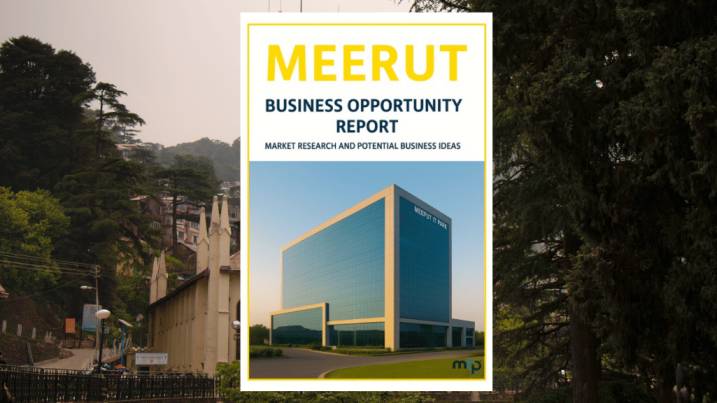
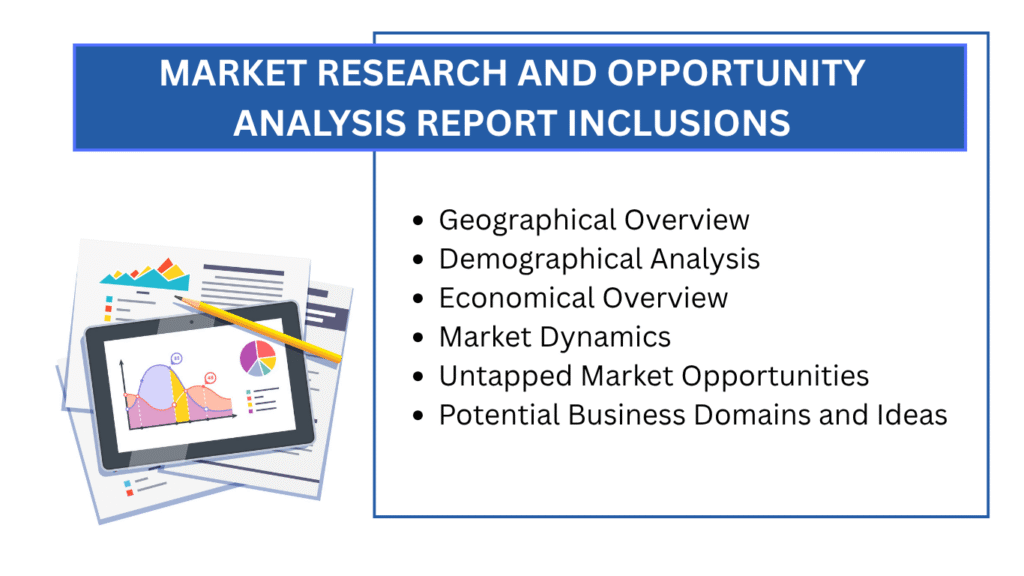
Starting a business without proper market research increases investment risks and uncertainty.
A professional Market Research & Opportunity Analysis Report helps entrepreneurs:
This enables informed decision-making and improves long-term business success.
Meerut offers opportunities in manufacturing, sports goods, engineering products, metal products, food processing, packaging, electrical goods, and MSME businesses.
Sports equipment, engineering products, metal components, electrical products, food processing, packaging, and other value-added manufacturing businesses can offer promising opportunities.
Key opportunity sectors include sports goods, engineering and metal manufacturing, food processing, packaging, electrical products, and other MSME-focused industries.
A Business Opportunity Report can help evaluate market demand, competition, investment requirements, infrastructure, industry potential, and suitable business ideas before making an investment decision.
Yes. The report provides market and industry insights that can help entrepreneurs shortlist business ideas, assess feasibility, understand investment potential, and plan their next steps.
Meticulous Business Plans (MBP) is global professional business planning company and delivered more than 5000 reports across the globe.
We have experience in working with clients from US, Europe, UK, Middle East, Africa & APAC.
Our team have fair understanding of global market across the industry & domain.
The world has become highly digitalized and information is available from multiple sources and this has created confusions about authenticity of the information and also it is not available at one place.
No. 401, Pushpak Business Hub, Wakad, Pune, MH 411057
Terms & Conditions | Privacy Policy | Cookie Policy | Disclaimer | © Meticulous Business Plan 2026
Powered by MappedSkills Marketing