
How Punjab’s industrial capital built on hosiery and bicycles is expanding into e-commerce, IT, and EVs – and where the real openings are for entrepreneurs right now.
Ludhiana carries a nickname earned over more than a century: the “Manchester of India.” It’s the country’s biggest bicycle manufacturing hub, the backbone of India’s woollen hosiery industry, and the largest city and industrial engine in Punjab. But the label undersells what’s happening here in 2026. Alongside its legendary knitwear mills and cycle factories, Ludhiana is now home to a growing IT and startup scene, an expanding e-commerce layer riding on its manufacturing base, and a bicycle industry actively pivoting toward EVs.
For entrepreneurs, that mix of deep industrial roots and new digital and export opportunity makes Ludhiana one of North India’s most underrated mid-size city markets.
Ludhiana’s scale is genuinely hard to overstate. It is the largest city and largest industrial hub in Punjab, the biggest city north of Delhi, and as of 2014 already accounted for 19.1% of Punjab’s total employment. Annual industrial output across the district exceeds ₹50,000 crore, supporting over 1 million direct jobs in manufacturing alone — numbers that put it in a different league from most Tier-2 Indian cities.
Hosiery and knitwear is the industry Ludhiana is best known for. The sector’s annual turnover exceeds ₹20,000 crore, and Ludhiana contributes at least 95% of the country’s woollen knitwear production. Roughly 85 to 90% of India’s entire woollen market demand is supplied out of Ludhiana, produced across more than 10,000 small and medium hosiery mills in the city. The Ludhiana Hosiery Export Promotion Council, established in 1973, continues to advocate for the sector, facilitate trade fairs, and support export capability — though the industry has faced real headwinds recently, with recent US tariffs disrupting exports and orders dropping significantly as of 2025.
Bicycles and cycle parts are Ludhiana’s other signature industry. The sector accounts for roughly 75% of India’s total bicycle production, and Hero Cycles, headquartered in the city, is the world’s largest bicycle manufacturer by volume. The industry runs an annual turnover of about ₹12,000 crore, with close to 90% of India’s bicycle production originating from Ludhiana and around ₹3,500 crore of that in exports — though industry leaders note India still exports only 75-80 lakh bicycles a year compared to China’s roughly 23 crore units, leaving real room to grow in markets like Europe if quality and design investment keep pace.
Beyond these two flagship sectors, the city’s industrial base is genuinely diversified. Ludhiana is home to over 1.5 lakh registered MSMEs, and unlike cities built around one dominant sector, it developed a multi-cluster economy spanning hosiery, engineering goods, bicycle manufacturing, auto components, and hand tools simultaneously — giving it a naturally diversified risk profile. Hand tools, fasteners, and sheet-metal units alone produce goods worth ₹400+ crore annually and form a critical part of India’s engineering export base, while the Gobind Nagar printing cluster generates ₹1,000 crore in annual output.
Ludhiana’s pivot toward technology is real, if still early-stage relative to its manufacturing scale. The city is no longer purely industrial — it’s emerging as a technology centre, with its thousands of enterprises, small stores, and big factories all needing websites, inventory software, and digital marketing to reach new markets, which is fueling demand for new IT companies. Ludhiana’s location also helps: strong road and rail connections and proximity to Chandigarh and Mohali make it easy for local IT firms to collaborate with larger corporations in those established tech hubs.
On the startup side, Ludhiana sits within the broader Chandigarh startup ecosystem, which ranks #163 globally and #11 in South Asia — modest by Bengaluru or Delhi standards, but a real and improving base. E-commerce and retail is currently the most active startup category in the city by website traffic, which tracks with the broader trend of the city’s manufacturers moving their products online.
The bicycle industry itself is undergoing a genuine strategic shift. The industry is moving toward electric bicycles and light EV components, targeting a $1.3 billion market by 2030, and manufacturers are asking for inclusion in PLI schemes and the PM e-Drive initiative to boost export competitiveness. For a founder, that pivot point — legacy manufacturing capability meeting a genuinely new product category — is one of the more interesting openings in the city right now.
Still the city’s largest industry by turnover; the opportunity lies in design-forward, export-ready product lines and diversifying export markets beyond the traditional ones now facing tariff pressure.
With the industry actively targeting a $1.3 billion EV/e-bike market by 2030, component suppliers, design and R&D services, and export-focused finishing businesses have real tailwind.
A steady, diversified ₹400+ crore segment with strong demand from India’s broader manufacturing and export base — a lower-risk entry point for ancillary and supply businesses.
Growing demand from the city’s own manufacturing base for websites, ERP/inventory tools, and digital marketing, aided by proximity to the established Chandigarh-Mohali tech corridor.
With rising internet and smartphone penetration, e-commerce has become a major growth driver for retail in Ludhiana, and several small businesses are already selling online – a trend expected to accelerate further, creating knock-on opportunities in logistics and delivery as well.
Established, well-run cloud kitchens are already changing hands in the city with strong growth potential — a sign of a maturing, investable food-business market.
Solar business opportunities are increasingly listed among the trending investment categories in the city, echoing the state’s broader push toward renewable energy and industrial sustainability.
Ludhiana’s dense manufacturing base, growing middle class, and improving digital infrastructure support several accessible entry points:
Most of these can realistically be started with a modest initial investment, making Ludhiana one of the more accessible major industrial cities in North India for a first business.
The scale of what’s already built here is a genuine advantage for a new founder. Ludhiana’s deep manufacturing tradition, combined with entrepreneurial energy, positions it as both Punjab’s industrial capital and a critical link in India’s global supply chains. With the Indian government’s continued focus on domestic manufacturing through initiatives like “Make in India,” and Ludhiana’s skilled labour force and established industrial infrastructure, the city is well-positioned to keep attracting both domestic and foreign investment – and the city’s position along the Delhi-Mumbai Industrial Corridor, a mega infrastructure project, adds a further structural advantage.
That means a new entrant isn’t building demand from scratch – they’re plugging into supply chains, a skilled labor pool, and export relationships that over a century of manufacturing have already established.
Starting a business without proper market research increases investment risks and uncertainty.
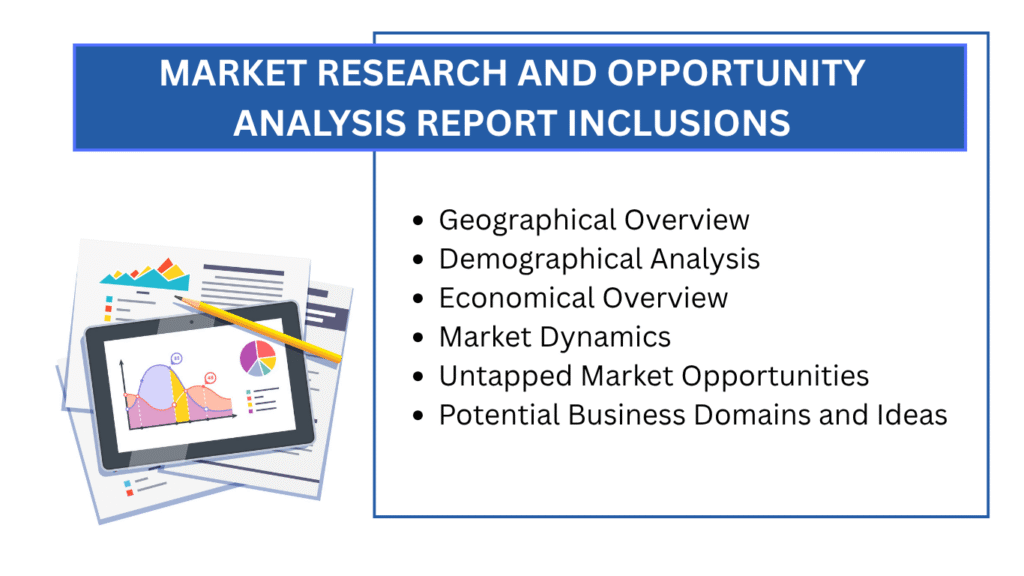
A professional Market Research & Opportunity Analysis Report helps entrepreneurs:
This enables informed decision-making and improves long-term business success.
Ludhiana offers opportunities in textiles and apparel, bicycle manufacturing, auto components, engineering goods, machine tools, food processing, packaging, and consumer products.
Key advantages include an established supplier network, availability of skilled and semi-skilled labor, strong industrial clusters, access to North Indian markets, and an experienced manufacturing ecosystem.
Entrepreneurs can explore opportunities in textiles, garments, bicycle components, auto parts, machinery, metal fabrication, packaging materials, food products, and industrial equipment.
Yes. Startups and MSMEs can leverage the city's industrial supply chains, manufacturing expertise, and access to a large regional market to develop scalable businesses.
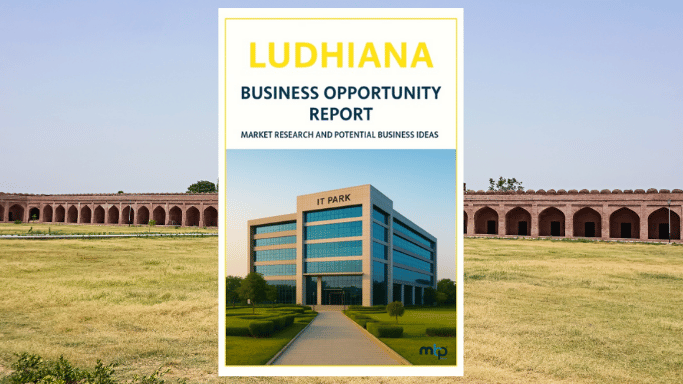
A Business Opportunity Report helps entrepreneurs evaluate market demand, industry trends, competition, investment requirements, location factors, potential business ideas, and feasibility before making an investment decision.
Meticulous Business Plans (MBP) is global professional business planning company and delivered more than 5000 reports across the globe.
We have experience in working with clients from US, Europe, UK, Middle East, Africa & APAC.
Our team have fair understanding of global market across the industry & domain.
The world has become highly digitalized and information is available from multiple sources and this has created confusions about authenticity of the information and also it is not available at one place.
No. 401, Pushpak Business Hub, Wakad, Pune, MH 411057
Terms & Conditions | Privacy Policy | Cookie Policy | Disclaimer | © Meticulous Business Plan 2026
Powered by MappedSkills Marketing