Meticulous Business Plans (MBP) is a global professional business planning company that has delivered more than 5000 reports across the globe.
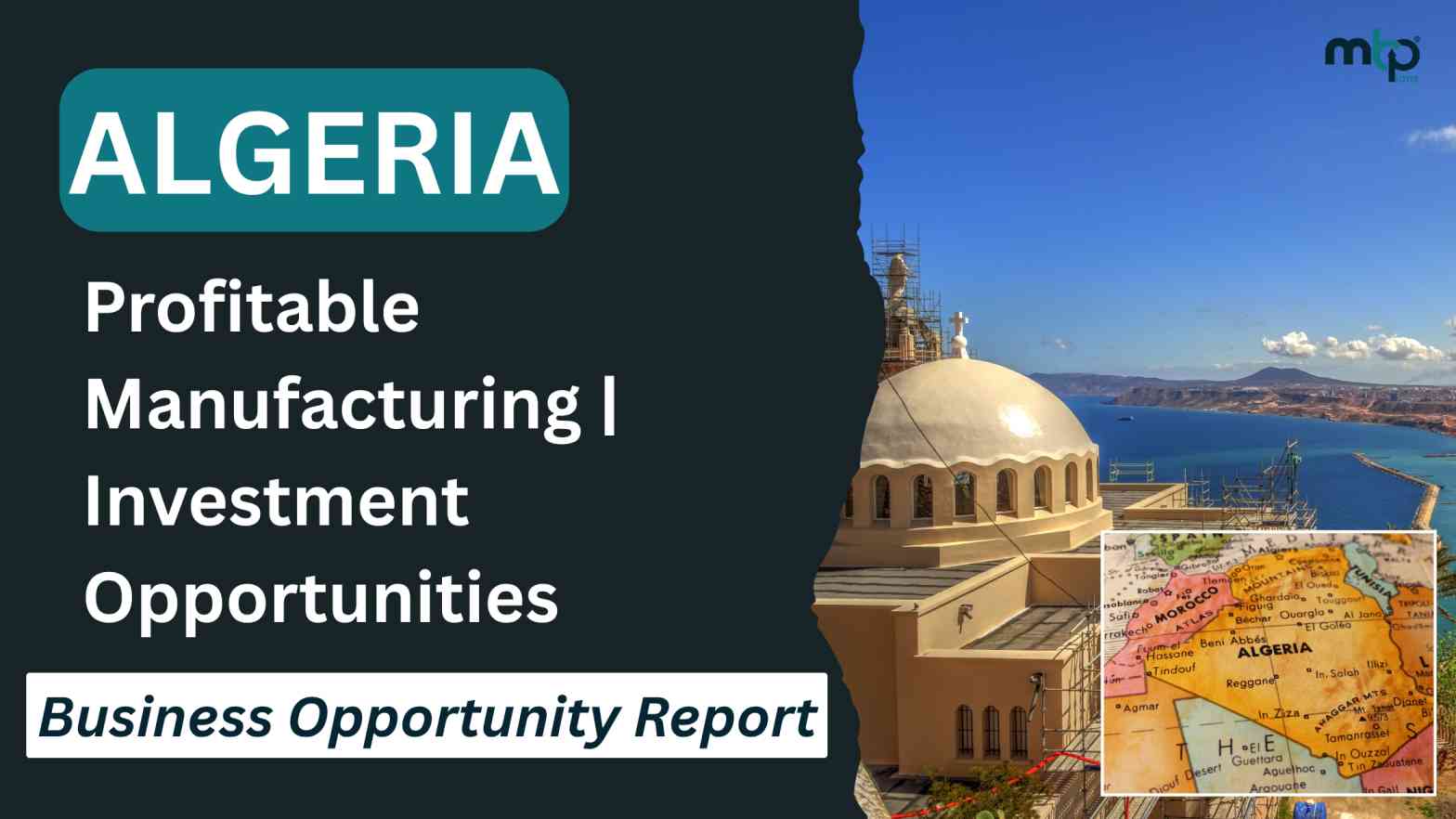
Our Expert’s team is working on the project of country market-entry research for Manufacturing Business Opportunities in Algeria, one of the most important growth markets within North Africa’s industrial and consumer goods sector, and the team has prepared Business Planning Reports on the title.
MBP expert’s team has studied the market for awareness, demand, and supply of manufacturing opportunities in Algeria, and wanted to share some helpful information about the project.
Algeria is Africa’s fourth-largest economy and the largest country by land area on the continent, with an estimated nominal GDP of USD 288.01 billion in 2025 and a real growth rate of 3.4%. Industry including manufacturing, construction, and hydrocarbons accounted for 37.8% of GDP in 2023, while services contributed 45.6% and agriculture 13.1%.
Algeria’s economy remains highly dependent on hydrocarbons, which represent close to 90% of total exports and roughly 60% of government revenue. To reduce this dependence, the government has launched the “Made in Algeria” import-substitution policy and the 2022 Investment Law, opening the door for full or majority foreign ownership across most manufacturing sectors and positioning manufacturing as a core pillar of long-term economic diversification.
Manufacturing investment opportunities in Algeria can be broken down into specific, investable sub-verticals within each priority sector, rather than treated as single broad categories:
Among these, automotive assembly and agro-food processing currently account for the largest share of announced foreign and joint-venture investment, driven by direct government incentives under the 2022 Investment Law and the “Made in Algeria” policy. Textiles and pharmaceutical API processing represent the clearest first-mover openings, given comparatively lower existing competitive density.
Algeria’s total inward FDI stock stood at USD 36.8 billion at the end of 2023, with net annual FDI inflows of USD 1.2 billion in 2023 (UNCTAD). Of this, manufacturing-directed FDI inflows were recorded at USD 133 million in 2023, against USD 829 million directed to extractive industries and USD 74 million to construction (Bank of Algeria) indicating substantial untapped headroom for manufacturing-focused capital relative to the hydrocarbon sector.
Algeria’s passenger car market alone is projected to reach a market volume of USD 3,628.0 million by 2029, growing at a CAGR of 1.46% between 2024 and 2029 (Statista), driven by a young, urbanizing population and rising disposable income among an expanding middle class.
Growth is further supported by rising hospital, retail, and construction demand for processed and packaged goods, expansion of the AAPI-facilitated investment pipeline, and continued government-backed infrastructure investment, including a new AfDB-financed railway connecting Algiers to resource-rich southern regions.
The 2022 Investment Law rolled back Algeria’s historical 51/49 local-ownership requirement (in place since 2009) for most non-strategic sectors, now permitting full or majority foreign ownership, alongside tax holidays, customs duty exemptions on production inputs, and investment credits. Industrial land is typically allocated via long-term lease (33 years, renewable twice) rather than outright sale, and all foreign investment is coordinated through the Agence Algérienne de Promotion de l’Investissement (AAPI).
With a large domestic consumer base of over 46 million people, proximity to European export markets across the Mediterranean, and government incentives specifically engineered to reward local production, Algeria represents a strategic and increasingly accessible manufacturing investment destination within North Africa.
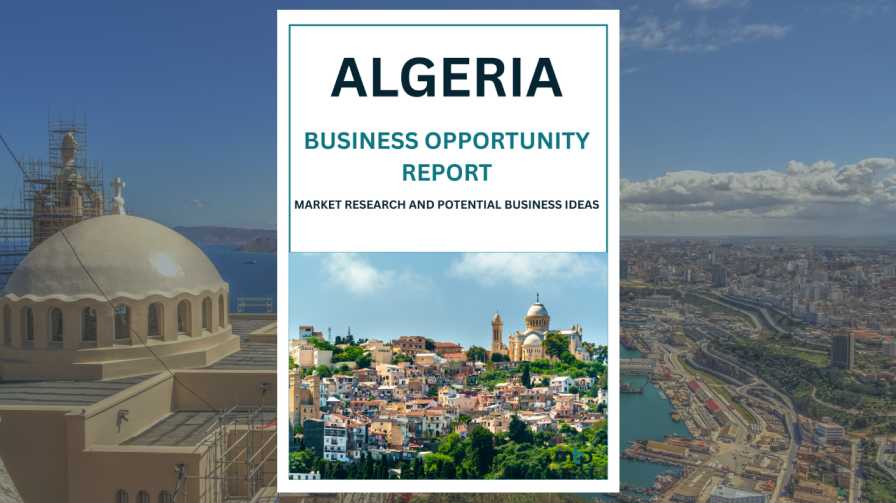
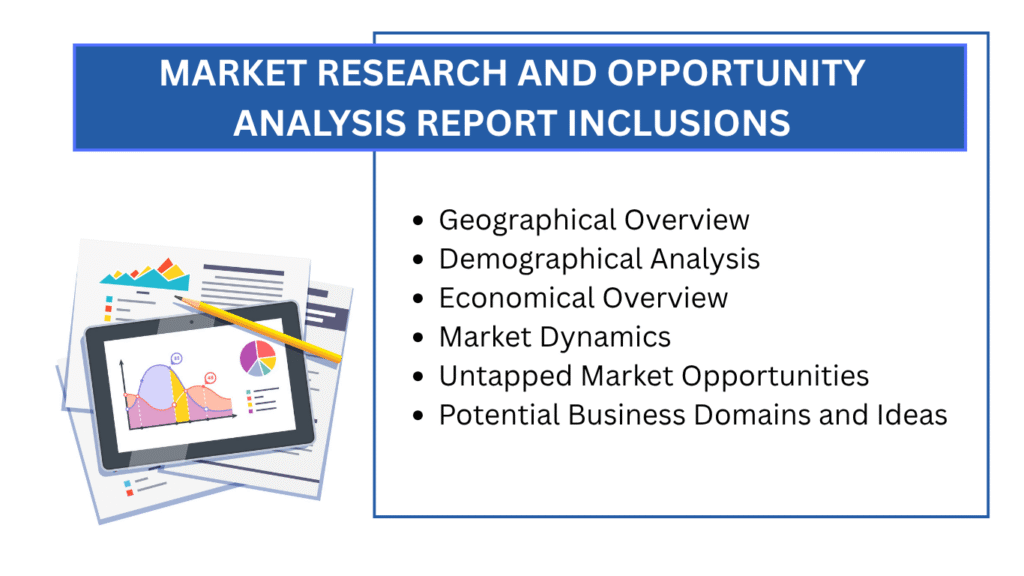
Starting a business without proper market research increases investment risks and uncertainty.
A professional Market Research & Opportunity Analysis Report helps entrepreneurs:
This enables informed decision-making and improves long-term business success.
Algeria offers a large domestic market, abundant natural resources, developing infrastructure, and opportunities across manufacturing, agriculture, energy, food processing, and services.
Key sectors include food processing, agriculture, pharmaceuticals, chemicals, construction materials, renewable energy, packaging, automotive components, and oil & gas-related industries.
Major advantages include access to natural resources, a large consumer market, strategic location in North Africa, developing industrial infrastructure, and opportunities to serve both domestic and regional markets.
Yes. Entrepreneurs can explore manufacturing opportunities in food products, pharmaceuticals, chemicals, packaging, construction materials, plastics, machinery, and consumer goods.
A Business Opportunity Report can help evaluate market demand, industry trends, competition, investment requirements, infrastructure, potential business ideas, and feasibility before entering the Algerian market.
Meticulous Business Plans (MBP) is global professional business planning company and delivered more than 5000 reports across the globe.
We have experience in working with clients from US, Europe, UK, Middle East, Africa & APAC.
Our team have fair understanding of global market across the industry & domain.
The world has become highly digitalized and information is available from multiple sources and this has created confusions about authenticity of the information and also it is not available at one place.
No. 401, Pushpak Business Hub, Wakad, Pune, MH 411057
Terms & Conditions | Privacy Policy | Cookie Policy | Disclaimer | © Meticulous Business Plan 2026
Powered by MappedSkills Marketing