₹59,000.00
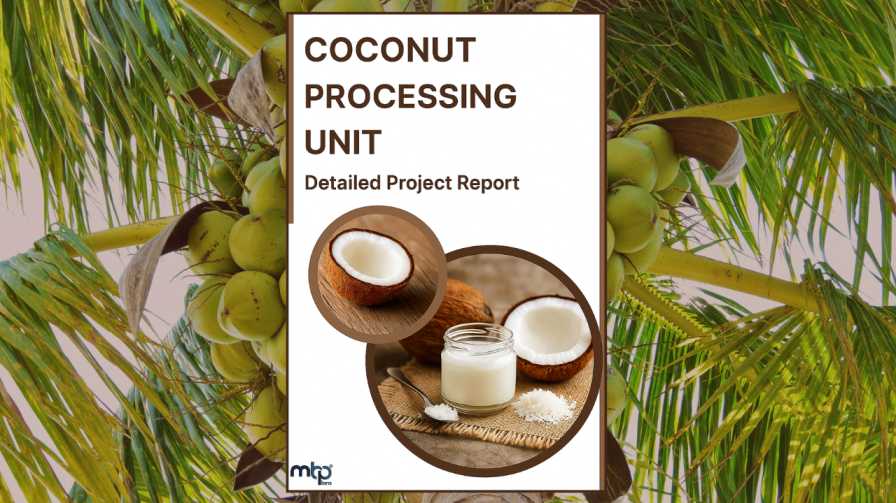
Build a Coconut Processing Business line with a bank-ready DPR or fund-ready Business Plan—market & pricing, material routes, process/ops design, compliance/claims guidance, and 5-year financials. Delivery: 12–15 working days.
📄 Download Free Sample Report →
Coconut processing refers to the conversion of fresh coconuts into a wide range of edible and industrial products through mechanical, thermal, and hygienic processing techniques while preserving nutritional value, flavor, and shelf stability. Coconut is a highly versatile agricultural commodity, and its processing enables efficient utilization of all parts of the nut, including kernel, water, shell, husk, and oil. Coconut processing plays a vital role in the food, cosmetic, pharmaceutical, and personal care industries due to its rich content of healthy fats, dietary fiber, minerals, and bioactive compounds.
Coconut processing units typically handle products such as coconut oil (virgin and refined), desiccated coconut, coconut milk and cream, coconut water, coconut powder, coconut chips, copra, coconut flour, and coconut-based confectionery ingredients. Depending on the product mix, coconuts are subjected to dehusking, deshelling, paring, washing, grinding, pressing, drying, filtration, and packaging operations. Advanced technologies such as cold pressing, centrifugal separation, spray drying, UHT processing, and aseptic packaging are increasingly used to improve product quality and shelf life.
Coconut processing can be broadly classified based on product category. Food-grade products include coconut oil, desiccated coconut, coconut milk, coconut water, coconut flour, and snacks. Industrial-grade products include copra, coconut shell charcoal, activated carbon, and coir-based by-products. Cosmetic and personal care applications use coconut oil, fatty acids, and derivatives in soaps, creams, shampoos, and skincare formulations. This wide application base ensures diversified revenue streams and reduces dependency on a single end market.
India is one of the largest producers of coconuts globally, providing strong raw material availability for coconut processing units. The growing demand for plant-based foods, lactose-free dairy alternatives, healthy cooking oils, and natural cosmetic ingredients has significantly increased the consumption of processed coconut products. Additionally, export demand for virgin coconut oil, coconut water, and desiccated coconut continues to rise in health-conscious global markets.
Growth Drivers
Market Size & Outlook
Global Market:
India Market:
Industry & Market
Product Portfolio & Processing Routes
Technical & Operations
QA/QC & Specifications
Financial Model (5 Years)
Implementation Plan
Is coconut processing a profitable business?
Yes. Coconut processing offers multiple product streams and strong export demand, improving profitability.
Can this business be started on a small scale?
Yes. It can begin with copra drying or oil extraction and expand into other products.
Is coconut processing seasonal?
Coconuts are available year-round, making this a stable, non-seasonal business.
What licenses are required?
An FSSAI license is mandatory. Exporters may require additional certifications.
Is cold storage required?
Cold storage is not mandatory for copra and oil but recommended for coconut milk and water.
Who are the main buyers?
Food companies, oil brands, cosmetic manufacturers, exporters, and bulk traders.
Does the DPR support bank loans and subsidies?
Yes. The DPR is bank-ready and suitable for MSME loans and food-processing subsidy schemes.
No. 401, Pushpak Business Hub, Wakad, Pune, MH 411057
Terms & Conditions | Privacy Policy | Cookie Policy | Disclaimer | © Meticulous Business Plan 2026
Powered by MappedSkills Marketing