
₹59,000.00
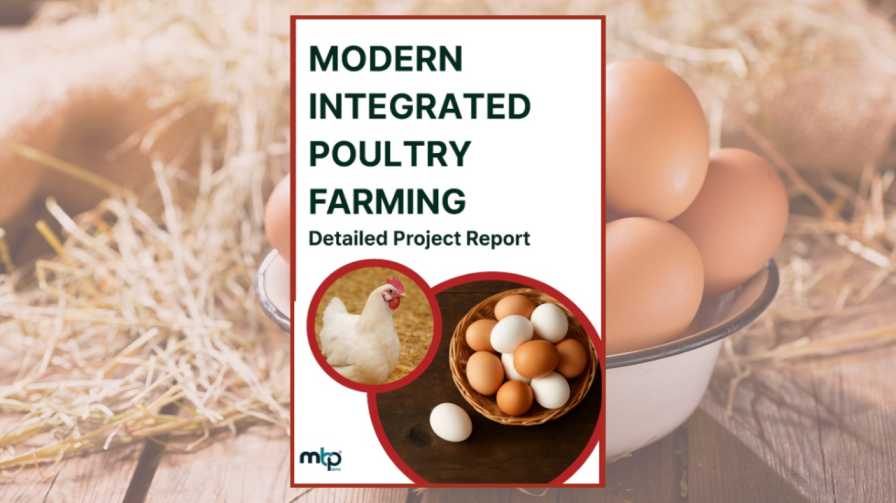
Build a vertically integrated poultry business with a bank-ready DPR or fund-ready Business Plan—covering market demand, biosecurity & ops design, cold chain, compliance, and 5-year financials. Delivery: 12–15 working days.
Modern integrated poultry farming refers to a scientifically managed livestock production system that combines multiple stages of poultry operations—such as breeding, hatchery operations, feed production, broiler or layer rearing, processing, and marketing under a single coordinated business model. Unlike traditional poultry farming, integrated poultry farming emphasizes biosecurity, automation, productivity optimization, animal welfare, and cost efficiency, making it a cornerstone of the organized meat and egg industry.
Integrated poultry farming covers both broiler production (meat birds) and layer production (egg-laying birds). Based on operation type, farms are classified into broiler integration systems, layer integration systems, breeder farms, hatchery units, and fully integrated operations that manage the entire value chain from feed to finished products. This model ensures uniform quality, predictable supply, reduced mortality, and better control over disease management and feed conversion ratios.
The farming process involves scientifically designed poultry sheds, climate-controlled housing, automated feeding and drinking systems, waste management systems, and health monitoring protocols. Advanced technologies such as environmental controllers, IoT-based farm monitoring, automated egg collection systems, precision feeding, and vaccination management systems are increasingly adopted to enhance productivity and reduce operational risks.
Modern integrated poultry farming supplies fresh and processed chicken meat, eggs, and value-added poultry products to households, hotels, restaurants, institutional buyers, food processors, and export markets. Poultry products are widely consumed due to their affordability, high protein content, faster production cycles, and lower carbon footprint compared to other animal proteins.
India is one of the world’s largest poultry producers, supported by strong domestic demand, rapid urbanization, rising disposable incomes, and increasing protein consumption. The shift from backyard poultry to organized, integrated farming models has significantly improved productivity, quality consistency, and export competitiveness in the sector.
Growth Drivers
Market Size & Outlook
Global Market:
India Market:
Option A — Detailed Project Report (DPR)
Bank-ready feasibility for a vertically integrated model:
Industry & Market: retail/HORECA demand, live vs processed, price bands, brand gaps
Value Chain Scope: breeder farms & hatchery, feed mill, broiler grow-out, slaughter/processing (chilled/frozen/cuts), cold chain & distribution, branded retail
Technical & Operations: shed layout & capacity planning, batch/cycle planning, biosecurity SOPs, water & waste handling, utilities, manpower, QA/QC, basic HACCP outline
Financial Model (5 years): capex & opex by module, throughput & yields, FCR/mortality assumptions framework, break-even, cash flow, sensitivity (feed price, capacity, realization)
Compliance & Risk: FSSAI & labeling for meat, slaughterhouse/municipal permissions, PCB norms, animal-welfare requirements, risk mitigations
Implementation Plan: phased rollout (modules), procurement timelines, KPIs, governance
Option B — Business Plan
Strategic, fund-ready plan for launch and scale:
Company & Offering: brand strategy (live/processed/cuts/value-added), SKU mix, pricing ladders
GTM & Channels: modern trade, HORECA, e-commerce/dark stores, distributor model, retail formats
Operations & Team: org chart, hiring roadmap, SOPs, capacity ramp-up, vendor strategy
Financial Forecasts (3–5 years): revenue model, unit economics, P&L, cash flow, scenarios
Growth & Risk Plan: milestones, city expansion, product extensions, mitigations
Format: PDF (print-ready). Editable Files available as add-on.
Is modern integrated poultry farming a profitable business?
Yes. Efficient production cycles, strong demand, and controlled costs make it a stable and scalable agribusiness.
What are the major end-use markets?
Households, hotels, restaurants, institutional catering, food processors, and export markets.
Are bank loans and funding options available?
Yes. The project reports support MSME loans, agriculture financing schemes, and private investment proposals.
What approvals are required?
Local animal husbandry permissions, pollution control approvals, biosecurity compliance, and food safety standards for processing units.

No. 401, Pushpak Business Hub, Wakad, Pune, MH 411057
Terms & Conditions | Privacy Policy | Cookie Policy | Disclaimer | © Meticulous Business Plan 2026
Powered by MappedSkills Marketing