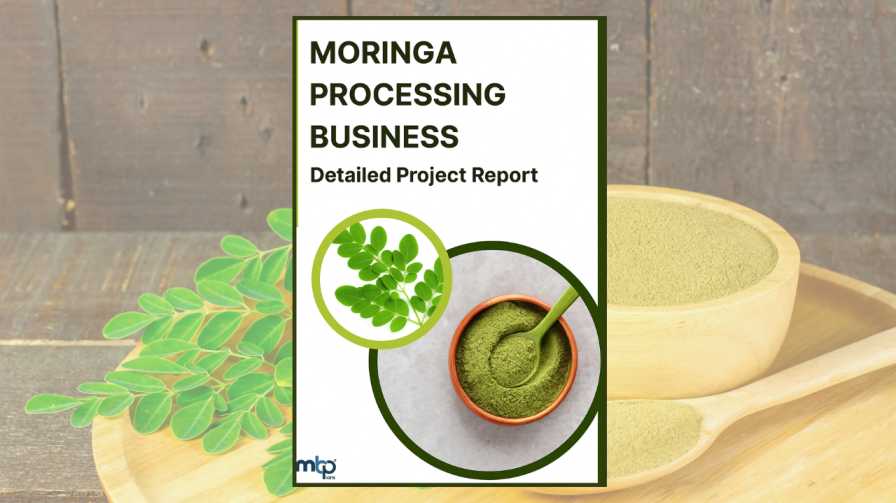
Moringa processing refers to the conversion of moringa leaves, pods, seeds, and flowers into value-added products such as moringa leaf powder, moringa capsules, tablets, extracts, tea, seed oil, and functional food ingredients. Moringa (Moringa oleifera), often referred to as the “miracle tree,” is widely recognized for its high nutritional density and medicinal properties. It is rich in proteins, vitamins, minerals, antioxidants, amino acids, and bioactive compounds, making it a highly valuable raw material for food, nutraceutical, pharmaceutical, cosmetic, and wellness industries.
Moringa products are extensively used in dietary supplements, functional foods, herbal medicines, immunity boosters, infant nutrition, animal feed, cosmetics, and traditional medicine systems. Based on product type, moringa processing includes leaf powder and flakes, standardized extracts, oil from moringa seeds (ben oil), capsules and tablets, herbal teas, and fortified food ingredients. The growing global shift toward plant-based nutrition, preventive healthcare, and natural supplements has significantly increased demand for moringa-based products.
Manufacturing of moringa products involves controlled harvesting, washing, shade or low-temperature drying, pulverization, sieving, extraction (if applicable), blending, and hygienic packaging. Advanced processing technologies such as low-temperature dryers, pulverizers, supercritical or solvent extraction systems, and encapsulation machines are increasingly adopted to preserve nutrient content and bioactive compounds. Strict quality control, microbial testing, and standardization are essential to meet domestic and export regulatory requirements.
India is one of the largest producers of moringa globally due to favorable agro-climatic conditions, low cultivation cost, and traditional usage. Strong availability of raw material, growing nutraceutical manufacturing capacity, and export demand from North America, Europe, and Asia-Pacific have positioned India as a strategic hub for moringa processing and exports.
Growth Drivers
- Rising global demand for plant-based and natural dietary supplements
- Increasing focus on immunity, preventive healthcare, and nutrition
- Expansion of nutraceutical, herbal, and functional food industries
- Growing use of moringa in cosmetics and personal care formulations
- Strong export demand for organic and standardized moringa products
- Government support for herbal and AYUSH-based products in India
Market Size & Outlook
Global Market:
- The global moringa products market size was estimated at USD 8,152.2 million in 2023 and is projected to reach USD 15,428.5 million by 2030, growing at a CAGR of 9.5% from 2024 to 2030. The growth is attributed to various factors, including increasing consumers awareness of its health and well-being.
India Market:
- The Moringa Products market size was estimated at 5.5 USD Billion in 2024. The Moringa industry is projected to grow from 6.006 USD Billion in 2025 to 14.48 USD Billion by 2035, exhibiting a compound annual growth rate (CAGR) of 9% during the forecast period 2025 – 2035.
-
Market & Demand — target customers (B2B/B2C), price bands, city/district demand cues
-
Competition & Pricing — product mixes (powder/oil/capsules), pack sizes, positioning gaps
-
Operations — process flow (drying/pulverizing/capsule filling or oil extraction), capacity plan, utilities
-
Financials — capex & opex ranges, break-even, cash flow, scenarios, funding needs
-
Compliance — FSSAI & labeling norms, pollution/health & safety, state incentives overview
-
Action Plan — 12-week setup roadmap, KPIs, and risk mitigations
Delivery: 12–15 working days from confirmed brief & payment.
Format: PDF (print-ready). Editable Files available as add-on.
Is moringa processing a viable business?
Yes. Strong demand from food, nutraceutical, cosmetic, and herbal medicine industries ensures long-term growth and scalability.
What are the major end-use industries?
Nutraceuticals, functional foods, pharmaceuticals, cosmetics, herbal medicines, animal feed, and export markets.
Are bank loans and funding options available?
Yes. The project reports are structured to support MSME loans, agri-processing finance, and investor funding proposals.
What approvals are required?
FSSAI registration, AYUSH compliance (for herbal products), factory license, pollution control approvals, and export certifications where applicable.