
₹59,000.00
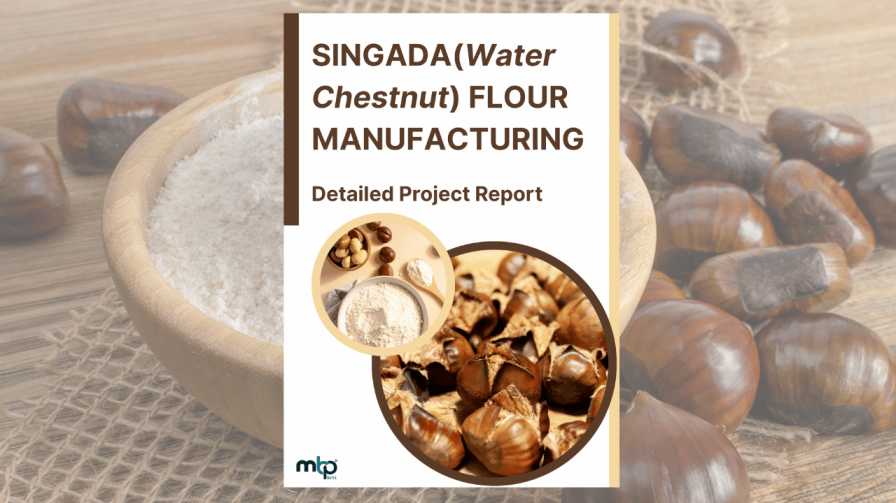
Build a Singhara Water Chestnut Flour Manufacturing line with a bank-ready DPR or fund-ready Business Plan—market & pricing, material routes, process/ops design, compliance/claims guidance, and 5-year financials. Delivery: 12–15 working days.
Singada, commonly known as water chestnut, is an aquatic crop obtained from Trapa natans and Trapa bispinosa and is widely consumed in fresh and processed forms. Singada flour (also called water chestnut flour) is a gluten-free, starch-rich ingredient traditionally used in Indian cooking, especially during fasting periods. In recent years, singada processing has gained importance due to rising demand for healthy, plant-based, and alternative flours. Singada flour is naturally gluten-free, low in fat, and rich in carbohydrates, dietary fiber, potassium, and essential minerals. It is widely used in flatbreads, snacks, sweets, batters, baby food formulations, and health-oriented food products. In processed form, singada is marketed as fresh peeled nuts, dried slices, flour, and ready-to-use packaged ingredients. Its suitability for people with gluten intolerance and preference for traditional foods has increased its acceptance in modern food markets. The growing demand for gluten-free foods, expansion of health-conscious consumer segments, and revival of traditional and fasting foods have significantly contributed to the rising demand for singada processing. India has a natural advantage due to widespread cultivation of singada in states such as Uttar Pradesh, Bihar, Madhya Pradesh, and parts of Eastern India, supported by strong domestic consumption and emerging export opportunities. Growth Drivers
Singada, commonly known as water chestnut, is an aquatic crop obtained from Trapa natans and Trapa bispinosa and is widely consumed in fresh and processed forms. Singada flour (also called water chestnut flour) is a gluten-free, starch-rich ingredient traditionally used in Indian cooking, especially during fasting periods. In recent years, singada processing has gained importance due to rising demand for healthy, plant-based, and alternative flours.
Singada flour is naturally gluten-free, low in fat, and rich in carbohydrates, dietary fiber, potassium, and essential minerals. It is widely used in flatbreads, snacks, sweets, batters, baby food formulations, and health-oriented food products. In processed form, singada is marketed as fresh peeled nuts, dried slices, flour, and ready-to-use packaged ingredients. Its suitability for people with gluten intolerance and preference for traditional foods has increased its acceptance in modern food markets.
The growing demand for gluten-free foods, expansion of health-conscious consumer segments, and revival of traditional and fasting foods have significantly contributed to the rising demand for singada processing. India has a natural advantage due to widespread cultivation of singada in states such as Uttar Pradesh, Bihar, Madhya Pradesh, and parts of Eastern India, supported by strong domestic consumption and emerging export opportunities.
Growth Drivers
Market Size & Outlook
Global Market:
The global market for gluten-free flours and alternative plant-based flours was valued at approximately USD 6.8 Billion in 2024 and is projected to grow at a CAGR of around 9%, driven by increasing dietary awareness and gluten intolerance trends. Singada flour represents a niche but steadily growing segment within this category.
The project reports provide detailed insights into:
These reports offer a comprehensive feasibility analysis along with suitable business models and structured implementation plans.
Kick-off (optional) — 45-min Expert Call add-on to align tech route, yields, and channel focus.
Research & Modeling — Market, CEA ops blueprint, and financials tailored to your plan.
Draft Delivery — Review together; 1st revision free.
Final Handover — DPR/Business Plan PDF (and Editable Files if selected).
DPR: ₹59,000 — Delivery: 12–15 working days
Business Plan: ₹59,000 — Delivery: 12–15 working days
Add-ons: Customization ₹3,500 · Expert Call ₹2,500 · Editable Files ₹4,500 · Extra Revisions ₹1,500 (first revision free)
Delivery Mode: Secure email/download link. Support: Email for clarifications.
Is singada processing a viable business?
Yes. The business benefits from steady domestic demand, seasonal peaks during fasting periods, and growing interest in gluten-free food products.
What are the major end-use products?
Singada flour, dried singada slices, fresh peeled singada, snacks, batters, and traditional food preparations.
Are bank loans and funding options available?
Yes. The project reports are bank-ready and suitable for MSME loans, food processing finance, and agri-based funding schemes.
What approvals are required?
Singada processing units require FSSAI registration, pollution control clearance, factory registration, and standard food safety compliance approvals.
No. 401, Pushpak Business Hub, Wakad, Pune, MH 411057
Terms & Conditions | Privacy Policy | Cookie Policy | Disclaimer | © Meticulous Business Plan 2026
Powered by MappedSkills Marketing