₹59,000.00
Build a Plant-based Meat Processing line with a bank-ready DPR or fund-ready Business Plan—market & pricing, material routes, process/ops design, compliance/claims guidance, and 5-year financials. Delivery: 12–15 working days.
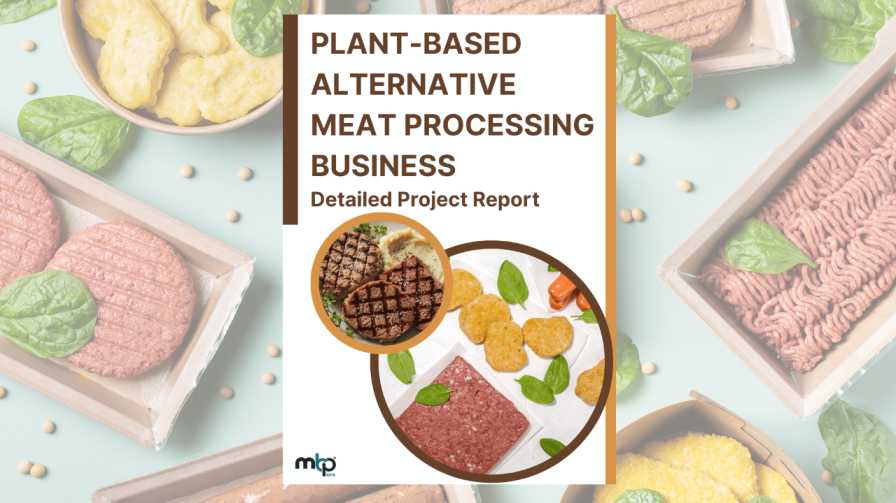
Plant-based alternative meat processing refers to the manufacturing of meat-like food products using plant-derived ingredients that replicate the taste, texture, appearance, and nutritional profile of conventional animal meat. These products are designed to serve as substitutes for meat while offering environmental, ethical, and health advantages. Plant-based meats are primarily produced using proteins extracted from soy, pea, wheat (gluten), chickpea, lentil, mung bean, and other plant sources, combined with natural fats, binders, flavors, and functional ingredients. The processing of plant-based meat involves protein extraction or isolation, hydration, blending, texturization, shaping, cooking, and packaging. Advanced food technologies such as extrusion cooking, shear-cell processing, and flavor encapsulation are widely used to create fibrous, meat-like textures. High-moisture extrusion technology plays a critical role in mimicking muscle fibers found in conventional meat products. Plant-based meat alternatives are available in multiple product forms including burger patties, sausages, nuggets, mince, kebabs, meatballs, strips, and ready-to-cook or ready-to-eat products. These products are extensively used in quick-service restaurants, retail food chains, frozen food segments, institutional catering, and home consumption. The growing concerns regarding climate change, greenhouse gas emissions, animal welfare, and health issues linked to excessive meat consumption have significantly accelerated the adoption of plant-based meat products. India, with its large vegetarian and flexitarian population, strong pulse production base, and evolving food processing ecosystem, presents a favorable environment for plant-based meat manufacturing. Globally, the demand is being driven by changing dietary habits, rising vegan and flexitarian populations, and innovation in food technology. Growth Drivers
This business is suitable for food processing companies, agri-food startups, MSMEs, protein ingredient manufacturers, quick-service restaurant suppliers, export-oriented units, and investors seeking high-growth opportunities in alternative protein and sustainable food sectors.
Plant-based alternative meat processing refers to the manufacturing of meat-like food products using plant-derived ingredients that replicate the taste, texture, appearance, and nutritional profile of conventional animal meat. These products are designed to serve as substitutes for meat while offering environmental, ethical, and health advantages. Plant-based meats are primarily produced using proteins extracted from soy, pea, wheat (gluten), chickpea, lentil, mung bean, and other plant sources, combined with natural fats, binders, flavors, and functional ingredients.
The processing of plant-based meat involves protein extraction or isolation, hydration, blending, texturization, shaping, cooking, and packaging. Advanced food technologies such as extrusion cooking, shear-cell processing, and flavor encapsulation are widely used to create fibrous, meat-like textures. High-moisture extrusion technology plays a critical role in mimicking muscle fibers found in conventional meat products.
Plant-based meat alternatives are available in multiple product forms including burger patties, sausages, nuggets, mince, kebabs, meatballs, strips, and ready-to-cook or ready-to-eat products. These products are extensively used in quick-service restaurants, retail food chains, frozen food segments, institutional catering, and home consumption.
The growing concerns regarding climate change, greenhouse gas emissions, animal welfare, and health issues linked to excessive meat consumption have significantly accelerated the adoption of plant-based meat products. India, with its large vegetarian and flexitarian population, strong pulse production base, and evolving food processing ecosystem, presents a favorable environment for plant-based meat manufacturing. Globally, the demand is being driven by changing dietary habits, rising vegan and flexitarian populations, and innovation in food technology.
Growth Drivers
Market Size & Outlook
Global Market:
The global plant-based meat market was valued at USD 7.17 billion in 2023 and is projected to reach USD 24.77 billion by 2030, exhibiting a strong CAGR of 19.4% from 2024-2030 due to rising consumer shift toward healthier and sustainable diets.
India Market:
The India plant-based meat alternatives market is estimated at USD 614.89 million in 2025 and expected to reach USD 999.33 million by 2030, growing at a CAGR of 10.2% (2025-2030) supported by urbanization, health trends, and rising vegan/vegetarian consumption.
The project reports provide detailed insights into:
These reports offer a comprehensive feasibility analysis along with scalable business models and structured implementation roadmaps.
Kick-off (optional) — 45-min Expert Call add-on to align tech route, yields, and channel focus.
Research & Modeling — Market, CEA ops blueprint, and financials tailored to your plan.
Draft Delivery — Review together; 1st revision free.
Final Handover — DPR/Business Plan PDF (and Editable Files if selected).
DPR: ₹59,000 — Delivery: 12–15 working days
Business Plan: ₹59,000 — Delivery: 12–15 working days
Add-ons: Customization ₹3,500 · Expert Call ₹2,500 · Editable Files ₹4,500 · Extra Revisions ₹1,500 (first revision free)
Delivery Mode: Secure email/download link. Support: Email for clarifications.
Is plant-based meat manufacturing a viable business?
Yes. The sector offers high growth potential due to rising demand for sustainable protein sources and continuous product innovation.
What are the major end-use segments?
Retail food products, quick-service restaurants, frozen foods, institutional catering, and export markets.
Are bank loans and funding options available?
Yes. Project reports are structured for MSME loans, venture funding, and strategic investment proposals.
What approvals are required?
FSSAI licensing, food safety compliance, labeling regulations, pollution control approvals, and export certifications (if applicable).
No. 401, Pushpak Business Hub, Wakad, Pune, MH 411057
Terms & Conditions | Privacy Policy | Cookie Policy | Disclaimer | © Meticulous Business Plan 2026
Powered by MappedSkills Marketing