₹59,000.00
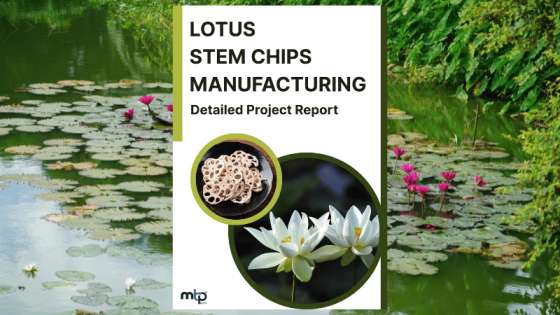
Build a Lotus Stem Chips Manufacturing line with a bank-ready DPR or fund-ready Business Plan—market & pricing, material routes, process/ops design, compliance/claims guidance, and 5-year financials. Delivery: 12–15 working days.
Lotus stem, commonly known as Kamal Kakdi, is an edible aquatic vegetable obtained from the rhizome of the lotus plant (Nelumbo nucifera). It is widely consumed in fresh and processed forms due to its crisp texture, dietary fiber content, and nutritional value. Processed lotus stem products—such as sliced, dried, frozen, pickled, and snack formats—are increasingly gaining popularity in modern food markets as healthy, plant-based food alternatives. Lotus stem is rich in dietary fiber, vitamin C, potassium, iron, and antioxidants, making it suitable for health-focused food products. In processed form, lotus stem is used in ready-to-cook vegetables, dehydrated ingredients, traditional snacks, fasting foods, and premium ethnic food products. Its naturally gluten-free and low-fat characteristics support its adoption in wellness-oriented and clean-label food segments. The rising demand for traditional foods in convenient formats, growth of healthy snacking, and increasing acceptance of plant-based diets have significantly contributed to the growing demand for lotus stem processing. India has a natural advantage due to availability of lotus cultivation in states such as Uttar Pradesh, Bihar, West Bengal, and parts of South India, along with strong domestic consumption and emerging export demand for ethnic food products. Growth Drivers
This project is suitable for entrepreneurs, MSMEs, food processors, agro-based manufacturers, snack producers, and export-oriented businesses looking to enter the processed vegetable and ethnic food segment. It is also relevant for investors seeking scalable opportunities in value-added food processing.
Lotus stem, commonly known as Kamal Kakdi, is an edible aquatic vegetable obtained from the rhizome of the lotus plant (Nelumbo nucifera). It is widely consumed in fresh and processed forms due to its crisp texture, dietary fiber content, and nutritional value. Processed lotus stem products—such as sliced, dried, frozen, pickled, and snack formats—are increasingly gaining popularity in modern food markets as healthy, plant-based food alternatives.
Lotus stem is rich in dietary fiber, vitamin C, potassium, iron, and antioxidants, making it suitable for health-focused food products. In processed form, lotus stem is used in ready-to-cook vegetables, dehydrated ingredients, traditional snacks, fasting foods, and premium ethnic food products. Its naturally gluten-free and low-fat characteristics support its adoption in wellness-oriented and clean-label food segments.
The rising demand for traditional foods in convenient formats, growth of healthy snacking, and increasing acceptance of plant-based diets have significantly contributed to the growing demand for lotus stem processing. India has a natural advantage due to availability of lotus cultivation in states such as Uttar Pradesh, Bihar, West Bengal, and parts of South India, along with strong domestic consumption and emerging export demand for ethnic food products.
Growth Drivers
Market Size & Outlook
The project reports provide detailed insights into:
These reports offer a comprehensive feasibility analysis along with suitable business models and structured implementation plans.
Kick-off (optional) — 45-min Expert Call add-on to align tech route, yields, and channel focus.
Research & Modeling — Market, CEA ops blueprint, and financials tailored to your plan.
Draft Delivery — Review together; 1st revision free.
Final Handover — DPR/Business Plan PDF (and Editable Files if selected).
DPR: ₹59,000 — Delivery: 12–15 working days
Business Plan: ₹59,000 — Delivery: 12–15 working days
Add-ons: Customization ₹3,500 · Expert Call ₹2,500 · Editable Files ₹4,500 · Extra Revisions ₹1,500 (first revision free)
Delivery Mode: Secure email/download link. Support: Email for clarifications.
Is lotus stem processing a viable business?
Yes. The business benefits from growing demand for healthy, ethnic, and plant-based food products with applications across fresh, processed, and snack food segments.
What are the major end-use products?
Fresh-cut lotus stem, dried slices, frozen lotus stem, lotus stem chips, pickles, and ready-to-cook products.
Are bank loans and funding options available?
Yes. The project reports are bank-ready and suitable for MSME loans, food processing finance, and agri-based funding schemes.
What approvals are required?
Food processing units require FSSAI registration, pollution control clearance, factory registration, and standard food safety compliance approvals.
No. 401, Pushpak Business Hub, Wakad, Pune, MH 411057
Terms & Conditions | Privacy Policy | Cookie Policy | Disclaimer | © Meticulous Business Plan 2026
Powered by MappedSkills Marketing