
₹59,000.00
Build a Lab Grown/Cultured Meat Production line with a bank-ready DPR or fund-ready Business Plan—market & pricing, material routes, process/ops design, compliance/claims guidance, and 5-year financials. Delivery: 12–15 working days.
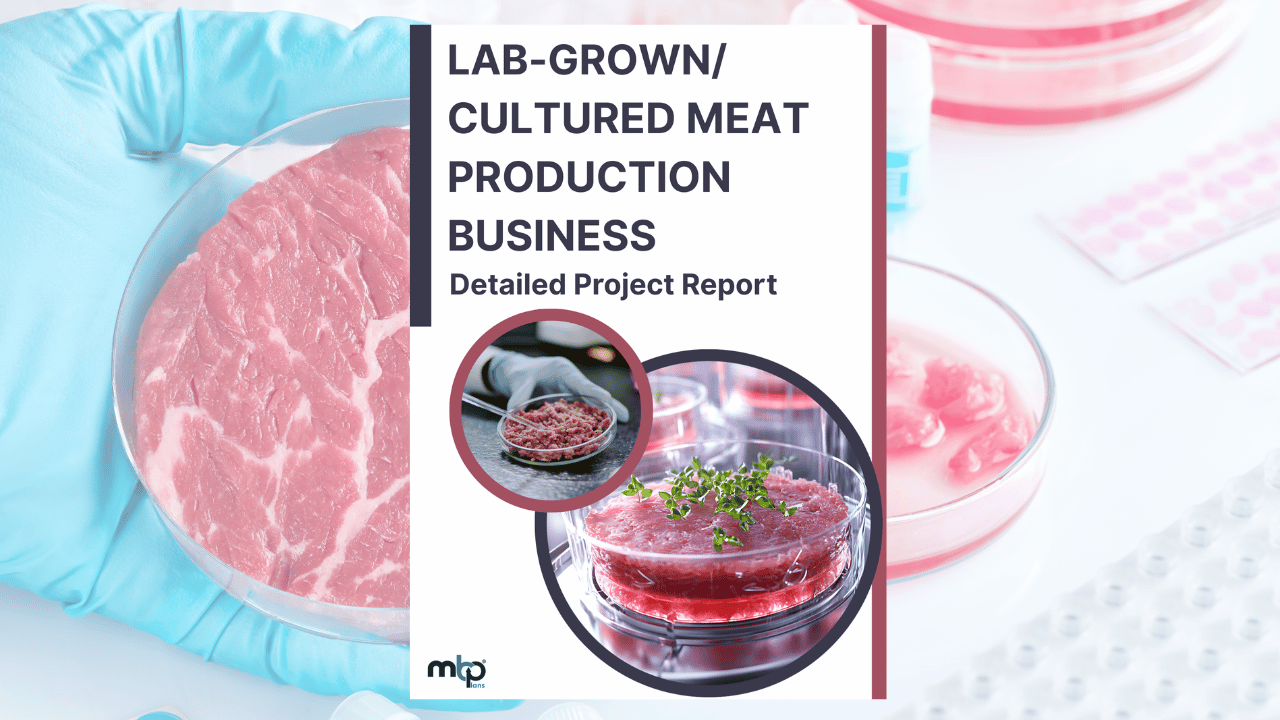
Lab-grown meat, also known as cultured meat or cell-based meat, is produced by cultivating animal cells in a controlled environment rather than through conventional livestock farming. This technology involves extracting animal stem cells and growing them in nutrient-rich culture media to form muscle tissue that replicates the structure, taste, and nutritional profile of conventional meat. Lab-grown meat represents a next-generation food innovation within the alternative protein and sustainable food technology sector. Cultured meat offers several advantages over traditional meat production, including reduced land and water usage, lower greenhouse gas emissions, and elimination of animal slaughter. It provides controlled nutrition, consistent quality, and enhanced food safety by minimizing exposure to antibiotics, pathogens, and zoonotic diseases. Lab-grown meat can be developed for various categories such as poultry, beef, pork, and seafood, making it adaptable across multiple dietary and culinary applications. The growing global concern over climate change, food security, animal welfare, and sustainability has significantly accelerated interest in lab-grown meat production. Increasing investment in food technology startups, rising acceptance of alternative proteins, and regulatory advancements are driving the commercialization of cultured meat. India is emerging as a potential future market due to rising protein demand, urbanization, and increasing focus on sustainable food systems, supported by research initiatives and policy-level discussions. Growth Drivers
Lab-grown meat, also known as cultured meat or cell-based meat, is produced by cultivating animal cells in a controlled environment rather than through conventional livestock farming. This technology involves extracting animal stem cells and growing them in nutrient-rich culture media to form muscle tissue that replicates the structure, taste, and nutritional profile of conventional meat. Lab-grown meat represents a next-generation food innovation within the alternative protein and sustainable food technology sector.
Cultured meat offers several advantages over traditional meat production, including reduced land and water usage, lower greenhouse gas emissions, and elimination of animal slaughter. It provides controlled nutrition, consistent quality, and enhanced food safety by minimizing exposure to antibiotics, pathogens, and zoonotic diseases. Lab-grown meat can be developed for various categories such as poultry, beef, pork, and seafood, making it adaptable across multiple dietary and culinary applications.
The growing global concern over climate change, food security, animal welfare, and sustainability has significantly accelerated interest in lab-grown meat production. Increasing investment in food technology startups, rising acceptance of alternative proteins, and regulatory advancements are driving the commercialization of cultured meat. India is emerging as a potential future market due to rising protein demand, urbanization, and increasing focus on sustainable food systems, supported by research initiatives and policy-level discussions.
Growth Drivers
Market Size & Outlook
Global Market:
Indian market:
The project reports provide detailed insights into:
These reports offer a comprehensive feasibility analysis along with suitable business models and structured implementation plans.
Kick-off (optional) — 45-min Expert Call add-on to align tech route, yields, and channel focus.
Research & Modeling — Market, CEA ops blueprint, and financials tailored to your plan.
Draft Delivery — Review together; 1st revision free.
Final Handover — DPR/Business Plan PDF (and Editable Files if selected).
DPR: ₹59,000 — Delivery: 12–15 working days
Business Plan: ₹59,000 — Delivery: 12–15 working days
Add-ons: Customization ₹3,500 · Expert Call ₹2,500 · Editable Files ₹4,500 · Extra Revisions ₹1,500 (first revision free)
Delivery Mode: Secure email/download link. Support: Email for clarifications.
Is lab-grown meat production a viable business?
Yes. While still emerging, the business has strong long-term potential driven by sustainability, ethical consumption, and global protein demand.
What are the major end-use applications?
Food service, retail meat products, ready-to-eat meals, and alternative protein formulations.
Are funding and investment opportunities available?
Yes. Projects are suitable for venture capital, strategic investors, government-backed innovation funds, and sustainability-linked financing.
What approvals are required?
Regulatory approvals related to food safety, biotechnology, and novel food standards are required and vary by country. Regulatory clarity is evolving globally.


No. 401, Pushpak Business Hub, Wakad, Pune, MH 411057
Terms & Conditions | Privacy Policy | Cookie Policy | Disclaimer | © Meticulous Business Plan 2026
Powered by MappedSkills Marketing