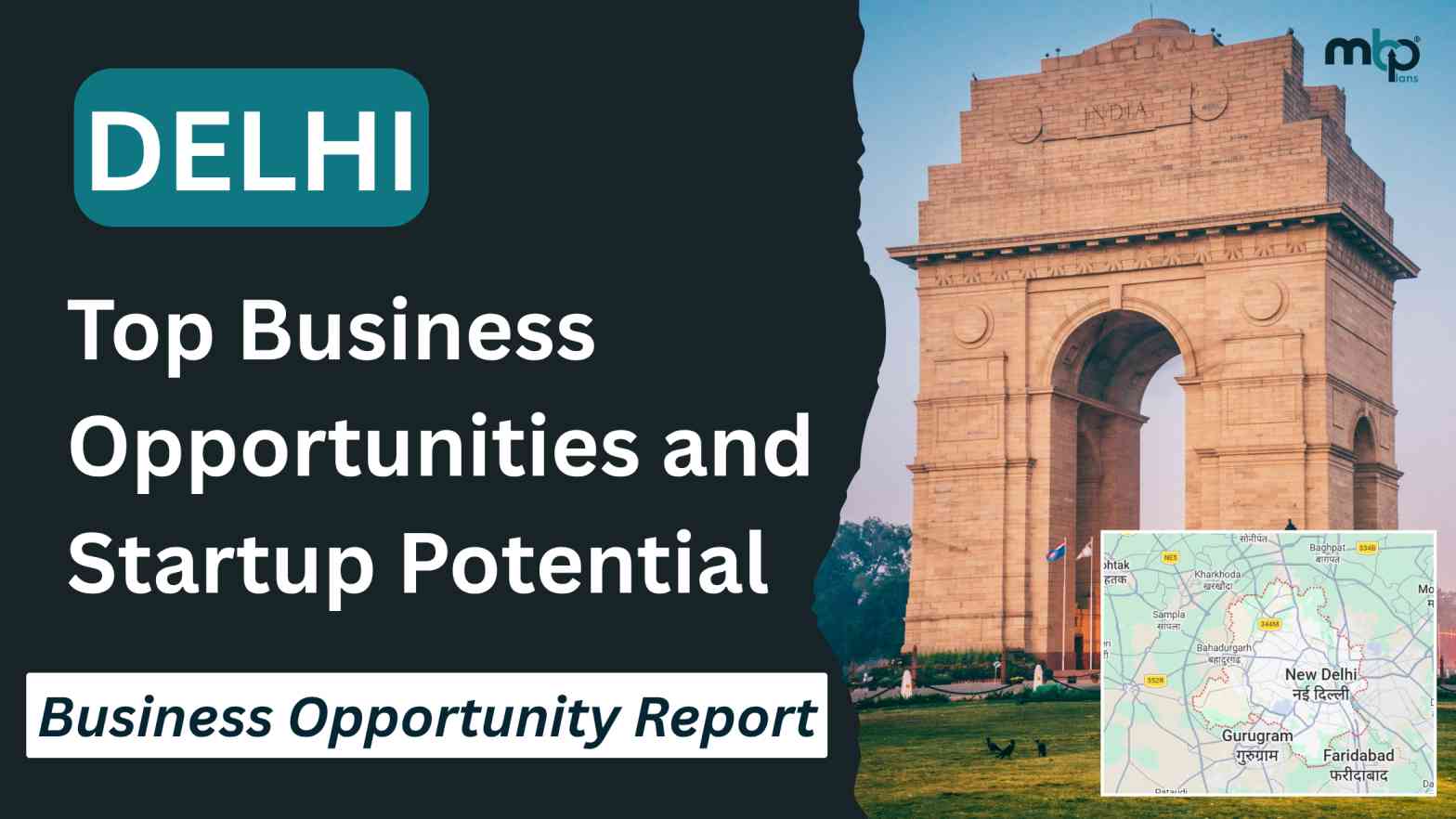
From street-food ventures to AI startups, here's a founder's guide to the sectors, funding, and policy support turning Delhi NCR into one of India's fastest-growing places to build a business.
Delhi has quietly become one of India’s most compelling places to start a business. It’s no longer just the seat of national government – it’s a commercial engine in its own right, competing head-to-head with Bengaluru and Mumbai for startup capital, talent, and attention. If you’re weighing whether to build a business here, this guide walks through why the city works, which sectors are hot, what it costs to get started, and how to actually go about it.
A few numbers explain the momentum. Delhi’s Gross State Domestic Product has climbed to roughly ₹11–12 lakh crore, with annual growth running near 9%, making it one of the fastest-growing urban economies in the country. The city is also punching above its weight in new company formation, with recent estimates putting its share of India’s new startup registrations anywhere from 10% to over 20% depending on the source and quarter measured. Either way, the direction is the same: more founders are choosing Delhi than they used to.
Three structural advantages keep showing up in why entrepreneurs pick the city:
Add to that Delhi NCR’s reach into satellite business districts – Gurugram, Noida, Faridabad, and Indirapuram – and you get a metro region that functions almost like several specialized business zones stitched together: Gurugram for corporate and finance, Noida for IT and manufacturing-adjacent work, and central Delhi for retail, trade, and government-facing business.
Delhi’s food culture is legendary, and that translates directly into business opportunity — cloud kitchens, quick-service restaurants, specialty cafés, and regional cuisine concepts all continue to do well. The advantage here is a built-in willingness among Delhiites to try new food concepts and pay for quality and experience, not just price.
Direct-to-consumer brands are one of the hottest categories in the broader Indian startup ecosystem right now, and Delhi NCR is a major hub for them – helped by access to logistics infrastructure, packaging vendors, and performance-marketing talent concentrated in the region.
Delhi NCR sits alongside Bengaluru as one of the country’s two or three primary startup hubs, and artificial intelligence, fintech, and SaaS are consistently named as the hottest sectors nationally in 2026. The Delhi government’s own startup policy explicitly prioritizes technology, AI, fintech, and deep-tech for support.
With companies like BharatPe having built significant scale out of the city, fintech remains a strong theme – payments, lending platforms, and transaction-banking infrastructure all have active players headquartered in Delhi.
Clean energy is one of the more surprising growth stories: firms in this space have attracted very large funding rounds, and the city’s startup policy specifically calls out clean energy and deep-tech as priority sectors going forward.
As e-commerce and D2C brands scale, the logistics layer underneath them – warehousing, last-mile delivery, fulfillment tech – has become a strong business category in its own right, benefiting from Delhi’s position as a national distribution hub.
Demand for skilling, test-prep, and vocational training remains strong in a market this large, and franchise models in this space continue to be a reliable entry point for new entrepreneurs.
Health and wellness services – clinics, diagnostics, home healthcare, and wellness franchises – are growing alongside rising consumer spending on health.
Delhi’s identity as a fashion and retail capital of North India supports everything from boutique retail to franchise fashion outlets.
Eco-friendly products and services are an emerging category, helped along by the government’s own push to simplify approvals for green industries.
Not every opportunity requires deep pockets. Some of the most accessible entry points in Delhi right now include:
Several of these can realistically be started with an investment as low as ₹50,000, making Delhi one of the more accessible major-city markets for first-time entrepreneurs.
A few developments are worth knowing about if you’re planning to launch soon:
Entrepreneurs establishing businesses in Delhi can benefit from various government initiatives, including:
These programs provide access to funding, credit guarantees, incubation support, skill development, and business mentoring.
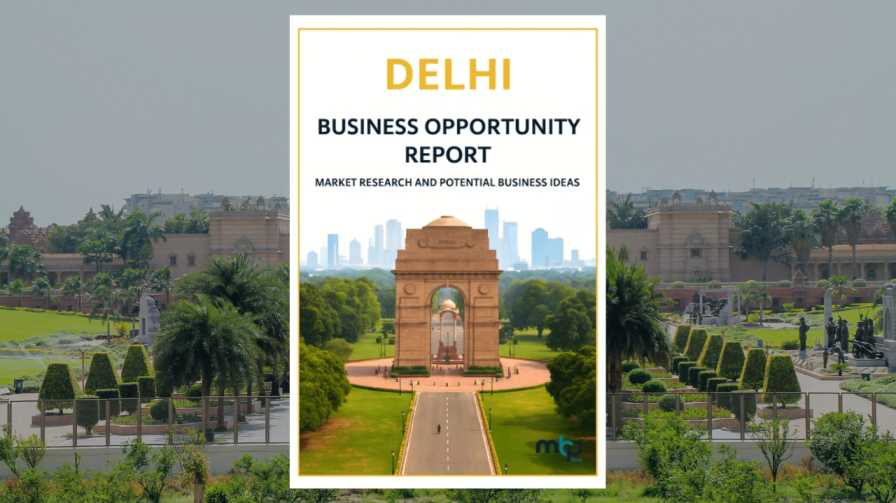
Starting a business without proper market research increases investment risks and uncertainty.
A professional Market Research & Opportunity Analysis Report helps entrepreneurs:
This enables informed decision-making and improves long-term business success.
Yes. Delhi offers one of India's largest consumer markets, excellent infrastructure, skilled talent, strong logistics, government support, and a vibrant startup ecosystem, making it an ideal destination for businesses across multiple sectors.
Food processing, pharmaceuticals, AI, fintech, manufacturing, renewable energy, healthcare, logistics, e-commerce, and digital services are among the fastest-growing sectors.
Investment varies by industry. Home-based businesses can begin with around ₹50,000, while manufacturing projects may require investments ranging from ₹25 lakh to several crores.
Entrepreneurs can benefit from Startup India, Delhi Startup Policy, PMEGP, Udyam Registration, Mudra Loans, CGTMSE, Stand-Up India, and SIDBI funding programs.
Delhi has firmly established itself as one of India’s premier destinations for entrepreneurship, innovation, and manufacturing. Its strategic location, extensive infrastructure, robust startup ecosystem, skilled workforce, and growing consumer market create exceptional opportunities for businesses across industries.
However, successful business ventures begin with informed planning. Conducting detailed market research, evaluating business opportunities, and preparing a professionally developed Detailed Project Report can significantly reduce risks while improving investment decisions.
Whether you are a first-time entrepreneur, an established manufacturer, or an investor exploring expansion opportunities, Delhi offers the right environment to build a sustainable and profitable business. Proper planning today can lay the foundation for long-term growth in one of India’s most dynamic business ecosystems.
No. 401, Pushpak Business Hub, Wakad, Pune, MH 411057
Terms & Conditions | Privacy Policy | Cookie Policy | Disclaimer | © Meticulous Business Plan 2026
Powered by MappedSkills Marketing