

Meticulous Business Plans (MBP) is a global professional business planning company that has delivered more than 5000 reports across the globe.
Our Expert’s team is working on the project of setting up an Organic Biopesticides and Fertilizers, one of the most important segments within the food additives and specialty chemicals industry and the team has prepared Business Planning Reports on the title.
MBP expert’s team has studied the market for awareness, demand, and supply of Organic Biopesticides and Fertilizers products, and wanted to share some helpful information about the project.
India Is Rewriting Its Farming Story and Biopesticides Are at the Centre of It
Here’s a number that tells you everything: India uses 626 grams of pesticide per hectare of agricultural land and the toxic residues show up in our soil, our water, and our food. The cost isn’t just environmental. In 2024, India’s food exports faced rejections worth crores because residue levels exceeded importing countries’ limits.
The response? India is now aggressively pivoting toward biological alternatives and the biopesticides and bio-fertilisers manufacturing sector is one of the most exciting places to be right now.
Biopesticides are pest control agents derived entirely from natural sources — microorganisms, plant extracts, and beneficial organisms — rather than synthetic chemicals. They work by targeting specific pests while leaving beneficial insects, soil microbes, and the broader ecosystem intact.
Together, these products form the backbone of natural and organic farming a system that India is now investing in at scale.
The Policy Push That Changes Everything
In November 2024, the Union Cabinet approved the National Mission on Natural Farming with a budget of Rs. 2,481 crores. This mission targets chemical-free farming across 15,000 clusters, reaching 1 crore farmers and covering 7.5 lakh hectares, while establishing 10,000 Bio-input Resource Centres.
That’s not a small pilot. That’s a structural transformation of Indian agriculture and it needs a massive supply of biopesticides and biofertilisers to execute.
On top of that, the Paramparagat Krishi Vikas Yojana (PKVY) continues to provide direct subsidies to farmers converting to organic practices. FSSAI’s stricter pesticide residue standards for food exports are pushing even conventional farmers toward biological inputs for export-oriented crops like basmati rice, spices, and grapes.
India’s biopesticides market was valued at USD 247.01 million in 2025 and is projected to grow to USD 537.24 million by 2033, at a CAGR of 10.2%.
Zooming out to the full agricultural biologicals picture: the India agricultural biologicals market (covering biofertilisers, biopesticides, and biostimulants) was valued at USD 573.85 million in 2024 and is projected to grow from USD 652.50 million in 2025 to USD 1,646.03 million by 2032, at a CAGR of 14.13%.
That 14.13% CAGR is not small. That’s nearly triple the growth rate of India’s overall economy.
Bioinsecticides are projected to grow at a CAGR of 10.6%, representing the leading innovation engine in the sector. Row crops (rice, wheat, maize) accounted for 88.6% of the Indian biopesticides market in 2024.
The fruits and vegetables segment is particularly promising. The fruits and vegetables segment by crop type is gaining traction and is anticipated to expand at a CAGR of 10.7% through 2034 driven by export compliance requirements and premium organic pricing.
It comes down to three things: regulation, money, and soil health.
Regulation: India’s Central Insecticides Board (CIB&RC) has been tightening approvals for new synthetic pesticides while fast-tracking biopesticide registrations under the BioRRAP system. Faster BioRRAP registrations shorten time-to-market, encouraging smaller manufacturers to launch proven microbial strains.
Money: Export-oriented farmers growing basmati, spices, grapes, or pomegranates earn significant price premiums with organic certification making the higher per-acre cost of biopesticides commercially rational.
Soil Health: Decades of chemical fertiliser overuse have degraded India’s agricultural soils. Biofertilisers restore microbial populations, improve soil structure, and reduce input costs over time making them economically compelling for small and marginal farmers.
Biopesticide production is a fermentation-based process — not unlike brewing, but with microorganisms instead of yeast:
Biofertiliser production follows a similar path, with additional carrier-material mixing (peat, vermiculite, or liquid carriers) for packaging as soil inoculants.
Regulatory registration with CIB&RC is mandatory before commercial sale. Compliance with the Insecticides Act, 1968, BIS standards for biofertilisers, and GMP guidelines defines the quality framework.
This is rare in manufacturing a business where social impact and commercial return are fully aligned. You’re not just making money; you’re helping restore soil health, reducing farmer health risks from chemical exposure, helping India meet its organic export targets, and contributing to climate resilience.
Key players already in the space include Coromandel International, IPL Biologicals, T. Stanes & Company, Biostadt India, Multiplex Group, and Agri Life, alongside a growing ecosystem of agritech startups like BioPrime (which raised $6 million in Series A funding in October 2024).
Estimated investment: INR 1 crore to INR 10 crore, depending on fermentation capacity, product range, and whether you target biopesticides, biofertilisers, or both.
If you want to build a business that the government is actively supporting, the market is pulling toward, and the farmer desperately needs this is it.
In these reports, we have analysed and explained the business opportunity for Organic Biopesticides and Fertilizers manufacturing unit and it can become a profitable and sustainable business if executed with proper planning, technology selection, and market strategy.
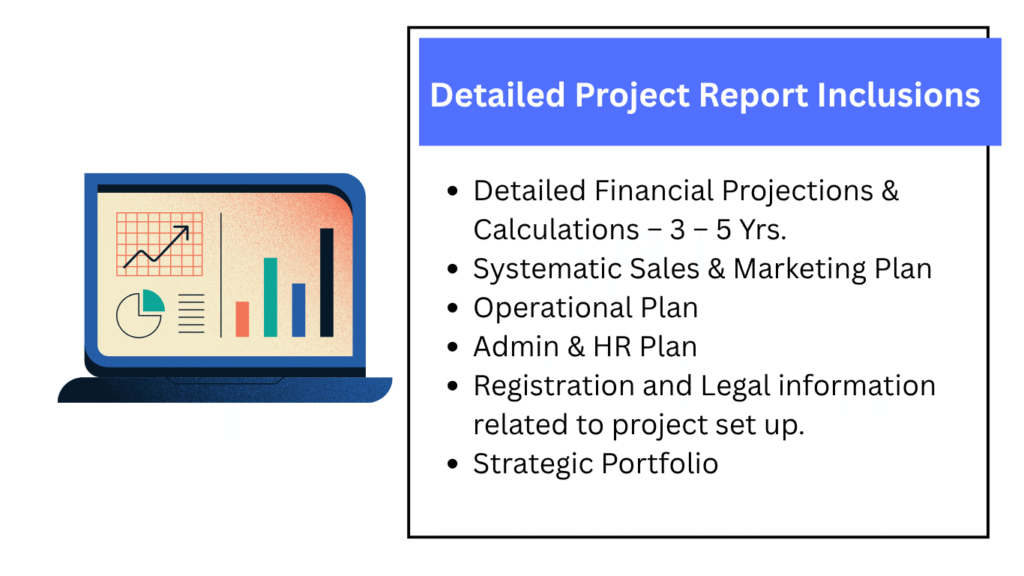
The Business Planning Reports on Organic Biopesticides and Fertilizers manufacturing unit, Business will help you in understanding the Industrial Overview, Market Feasibility, Technical Feasibility, Legal Feasibility, Sales Feasibility, Infrastructure Feasibility, etc. Also, emphasis on Market Position, Demand, Market Size, Statistics, Market Dynamics and Trends. These reports provide a comprehensive business feasibility analysis; Types of Business Models, and Business Plan, which helps you to decide to start up a business.
Meticulous Business Plans (MBP) is global professional business planning company and delivered more than 5000 reports across the globe.
We have experience in working with clients from US, Europe, UK, Middle East, Africa & APAC.
Our team have fair understanding of global market across the industry & domain.
The world has become highly digitalized and information is available from multiple sources and this has created confusions about authenticity of the information and also it is not available at one place.
No. 401, Pushpak Business Hub, Wakad, Pune, MH 411057
Terms & Conditions | Privacy Policy | Cookie Policy | Disclaimer | © Meticulous Business Plan 2026
Powered by MappedSkills Marketing