Home / Agriculture Technology / Organic Biopesticides and Fertilizers Production – DPR

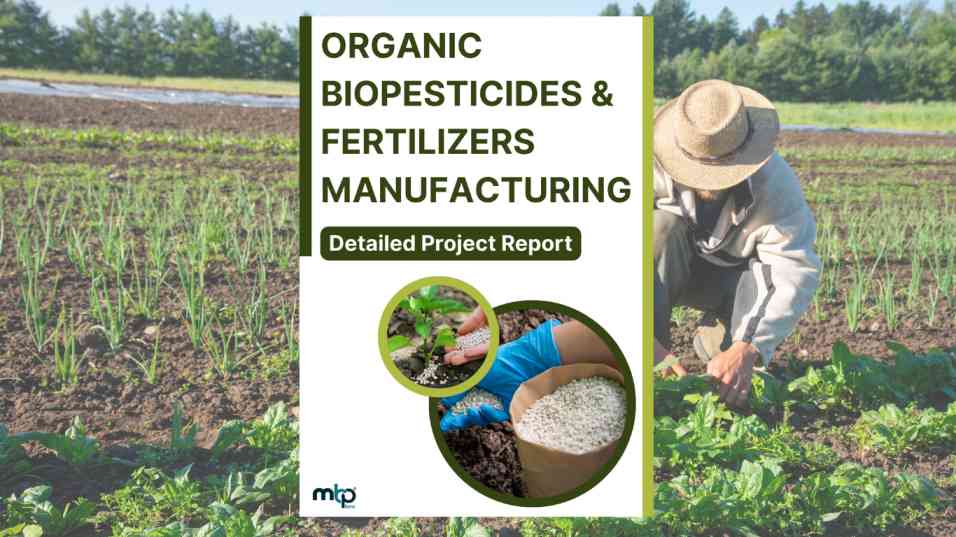
Organic Biopesticides and Fertilizers Production - DPR

59,000.00

Short Description

Build an Organic Biopesticides and Fertilizers Manufacturing line with a bank-ready DPR or fund-ready Business Plan—market & pricing, material routes, process/ops design, compliance/claims guidance, and 5-year financials. Delivery: 12–15 working days.

Detailed Description

India's agricultural input industry is undergoing its most consequential transformation in six decades a structural shift away from synthetic chemical dependency toward biologically derived, environmentally sustainable crop protection and soil fertility solutions. At the centre of this transformation is the organic biopesticides and biofertilizers manufacturing sector: a high-growth, policy-supported, and commercially compelling agri-input business segment that is simultaneously delivering farmer welfare, environmental benefits, and institutional investor returns. Meticulous Business Plans presents this investor-grade project report for entrepreneurs, agri-biotech professionals, and institutional investors evaluating this sector's strong commercial and impact-aligned fundamentals.

Product and Industry Overview Biopesticides are pest control formulations derived from natural sources microorganisms, plant extracts, and naturally occurring biochemical compounds that protect crops from insect pests, fungal diseases, bacterial pathogens, nematodes, and invasive weeds without the residue, resistance, or toxicity concerns associated with synthetic agrochemicals. Unlike conventional pesticides that offer broad-spectrum chemical control, biopesticides operate through targeted biological mechanisms disrupting pest growth cycles, colonising plant surfaces to exclude pathogens, or triggering the plant's own immune responses.

Biofertilisers are preparations of living microorganisms that, when applied to seed, soil, or plant surfaces, colonise the rhizosphere and enhance nutrient availability through biological nitrogen fixation, phosphate solubilisation, or potassium mobilisation reducing the need for energy-intensive synthetic fertiliser inputs and restoring soil microbial ecosystem health.

The global biopesticide market size was valued at USD 8.928 billion in 2025 and is expected to reach USD 23.97 billion by 2034, exhibiting a CAGR of 11.6% from 2026 to 2034, driven by rapidly expanding organic farming, government-imposed restrictions on chemical pesticides, and growing consumer demand for residue-free produce.

Product Classification Biopesticides are classified across four primary categories:

Category Key Organisms / Agents Target Pest/Disease
Bioinsecticides Bacillus thuringiensis (Bt), Beauveria bassiana, Metarhizium anisopliae Lepidopteran borers, sucking pests, termites
Biofungicides Trichoderma harzianum, Bacillus subtilis Soil-borne and foliar fungal pathogens
Bioherbicides Microbial phytopathogens, plant extracts Invasive weeds with crop selectivity
Biochemical Pesticides Neem (Azadirachtin), pheromone lures, plant oils Broad pest management and mating disruption
  Biofertilisers are classified by nutrient function:
Type Key Organisms Nutrient Function
Nitrogen-Fixing Rhizobium, Azotobacter, Azospirillum Atmospheric nitrogen fixation
Phosphate-Solubilising (PSB) Pseudomonas, Bacillus megaterium Soil phosphorus unlocking
Potassium-Mobilising Frateuria aurantia Potassium mineral dissolution
Mycorrhizal Inoculants AM fungi Nutrient and water uptake enhancement
  Manufacturing Process Overview Biopesticide and biofertiliser production is a fermentation-based bioprocess executed across well-defined stages:
  • Strain Procurement and Culture Maintenance: Certified microbial strains sourced from IMTECH, NCIM, or proprietary culture banks; maintained on agar slants or in cryogenic storage
  • Seed Culture Preparation: Inoculation into shake flasks for culture activation and multiplication
  • Primary Fermentation: Scale-up in stainless-steel bioreactors (50-5,000 litres) using submerged fermentation (SF) for liquid biopesticides and biofertilisers, or solid-state fermentation (SSF) for powder-based products
  • Downstream Processing: Centrifugation to concentrate biomass; filtration to remove spent media and impurities
  • Formulation: Blending into carrier materials talc, vermiculite, peat, or liquid concentrates for biofertilisers; wettable powder (WP), suspension concentrate (SC), or granule (GR) formulations for biopesticides
  • Quality Assurance: Microbial count verification (CFU/g or CFU/ml), shelf-life stability testing, heavy metal screening, and pathogen-absence confirmation
  • Packaging and Labelling: HDPE bottles, aluminium foil sachets, or woven bags with CIB&RC-compliant labelling and application instructions
The regulatory framework includes CIB&RC registration under the Insecticides Act, 1968 for biopesticides, and Fertiliser Control Order (FCO) compliance for biofertilisers. NPOP certification is required for products marketed for certified organic farming systems.

Applications
  • Row Crop Protection: Bioinsecticide and biofungicide application in rice, wheat, maize, and cotton farming the dominant consumption segment
  • Horticulture and Spice Crops: Biopesticide use in export-oriented crops (grapes, pomegranate, spices) to meet importing country Maximum Residue Limits (MRLs)
  • Organic Farming: Sole-input crop protection and fertility management in NPOP-certified organic farming operations
  • Integrated Pest Management (IPM): Combined use with conventional inputs to reduce chemical load while maintaining yield protection
  • Seed Treatment: Biofertilizer inoculant coating on seeds before sowing for early-season nutrient establishment
  • Soil Application: Biofertilizer incorporation into soil pre-planting for microbiome restoration in degraded agricultural land

Growth Drivers
  • In November 2024, the Union Cabinet approved the National Mission on Natural Farming with a budget of Rs 2,481 crore, targeting chemical-free farming across 15,000 clusters, reaching 1 crore farmers, and establishing 10,000 Bio-input Resource Centres.
  • The India agricultural biologicals market is projected to grow from USD 652.50 million in 2025 to USD 1,646.03 million by 2032, at a CAGR of 14.13%.
  • Stricter FSSAI pesticide residue regulations for domestic food and tightening MRL enforcement in export destination markets
  • Faster BioRRAP registrations shortening time-to-market, encouraging smaller manufacturers to launch proven microbial strains.
  • Rising organic farmland area growing at 18.2% CAGR (2018–2023), directly expanding the captive user base
  • Growing venture capital interest BioPrime secured $6 million Series A in October 2024 for bio-fungicide and bio-insecticide development
  • PMFME and Agriculture Infrastructure Fund (AIF) providing capital access to small-scale bio-input producers

Market Size and Global Outlook
The global biopesticide market was valued at USD 8.928 billion in 2025 and is projected to reach USD 23.97 billion by 2034, at a CAGR of 11.6%. India's biopesticides market was valued at USD 247.01 million in 2025 and is projected to grow to USD 537.24 million by 2033, at a CAGR of 10.2%. The broader agricultural biologicals market further contextualises the opportunity: the India agricultural biologicals market was valued at USD 573.85 million in 2024 and is projected to reach USD 1,646.03 million by 2032, at a CAGR of 14.13%. Gross profit margins for biopesticide manufacturing typically range between 35-45%, with a well-defined break-even trajectory.

India Market India presents the most favourable market conditions globally for biopesticide and biofertiliser manufacturing. The country's National Mission on Natural Farming, PLI support, PKVY subsidies, and APEDA-backed organic export framework collectively create both demand pull and supply-side incentives. Row crops (rice, wheat, and maize) accounted for 88.6% of the Indian biopesticides market in 2024, while bioinsecticides are projected to grow at a CAGR of 10.6%, representing the leading innovation engine. Key manufacturing hubs include Andhra Pradesh, Gujarat, Maharashtra, Karnataka, and Tamil Nadu states with established agrochemical infrastructure, skilled fermentation technicians, and proximity to major agricultural consumption zones.

Target Customers
  • Organic and natural farmers across certified and transitioning farmlands
  • Export-oriented horticulture farmers (grapes, spices, basmati rice, pomegranate)
  • Agricultural input dealers and cooperative networks
  • State government procurement agencies under PKVY and NMSA schemes
  • Agri-input distributors serving Andhra Pradesh, Telangana, Karnataka, and Maharashtra
  • Bio-input resource centres established under the Natural Farming Mission
  • Export buyers of certified organic biopesticide formulations in Europe and North America

This project is suitable for sugar mills, grain processors, chemical manufacturers, renewable energy companies, MSMEs, agribusiness groups, and investors seeking entry into large-scale biofuel and green energy projects.

Description

India’s agricultural input industry is undergoing its most consequential transformation in six decades a structural shift away from synthetic chemical dependency toward biologically derived, environmentally sustainable crop protection and soil fertility solutions. At the centre of this transformation is the organic biopesticides and biofertilizers manufacturing sector: a high-growth, policy-supported, and commercially compelling agri-input business segment that is simultaneously delivering farmer welfare, environmental benefits, and institutional investor returns. Meticulous Business Plans presents this investor-grade project report for entrepreneurs, agri-biotech professionals, and institutional investors evaluating this sector’s strong commercial and impact-aligned fundamentals.

Product and Industry Overview

Biopesticides are pest control formulations derived from natural sources microorganisms, plant extracts, and naturally occurring biochemical compounds that protect crops from insect pests, fungal diseases, bacterial pathogens, nematodes, and invasive weeds without the residue, resistance, or toxicity concerns associated with synthetic agrochemicals. Unlike conventional pesticides that offer broad-spectrum chemical control, biopesticides operate through targeted biological mechanisms disrupting pest growth cycles, colonising plant surfaces to exclude pathogens, or triggering the plant’s own immune responses.

Biofertilisers are preparations of living microorganisms that, when applied to seed, soil, or plant surfaces, colonise the rhizosphere and enhance nutrient availability through biological nitrogen fixation, phosphate solubilisation, or potassium mobilisation reducing the need for energy-intensive synthetic fertiliser inputs and restoring soil microbial ecosystem health.

The global biopesticide market size was valued at USD 8.928 billion in 2025 and is expected to reach USD 23.97 billion by 2034, exhibiting a CAGR of 11.6% from 2026 to 2034, driven by rapidly expanding organic farming, government-imposed restrictions on chemical pesticides, and growing consumer demand for residue-free produce.

Product Classification

Biopesticides are classified across four primary categories:

Category Key Organisms / Agents Target Pest/Disease
Bioinsecticides Bacillus thuringiensis (Bt), Beauveria bassiana, Metarhizium anisopliae Lepidopteran borers, sucking pests, termites
Biofungicides Trichoderma harzianum, Bacillus subtilis Soil-borne and foliar fungal pathogens
Bioherbicides Microbial phytopathogens, plant extracts Invasive weeds with crop selectivity
Biochemical Pesticides Neem (Azadirachtin), pheromone lures, plant oils Broad pest management and mating disruption


Biofertilisers are classified by nutrient function:

Type Key Organisms Nutrient Function
Nitrogen-Fixing Rhizobium, Azotobacter, Azospirillum Atmospheric nitrogen fixation
Phosphate-Solubilising (PSB) Pseudomonas, Bacillus megaterium Soil phosphorus unlocking
Potassium-Mobilising Frateuria aurantia Potassium mineral dissolution
Mycorrhizal Inoculants AM fungi Nutrient and water uptake enhancement


Manufacturing Process Overview

Biopesticide and biofertiliser production is a fermentation-based bioprocess executed across well-defined stages:

  • Strain Procurement and Culture Maintenance: Certified microbial strains sourced from IMTECH, NCIM, or proprietary culture banks; maintained on agar slants or in cryogenic storage
  • Seed Culture Preparation: Inoculation into shake flasks for culture activation and multiplication
  • Primary Fermentation: Scale-up in stainless-steel bioreactors (50-5,000 litres) using submerged fermentation (SF) for liquid biopesticides and biofertilisers, or solid-state fermentation (SSF) for powder-based products
  • Downstream Processing: Centrifugation to concentrate biomass; filtration to remove spent media and impurities
  • Formulation: Blending into carrier materials talc, vermiculite, peat, or liquid concentrates for biofertilisers; wettable powder (WP), suspension concentrate (SC), or granule (GR) formulations for biopesticides
  • Quality Assurance: Microbial count verification (CFU/g or CFU/ml), shelf-life stability testing, heavy metal screening, and pathogen-absence confirmation
  • Packaging and Labelling: HDPE bottles, aluminium foil sachets, or woven bags with CIB&RC-compliant labelling and application instructions

The regulatory framework includes CIB&RC registration under the Insecticides Act, 1968 for biopesticides, and Fertiliser Control Order (FCO) compliance for biofertilisers. NPOP certification is required for products marketed for certified organic farming systems.

Applications

  • Row Crop Protection: Bioinsecticide and biofungicide application in rice, wheat, maize, and cotton farming the dominant consumption segment
  • Horticulture and Spice Crops: Biopesticide use in export-oriented crops (grapes, pomegranate, spices) to meet importing country Maximum Residue Limits (MRLs)
  • Organic Farming: Sole-input crop protection and fertility management in NPOP-certified organic farming operations
  • Integrated Pest Management (IPM): Combined use with conventional inputs to reduce chemical load while maintaining yield protection
  • Seed Treatment: Biofertilizer inoculant coating on seeds before sowing for early-season nutrient establishment
  • Soil Application: Biofertilizer incorporation into soil pre-planting for microbiome restoration in degraded agricultural land

Growth Drivers

  • In November 2024, the Union Cabinet approved the National Mission on Natural Farming with a budget of Rs 2,481 crore, targeting chemical-free farming across 15,000 clusters, reaching 1 crore farmers, and establishing 10,000 Bio-input Resource Centres.
  • The India agricultural biologicals market is projected to grow from USD 652.50 million in 2025 to USD 1,646.03 million by 2032, at a CAGR of 14.13%.
  • Stricter FSSAI pesticide residue regulations for domestic food and tightening MRL enforcement in export destination markets
  • Faster BioRRAP registrations shortening time-to-market, encouraging smaller manufacturers to launch proven microbial strains.
  • Rising organic farmland area growing at 18.2% CAGR (2018–2023), directly expanding the captive user base
  • Growing venture capital interest BioPrime secured $6 million Series A in October 2024 for bio-fungicide and bio-insecticide development
  • PMFME and Agriculture Infrastructure Fund (AIF) providing capital access to small-scale bio-input producers

Market Size and Global Outlook

The global biopesticide market was valued at USD 8.928 billion in 2025 and is projected to reach USD 23.97 billion by 2034, at a CAGR of 11.6%. India’s biopesticides market was valued at USD 247.01 million in 2025 and is projected to grow to USD 537.24 million by 2033, at a CAGR of 10.2%.

The broader agricultural biologicals market further contextualises the opportunity: the India agricultural biologicals market was valued at USD 573.85 million in 2024 and is projected to reach USD 1,646.03 million by 2032, at a CAGR of 14.13%.

Gross profit margins for biopesticide manufacturing typically range between 35-45%, with a well-defined break-even trajectory.

India Market

India presents the most favourable market conditions globally for biopesticide and biofertiliser manufacturing. The country’s National Mission on Natural Farming, PLI support, PKVY subsidies, and APEDA-backed organic export framework collectively create both demand pull and supply-side incentives. Row crops (rice, wheat, and maize) accounted for 88.6% of the Indian biopesticides market in 2024, while bioinsecticides are projected to grow at a CAGR of 10.6%, representing the leading innovation engine.

Key manufacturing hubs include Andhra Pradesh, Gujarat, Maharashtra, Karnataka, and Tamil Nadu states with established agrochemical infrastructure, skilled fermentation technicians, and proximity to major agricultural consumption zones.

Target Customers

  • Organic and natural farmers across certified and transitioning farmlands
  • Export-oriented horticulture farmers (grapes, spices, basmati rice, pomegranate)
  • Agricultural input dealers and cooperative networks
  • State government procurement agencies under PKVY and NMSA schemes
  • Agri-input distributors serving Andhra Pradesh, Telangana, Karnataka, and Maharashtra
  • Bio-input resource centres established under the Natural Farming Mission
  • Export buyers of certified organic biopesticide formulations in Europe and North America

The project reports provide detailed insights into:

  • Industrial overview and market feasibility
  • Feedstock selection and process technology feasibility
  • Environmental, legal, and regulatory compliance
  • Sales feasibility and offtake linkage assessment
  • Infrastructure, utilities, and operational planning

These reports offer a comprehensive feasibility analysis along with suitable business models and structured implementation plans.

  • This report functions as a step-by-step decision and execution guide for entrepreneurs and investors planning to set up an ethanol production unit, covering policy compliance, technology selection, plant capacity planning, cost estimation, revenue modeling, and risk assessment.
  • Kick-off (optional) — 45-min Expert Call add-on to align tech route, yields, and channel focus.
  • Research & Modeling — Market, CEA ops blueprint, and financials tailored to your plan.
  • Draft Delivery — Review together; 1st revision free.
  • Final Handover — DPR/Business Plan PDF (and Editable Files if selected).
  • DPR: ₹59,000Delivery: 12–15 working days

  • Add-ons: Customization ₹3,500 · Expert Call ₹2,500 · Editable Files ₹4,500 · Extra Revisions ₹1,500 (first revision free)
    Delivery Mode: Secure email/download link. Support: Email for clarifications.

Is Organic Biopesticides and Fertilizers Manufacturing a profitable business?

Yes. Increasing demand for organic farming, government support, and rising awareness about chemical-free agriculture make this a high-potential and growing business opportunity.

What machinery is required for manufacturing organic fertilizers and biopesticides?

Typical machinery includes:

  • Mixing machines
  • Pulverizers
  • Fermentation tanks
  • Granulators
  • Dryers
  • Sieving machines
  • Packaging machines

The setup depends on production capacity and product range.

Why is a Detailed Project Report (DPR) important before starting this business?

A DPR helps entrepreneurs understand:

  • Market demand
  • Investment requirement
  • Machinery selection
  • Financial projections
  • Raw material sourcing
  • Profitability analysis
  • Government support opportunities

It helps reduce business risk and supports better planning before investment.

What licenses are required to start this manufacturing unit?

Common requirements include:

  • Fertilizer manufacturing license
  • Biopesticide registration
  • Pollution Control approvals
  • GST registration
  • Factory license
  • MSME/Udyam registration

Requirements may vary based on product type and state regulations.