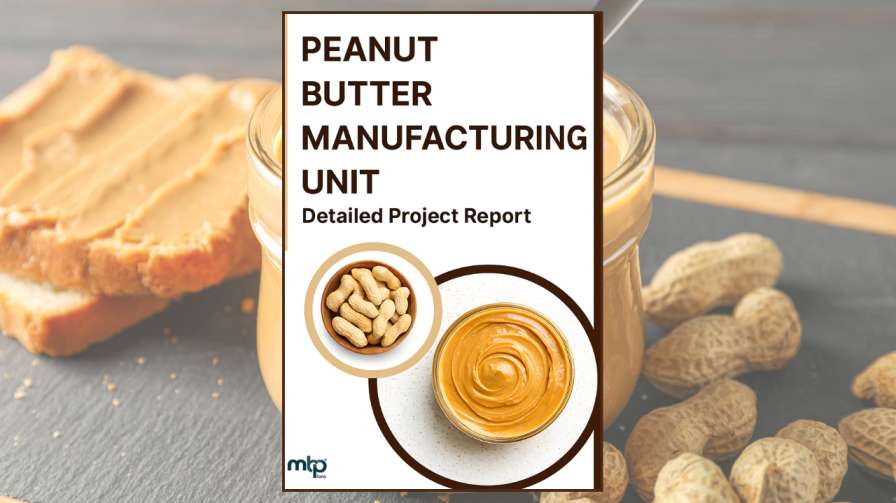
Home / Food Technology / Peanut Butter Manufacturing Unit – DPR

Peanut Butter Manufacturing Unit - DPR

59,000.00

Short Description

Build a Peanut Butter Manufacturing line with a bank-ready DPR or fund-ready Business Plan—market & pricing, material routes, process/ops design, compliance/claims guidance, and 5-year financials. Delivery: 12–15 working days.

Detailed Description

Peanut butter manufacturing refers to the processing of peanuts into a smooth or crunchy paste through controlled roasting, grinding, and blending processes while preserving nutritional value, flavor, and shelf stability. Peanut butter is a high-protein, energy-dense food product widely consumed as a spread and ingredient across food, bakery, confectionery, sports nutrition, and functional food applications. It is valued for its rich content of plant protein, healthy fats, dietary fiber, vitamins, and minerals.

Peanut butter is primarily classified into smooth peanut butter and crunchy peanut butter, with variations including natural peanut butter, flavored peanut butter, and fortified peanut butter. The manufacturing process typically includes raw peanut cleaning, shelling, roasting, blanching, grinding, emulsification, homogenization, cooling, and hygienic packaging. Stabilizers, salt, and sweeteners may be added depending on product formulation and target market. Advanced processing technologies ensure consistent texture, extended shelf life, and prevention of oil separation.

Peanut butter is widely used in breakfast spreads, bakery fillings, protein bars, ready-to-eat snacks, sauces, desserts, and sports nutrition products. Its growing popularity among fitness-conscious consumers, vegetarians, and plant-based diet followers has significantly expanded its market reach. India has strong advantages in peanut butter manufacturing due to abundant groundnut production, cost-effective raw materials, and rising domestic consumption alongside export demand.

  Growth Drivers

  • Increasing demand for high-protein and plant-based food products
  • Growing health and fitness awareness among consumers
  • Expansion of bakery, snack, and sports nutrition industries
  • Rising popularity of Western-style breakfast and convenience foods
  • Strong availability of peanuts in major producing regions like India
Market Size & Outlook

Global Market:
  • The global peanut butter market is valued at USD 5.8 billion in 2026 and is projected to reach USD 8.5 billion by 2036, reflecting a CAGR of 3.9%.
India Market:
  • The India Peanut Butter Market was valued at USD 152.38 Million in 2024, and is expected to reach USD 228.12 Million by 2030, rising at a CAGR of 6.96%.

  • Entrepreneurs, food-processing startups, MSME owners, investors, and existing agro-based industries who want to enter the peanut butter manufacturing business.

  • High-margin value-added products like peanut butter.

  • Understand capacity planning, product diversification, and scaling.

  • Ideal for bank loan applicants and subsidy seekers.

Description

Peanut butter manufacturing refers to the processing of peanuts into a smooth or crunchy paste through controlled roasting, grinding, and blending processes while preserving nutritional value, flavor, and shelf stability. Peanut butter is a high-protein, energy-dense food product widely consumed as a spread and ingredient across food, bakery, confectionery, sports nutrition, and functional food applications. It is valued for its rich content of plant protein, healthy fats, dietary fiber, vitamins, and minerals.

Peanut butter is primarily classified into smooth peanut butter and crunchy peanut butter, with variations including natural peanut butter, flavored peanut butter, and fortified peanut butter. The manufacturing process typically includes raw peanut cleaning, shelling, roasting, blanching, grinding, emulsification, homogenization, cooling, and hygienic packaging. Stabilizers, salt, and sweeteners may be added depending on product formulation and target market. Advanced processing technologies ensure consistent texture, extended shelf life, and prevention of oil separation.

Peanut butter is widely used in breakfast spreads, bakery fillings, protein bars, ready-to-eat snacks, sauces, desserts, and sports nutrition products. Its growing popularity among fitness-conscious consumers, vegetarians, and plant-based diet followers has significantly expanded its market reach. India has strong advantages in peanut butter manufacturing due to abundant groundnut production, cost-effective raw materials, and rising domestic consumption alongside export demand.


Growth Drivers

  • Increasing demand for high-protein and plant-based food products
  • Growing health and fitness awareness among consumers
  • Expansion of bakery, snack, and sports nutrition industries
  • Rising popularity of Western-style breakfast and convenience foods
  • Strong availability of peanuts in major producing regions like India

Market Size & Outlook

Global Market:

  • The global peanut butter market is valued at USD 5.8 billion in 2026 and is projected to reach USD 8.5 billion by 2036, reflecting a CAGR of 3.9%.

India Market:

  • The India Peanut Butter Market was valued at USD 152.38 Million in 2024, and is expected to reach USD 228.12 Million by 2030, rising at a CAGR of 6.96%.

Detailed Project Report (DPR) (bank-ready feasibility)

The global peanut butter market size reached USD 4.4 Billion in 2024. Projected to reach USD 6.3 Billion by 2033, exhibiting a growth rate (CAGR) of 4% during 2025-2033.

Industry & Market

  • Rising demand from fitness, breakfast, kids’ nutrition, retail & B2B bakeries.
  • Trend shifts: natural, high-protein, jaggery, flavoured variants.
  • Price tiers: economy, standard, premium, functional.

Product Routes

  • Classic PB: creamy/crunchy (sweetened/unsweetened).
  • Natural & preservative-free.
  • High-protein blends.
  • Flavoured: chocolate, honey, jaggery, sea salt.
  • Bulk B2B tubs (5-20 kg).
  • Emerging: fortified spreads, low-sugar/diabetic-friendly.

Technical & Operations

  • Peanut sorting → roasting → cooling → blanching → milling → mixing → homogenizing → deaeration → filling → labeling → packing.
  • Layout, utilities, manpower, hygiene zoning.
  • Automation level recommendations.

QA/QC & Specs

  • Moisture, oil %, texture, spreadability, particle size.
  • Microbiology checks (TPC, yeast/mould).
  • Shelf-life & packaging integrity tests.
  • Sensory evaluation & batch traceability.

Compliance

  • FSSAI licensing & documentation.
  • Nutrition label, allergen warning, ingredient norms.
  • Claims: natural, vegan, high-protein, no added sugar.
  • Export basics (GCC/Asia/Africa).
  • HACCP, GMP, ISO 22000 readiness.

5-Year Financial Model

  • Capex & Opex mapping.
  • Raw material/packaging cost breakdown.
  • Yield-based costing & margins.
  • Break-even & cash flow.
  • Sensitivity: peanut prices, power tariff, selling price.

Implementation Plan

  • Machinery & utility vendor framework.
  • Procurement → installation → commissioning timeline.
  • Pilot batch plan.
  • KPIs: OEE, yield, wastage, QC pass rates.
  • SOP & governance checklist.

Format: PDF (print-ready). Editable Files available as add-on.

  • Share Inputs — City/location, crop mix (leafy/microgreens/herbs), system choice (NFT/DWC/aeroponics), target capacity (m² or trays), preferred channels.

  • Kick-off (optional) — 45-min Expert Call add-on to align tech route, yields, and channel focus.

  • Research & Modeling — Market, CEA ops blueprint, and financials tailored to your plan.

  • Draft Delivery — Review together; 1st revision free.

  • Final Handover — DPR PDF (and Editable Files if selected).

  • DPR: ₹59,000Delivery: 12–15 working days

  • Add-ons: Customization ₹3,500 · Expert Call ₹2,500 · Editable Files ₹4,500 · Extra Revisions ₹1,500 (first revision free)
    Delivery Mode: Secure email/download link. Support: Email for clarifications.

Is peanut butter manufacturing a profitable business?

Yes. Rising demand for protein-rich and convenient foods ensures strong domestic and export growth opportunities.

What are the major end-use segments?

Retail spreads, bakery, confectionery, sports nutrition, ready-to-eat foods, and export markets.

Are bank loans and funding options available?

Yes. The project reports are structured to support MSME loans, term loans, and investor funding proposals.

What approvals are required?

FSSAI registration, factory license, food safety compliance, labeling regulations, and pollution control approvals are required.