Home / Consumer Goods & Services / Biodegradable Bioplastic Manufacturing / Processing Unit — DPR

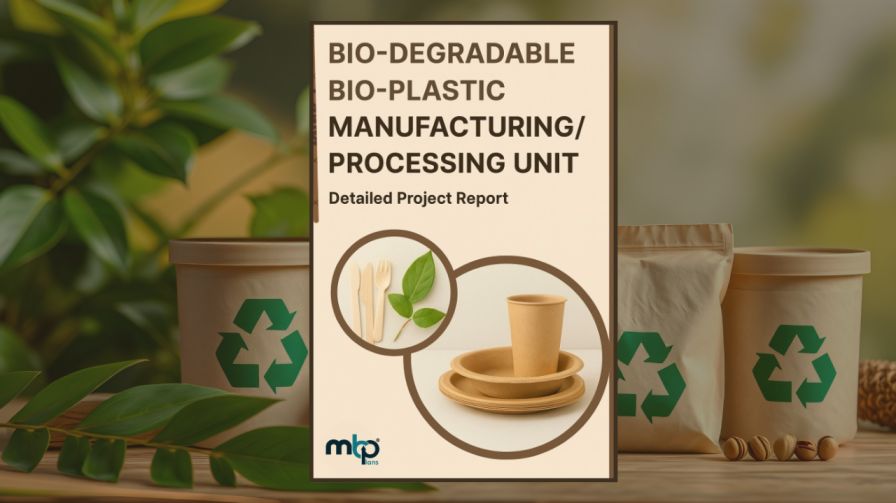
Biodegradable Bioplastic Manufacturing / Processing Unit — DPR

59,000.00

Short Description

Set up a Biodegradable Bioplastic unit (PLA/PHA/starch-blend films, bags, cutlery) with a bank-ready DPR or fund-ready Business Plan. Includes market sizing, channels, process/ops design, compliance, and 5-year financials. Delivery: 12–15 working days.

Detailed Description

Biodegradable bio-plastic manufacturing refers to the production of plastic materials derived from renewable biological sources that can decompose naturally through microbial action under suitable environmental conditions. Unlike conventional petroleum-based plastics, biodegradable bio-plastics are designed to reduce environmental pollution, carbon footprint, and long-term plastic waste accumulation. These materials are increasingly adopted as sustainable alternatives in packaging, agriculture, consumer goods, and industrial applications.

Biodegradable bio-plastics are commonly produced from raw materials such as corn starch, sugarcane, cassava, potato starch, cellulose, and lactic acid. Major product categories include polylactic acid (PLA), starch-based plastics, polyhydroxyalkanoates (PHA), and biodegradable blends. The manufacturing process typically involves raw material preparation, polymerization or compounding, extrusion, pelletization, and conversion into end-use products such as films, bags, containers, cutlery, and molded items. Advanced processing technologies ensure required mechanical strength, thermal stability, and controlled biodegradability.

Biodegradable bio-plastics are widely used in food packaging, carry bags, disposable tableware, agricultural mulch films, medical packaging, and consumer products. Increasing regulatory restrictions on single-use plastics, growing environmental awareness, and corporate sustainability commitments are driving rapid adoption. India is emerging as a strong market for biodegradable plastics due to government bans on conventional plastics, rising demand for eco-friendly packaging, and increasing investment in sustainable manufacturing infrastructure.

Growth Drivers

  • Government bans and regulations on single-use plastics
  • Rising environmental awareness and sustainability initiatives
  • Increasing demand for eco-friendly packaging solutions
  • Expansion of food packaging, agriculture, and consumer goods sectors
  • Corporate ESG commitments and green supply chain adoption

Market Size & Outlook Global Market:
  • The global biodegradable plastic market size was estimated at USD 10.26 billion in 2025 and is projected to reach USD 24.86 billion by 2033, growing at a CAGR of 11.1% from 2026 to 2033.
India Market:
  • The biodegradable plastic market in India is expected to reach a projected revenue of US$ 625.1 million by 2033. A compound annual growth rate of 14.9% is expected of India biodegradable plastic market from 2025 to 2033.

  • Entrepreneurs launching compostable film/bag or rigid bioplastic products.

  • Converters/FMCG vendors aligning to EPR & PWM requirements.

  • Founders seeking bank/investor-ready documentation for clean-tech packaging.

Description

Biodegradable bio-plastic manufacturing refers to the production of plastic materials derived from renewable biological sources that can decompose naturally through microbial action under suitable environmental conditions. Unlike conventional petroleum-based plastics, biodegradable bio-plastics are designed to reduce environmental pollution, carbon footprint, and long-term plastic waste accumulation. These materials are increasingly adopted as sustainable alternatives in packaging, agriculture, consumer goods, and industrial applications.

Biodegradable bio-plastics are commonly produced from raw materials such as corn starch, sugarcane, cassava, potato starch, cellulose, and lactic acid. Major product categories include polylactic acid (PLA), starch-based plastics, polyhydroxyalkanoates (PHA), and biodegradable blends. The manufacturing process typically involves raw material preparation, polymerization or compounding, extrusion, pelletization, and conversion into end-use products such as films, bags, containers, cutlery, and molded items. Advanced processing technologies ensure required mechanical strength, thermal stability, and controlled biodegradability.

Biodegradable bio-plastics are widely used in food packaging, carry bags, disposable tableware, agricultural mulch films, medical packaging, and consumer products. Increasing regulatory restrictions on single-use plastics, growing environmental awareness, and corporate sustainability commitments are driving rapid adoption. India is emerging as a strong market for biodegradable plastics due to government bans on conventional plastics, rising demand for eco-friendly packaging, and increasing investment in sustainable manufacturing infrastructure.

Growth Drivers

  • Government bans and regulations on single-use plastics
  • Rising environmental awareness and sustainability initiatives
  • Increasing demand for eco-friendly packaging solutions
  • Expansion of food packaging, agriculture, and consumer goods sectors
  • Corporate ESG commitments and green supply chain adoption

Market Size & Outlook

Global Market:

  • The global biodegradable plastic market size was estimated at USD 10.26 billion in 2025 and is projected to reach USD 24.86 billion by 2033, growing at a CAGR of 11.1% from 2026 to 2033.

India Market:

  • The biodegradable plastic market in India is expected to reach a projected revenue of US$ 625.1 million by 2033. A compound annual growth rate of 14.9% is expected of India biodegradable plastic market from 2025 to 2033.

Detailed Project Report (DPR) (bank-ready report)

  • Industry & Market: demand drivers (single-use plastic restrictions, EPR, brand sustainability), priority applications (carry bags/liners, mailers, films, thermoformed/cutlery), price bands & pack sizes.

  • Positioning & Product Mix: PLA/PHA/starch-blend strategy, film vs rigid portfolio; printing & labeling.

  • Technical & Operations:

    • Raw materials & compounding: biopolymer grades, starch content/additives; masterbatch options.

    • Conversion routes: film extrusion & blown film, bag making; injection/thermoforming for rigid items; die/tooling basics; downstream cooling/handling.

    • Utilities & Layout: power, compressed air, chilled water (as applicable), ventilation, material flow, manpower plan.

    • QA/QC: MFI, tensile/elongation, seal strength, thickness, disintegration/biodegradation test references; packaging compatibility.

  • Financial Model (5 years): capex/opex by section, throughput & yields, break-even, cash flow, sensitivity (resin price, energy tariff, realization).

  • Compliance & Risk (India): compostable products must conform to IS/ISO 17088 and obtain CPCB compostable certification under the Plastic Waste Management Rules; labeling/marking pathway and e-certification portal; risk mitigations (material variability, end-of-life claims).

  • Implementation Plan: procurement & setup timeline, KPIs, SOPs, governance.

  • This report is designed as a step-by-step decision and execution guide for entrepreneurs, investors, and businesses planning to set up a bio-degeradable bio-plastic manufacturing/processing unit. It does not remain theoretical instead, it works as a practical roadmap from idea validation to project execution.
  • Kick-off (optional) — 45-min Expert Call add-on to align tech route, yields, and channel focus.

  • Research & Modeling — Market, CEA ops blueprint, and financials tailored to your plan.

  • Draft Delivery — Review together; 1st revision free.

  • Final Handover — DPR/Business Plan PDF (and Editable Files if selected).

  • DPR: ₹59,000Delivery: 12–15 working days

  • Business Plan: ₹59,000Delivery: 12–15 working days

  • Add-ons: Customization ₹3,500 · Expert Call ₹2,500 · Editable Files ₹4,500 · Extra Revisions ₹1,500 (first revision free)
    Delivery Mode: Secure email/download link. Support: Email for clarifications.

Is biodegradable bio-plastic manufacturing a viable business?

Yes. Strong regulatory support, sustainability demand, and rapid market growth make this a highly viable and future-ready business.

What are the major end-use industries?

Packaging, agriculture, food service, consumer goods, medical supplies, and industrial applications.

Are bank loans and funding options available?

Yes. The project reports are structured to support MSME loans, green financing, term loans, and investor funding proposals.

What approvals are required?

Pollution control approvals, environmental clearances, BIS standards, CPCB guidelines, and applicable packaging and plastic regulations are required.