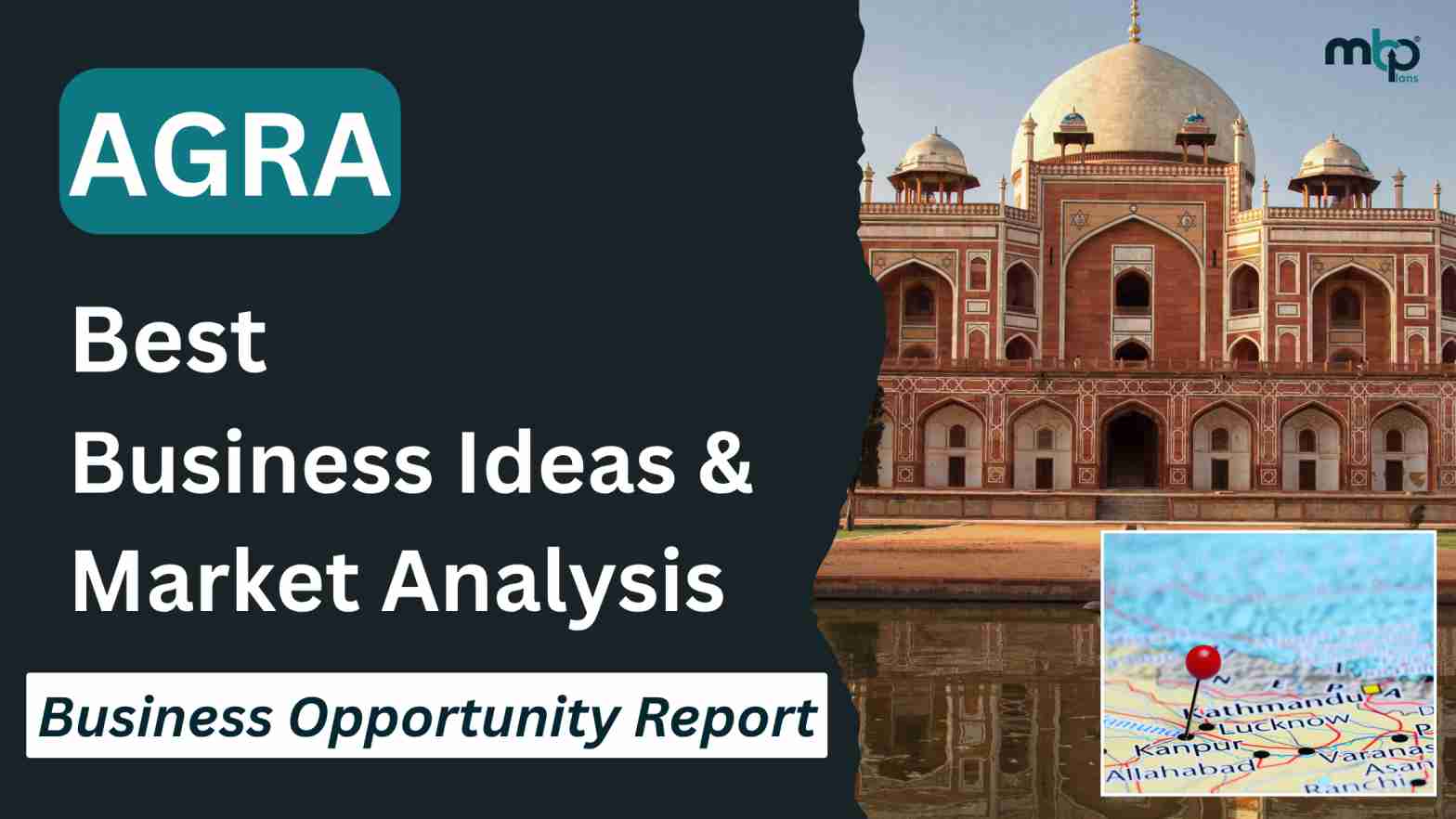
Agra Business Opportunities 2026: Beyond the Taj, Toward the “Shoe Capital of the World”
How the city of the Taj Mahal is turning its 500-year-old leather craft into a global export powerhouse – and where the real openings are for entrepreneurs right now.
Say “Agra” and most people picture one thing: the Taj Mahal. That instinct isn’t wrong – tourism remains a genuine economic pillar for the city – but it’s an incomplete picture. Quietly, and for decades, Agra has also been building one of India’s largest footwear manufacturing clusters, and in 2026 that industry is entering a new, government-backed phase aimed at turning the city into the “Shoe Capital of the World.” For entrepreneurs, that combination – a world-famous tourism economy layered on top of a genuinely massive, export-oriented manufacturing base – makes Agra one of the more interesting Tier-2 opportunities in North India right now.
Agra, known as the “City of Love,” has a rich history and is a major tourist destination in India due to the Taj Mahal – but its economy is not solely dependent on tourism. Agra is also a major industrial and trade hub, with industries such as leather, handicrafts, and agriculture playing a significant role in its economic growth. The city’s economic outlook looks promising, helped by a strategic location on the banks of the Yamuna river with strong road, rail, and air connections to Delhi, Jaipur, and Lucknow, and by government investment in industrial areas, IT parks, and special economic zones that has attracted both domestic and foreign investors.
That dual identity – heritage tourism destination and industrial export hub – is really the story of doing business in Agra. Understanding which engine your business plugs into (or, ideally, how it connects both) is the first strategic decision any founder here needs to make.
This is where Agra’s scale becomes genuinely striking. Agra currently accounts for over 75% of India’s total leather footwear exports, and it’s often referred to as the Shoe Capital of India, standing as a major producer and exporter of footwear that employs a large portion of the city’s population and contributes significantly to its economy. The industry dates back to the Mughal period, and the city has continued to grow into one of India’s largest producers of leather footwear, supplying both high-end fashion brands and budget retail chains, with established exporters shipping regularly to the UK, Italy, and Gulf countries.
The ecosystem underneath that export number is enormous. It supports more than 5,000 MSMEs and employs up to 500,000 people – a scale that rivals or exceeds many of North India’s other single-industry manufacturing hubs.
2026 is shaping up to be a genuine inflection point for the sector. A push to transform Agra into the “Shoe Capital of the World” is underway, anchored by deepening India-New Zealand trade ties focused on raw material supply and design innovation, with projected export growth of 3 to 5 times via new free trade and economic partnership agreements. Infrastructure is catching up too: the under-development Jewar International Airport and a dedicated YEIDA footwear park are set to overhaul logistics, while the government is offering zero duty on components and interest subsidies through 2030. Leather products have also been named a notified focus area under the government’s One District One Product (ODOP) programme, giving artisan-entrepreneurs access to exhibitions, fairs, and direct-to-buyer channels that reduce dependence on wholesalers and showroom intermediaries.
For a founder, this is a rare setup: an established, world-scale industry cluster entering a period of active government investment and trade-deal-driven export growth – the kind of tailwind that’s hard to find in a single city.
The single biggest opportunity in the city. With tariff-friendly trade agreements opening up, component-level zero duty, and a dedicated footwear park coming online, this is the moment for export-focused or private-label footwear ventures to enter, particularly in design-forward, Goodyear-welted, or sustainable leather segments.
As global buyers increasingly demand sustainable sourcing, entrepreneurs building eco-friendly, plant-based leather alternatives alongside Agra’s traditional craftsmanship have a genuine differentiation angle in export markets.
Agra’s centuries-old marble inlay and carpet-weaving traditions remain under-digitized — curated subscription boxes of handcrafted goods and online workshops teaching traditional techniques are both realistic, low-capital business models.
With environmental sustainability now a major traveler concern, sustainable hotels and homestays, e-rickshaw heritage tours, and zero-waste souvenir retail are all genuine openings in a tourism economy that’s historically been fairly conventional.
AR/VR-guided tours of Agra’s monuments and AI-driven tourism apps represent an underserved niche — the city draws huge visitor volumes but has relatively little bespoke tourism technology built specifically around its own landmarks.
SEO, social media management, and e-commerce setup (Amazon, Flipkart, Shopify) for the city’s thousands of leather and handicraft MSMEs is one of the lowest-capital ways to build a services business here, since demand for online visibility is rising faster than local supply of digital talent.
The healthcare industry in Agra is expanding rapidly on the back of population growth and rising incomes, creating openings in diagnostics, specialty clinics, and allied health services.
Agra’s combination of steady tourist footfall, a huge artisan and manufacturing base, and rising digital adoption supports several accessible entry points:
Several of these can be started with a modest initial investment, particularly the digital-first and curated-retail models, making Agra a genuinely accessible city for a first business despite its heavy-industry reputation.
Starting a business without proper market research increases investment risks and uncertainty.
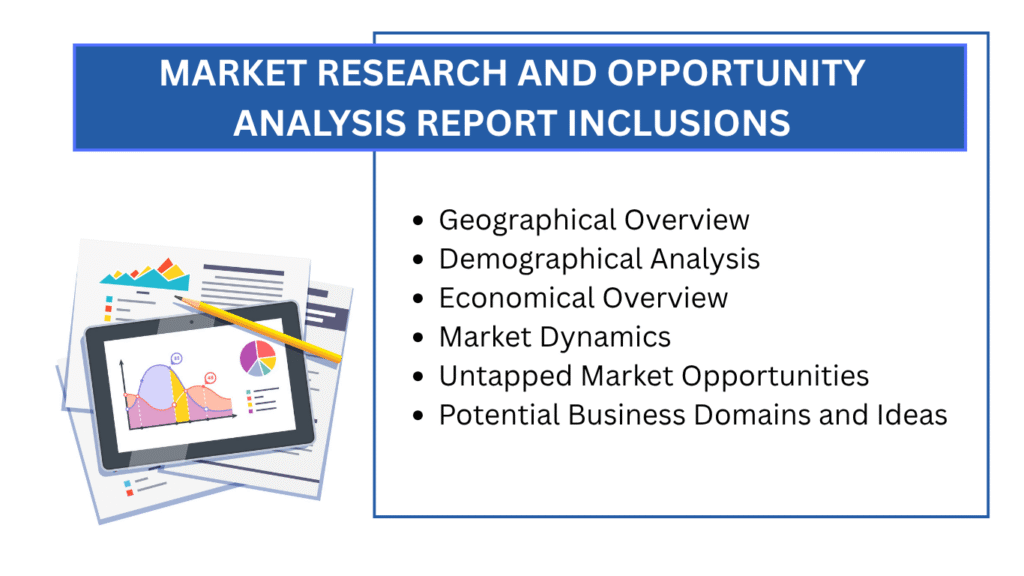
A professional Market Research & Opportunity Analysis Report helps entrepreneurs:
This enables informed decision-making and improves long-term business success.
Promising sectors include footwear and leather products, food processing, tourism and hospitality, handicrafts, packaging, textiles, marble products, and consumer goods manufacturing.
Key advantages include an established industrial base, availability of skilled labor, strong tourism activity, access to major markets, and opportunities for MSMEs and manufacturing businesses.
Yes. Agra offers opportunities for MSMEs and startups across manufacturing, services, tourism, food processing, retail, and technology-enabled businesses.
Potential opportunities include footwear, leather products, packaging materials, food products, handicrafts, textiles, consumer goods, and light engineering products.
A Business Opportunity Report helps entrepreneurs assess market demand, industry trends, competition, investment requirements, location factors, and potential business ideas to make better-informed investment decisions.
Meticulous Business Plans (MBP) is global professional business planning company and delivered more than 5000 reports across the globe.
We have experience in working with clients from US, Europe, UK, Middle East, Africa & APAC.
Our team have fair understanding of global market across the industry & domain.
The world has become highly digitalized and information is available from multiple sources and this has created confusions about authenticity of the information and also it is not available at one place.
No. 401, Pushpak Business Hub, Wakad, Pune, MH 411057
Terms & Conditions | Privacy Policy | Cookie Policy | Disclaimer | © Meticulous Business Plan 2026
Powered by MappedSkills Marketing