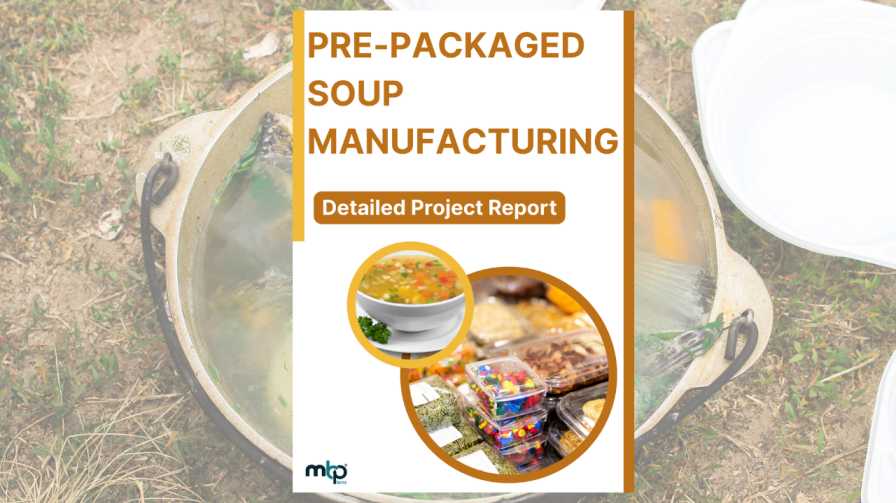
Pre-packaged soup manufacturing refers to the industrial culinary formulation, preservation, and packaging of ready-to-eat, dehydrated, and concentrated liquid soups. These products represent a massive segment of the fast-moving consumer goods (FMCG) and convenience food market. Designed to provide instant or near-instant nutritional meals, commercial soups eliminate the time-intensive preparation associated with traditional cooking. Because they cater to busy professionals, dual-income households, and commercial kitchens, pre-packaged soups are highly scalable and deeply resilient against economic downturns.
Commercial soups are broadly classified into four major product lines: Dehydrated (Dry) Soup Mixes, Ready-To-Eat (RTE) Liquid Soups, Ultra-High-Temperature (UHT) Broths, and Canned/Frozen Soups. By ingredient focus, products are categorized into clear vegetable broths, thick cream-based soups, meat-based formulations, and emerging clean-label organic and vegan variations. This wide classification allows manufacturers to diversify their product offerings to capture both the high-volume budget consumer and the high-margin premium health demographic.
The manufacturing process is a highly technical blend of food science and sterile engineering. For liquid formats, fresh ingredients are processed, homogenized, and cooked in steam-jacketed industrial kettles. The product is then subjected to UHT flash-pasteurization or retort sterilization to neutralize bacteria while perfectly preserving the aroma, texture, and nutritional value. The sterile liquid is then routed into automated aseptic filling lines (like Tetra Pak machines) operating under positive pressure. For dehydrated soup lines, ingredients are moisture-extracted using continuous hot-air belt dryers or freeze-dryers before being milled, blended with spices, and sealed in multi-layer moisture-proof foil pouches. Strict adherence to food safety standards (such as FSSAI, FDA, or HACCP) is mandatory.
Growth Drivers
- Increasing demand for fast, ready-to-eat convenience meals globally.
- Rapid urbanization and the rise of single-person and dual-income households.
- Growing preference for clean-label, organic, and low-sodium culinary options.
- Rising demand for vegan vegetable stocks and bone broths as cooking bases.
- Advancements in aseptic packaging technology extending ambient shelf life.
Market Size & Outlook
Global Market:
- The global soup market size was valued at USD 19.0 billion in 2023 and is projected to grow from USD 21.7 billion in 2026 to USD 26.2 billion by 2030, at a CAGR of 4.7% from 2024 to 2030.
- The market in Europe dominated with a revenue share of 38.9% in 2023.
India Market
- The India soup market size reached USD 420.0 Million in 2025. Looking forward, research Group expects the market to reach USD 648.8 Million by 2034, exhibiting a growth rate (CAGR) of 5.00% during 2026-2034.
The Project Reports provide detailed insights into:
- Industrial overview and market feasibility for soup processing.
- Technical layout, UHT pasteurization, and aseptic machinery selection.
- Legal, environmental, and food safety (HACCP) compliance frameworks.
- Sales feasibility, e-commerce integration, and retail positioning.
- Infrastructure, utilities, and raw-material procurement planning.
Is pre-packaged soup manufacturing profitable?
Yes. High-volume recurring demand, long ambient shelf lives, and the ability to command premium pricing for organic/clean-label lines make this a highly sustainable business.
What are the major end-use sectors?
Supermarkets, convenience stores, institutional food service (HoReCa), cloud kitchens, and direct-to-consumer online grocery platforms.
Are bank loans and funding options available?
Yes. The project reports are rigorously structured to support MSME loans, term financing, and venture capital funding proposals.
What approvals are required?
Food manufacturing licenses (such as FSSAI in India), municipal approvals, pollution control clearances, and strict adherence to food safety and metrology standards are required.