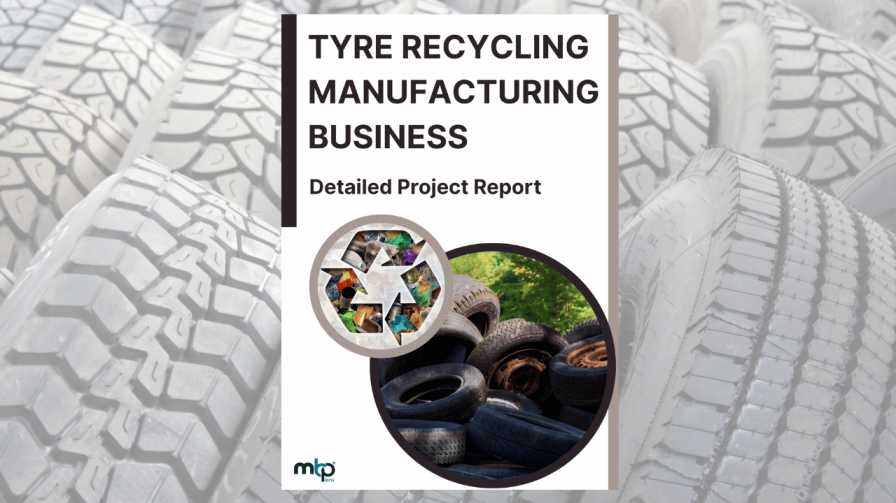
Tyre recycling is an industrial process that converts waste and end-of-life tyres into valuable secondary raw materials such as crumb rubber, steel wire, recovered carbon black, pyrolysis oil, and tyre-derived fuel. Since tyres are non-biodegradable and difficult to dispose of safely, recycling plays a critical role in reducing environmental pollution, conserving resources, and supporting sustainable manufacturing.
Recycled tyre products are widely used in road construction, sports flooring, playground surfaces, rubber goods, cement kilns, power plants, footwear, automotive parts, and molded rubber products. Advanced technologies such as pyrolysis allow tyres to be thermally decomposed into oil, gas, and carbon black, which can be reused as fuel and industrial raw material. The increasing demand for alternative fuels and recycled rubber is driving strong growth in this sector.
The rising number of vehicles, tightening environmental regulations, and growing focus on circular economy models are making tyre recycling a highly attractive and future-ready business.
Growth Drivers
- Rapid growth of the automotive and transportation sector
- Increasing volume of end-of-life tyres globally
- Strict landfill and waste-tyre disposal regulations
- Rising demand for recycled rubber and tyre-derived fuel
- Government support for circular economy and sustainability
Market Size & Outlook
Global Market:
- The global tyre recycling market size was estimated at USD 6.87 billion in 2024 and is projected to reach USD 8.46 billion by 2030, growing at a CAGR of 3.71% from 2025 to 2030.
- The tyre recycling market in Asia Pacific accounted for the largest revenue share of 37.98% in 2024.
Is tyre recycling profitable?
Yes, due to strong demand for recycled rubber, fuel, and carbon black.
What are the major end-use industries?
Road construction, cement plants, rubber manufacturing, energy generation, and molded products.
Are loans and funding available?
Yes, recycling projects qualify for MSME loans, green finance, and sustainability-linked funding.
What approvals are required?
Pollution control, waste management authorization, and factory registration are required.