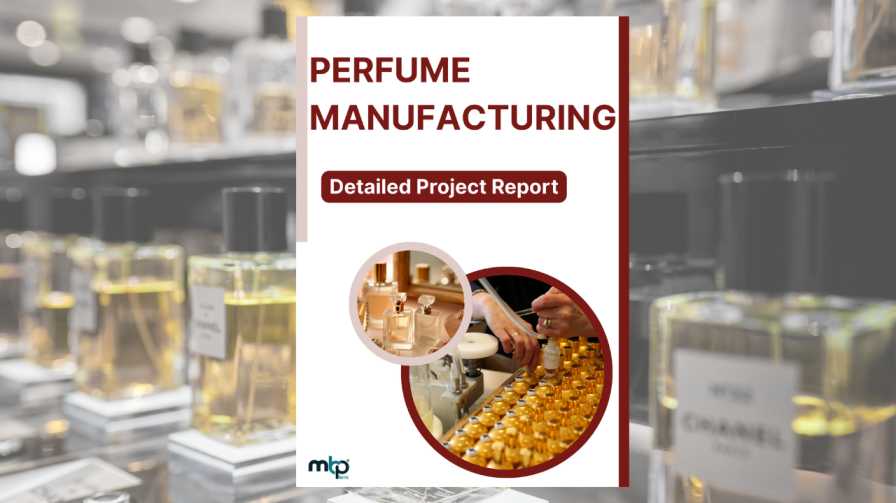
Perfume manufacturing refers to the industrial formulation and production of aromatic fragrance compositions blended into an alcohol or oil base for personal grooming and lifestyle use. This segment sits at the intersection of chemical formulation and lifestyle branding, spanning mass-market body mists to premium Eau de Parfum and niche artisanal fragrances. Perfume manufacturing requires precise proportioning of top, middle, and base notes to achieve a balanced, long-lasting scent profile.
Perfumes are manufactured through fragrance oil compounding, blending with a perfumer’s alcohol or carrier base, maceration to integrate aromatic compounds, chill-filtration for clarity, and automated bottle filling, capping, and batch-coding. Advanced facilities use stainless steel blending tanks, temperature-controlled maceration rooms, and automated filling lines to ensure consistent fragrance strength and product stability.
Perfume products can be broadly classified by concentration and end-user. By concentration, the category includes Extrait de Parfum (20-30% oil), Eau de Parfum (15-20%), Eau de Toilette (5-15%), and body mists (1-3%). By end-user, products are segmented into women’s, men’s, and unisex fragrances. By positioning, the segment spans mass-market deodorant sprays to premium and niche artisanal perfumes sold through specialty retail.
Growth Drivers
- Rising disposable incomes and growing personal grooming spend
- Perfume increasingly viewed as a form of daily self-expression, not occasional use
- Growing millennial and Gen Z demand for signature and niche fragrances
- Expansion of organized retail, e-commerce, and direct-to-consumer fragrance brands
- Rising gifting culture around festivals and special occasions
Market Size & Outlook
Global Market:
- The global perfume market size was valued at USD 60.0 billion in 2025 and is projected to grow from USD 63.5 billion in 2026 to USD 96.1 billion by 2033, at a CAGR of 6.1% from 2026 to 2033.
- Europe held the largest market share of 35.4% in 2025.
India Market:
- The India perfume market size is valued to increase by USD 3.80 billion, at a CAGR of 23.7% from 2025 to 2030. Increasing perfume demand among millennial population will drive the India perfume market.
The project reports provide detailed insights into:
- Industrial overview and market feasibility
- Technical and manufacturing feasibility
- Facility and equipment planning
- Regulatory approvals and quality compliance
- Sales feasibility and domestic/export market positioning
- Infrastructure, utilities, and operational planning
These reports offer a comprehensive feasibility analysis along with suitable business models and structured implementation plans.
Is perfume manufacturing profitable?
Yes. High margins, strong brand differentiation potential, and rising per-capita fragrance spending make this a lucrative and scalable business.
What are the major end-use sectors?
Retail households, gifting and festive occasions, organized beauty retail, and export markets.
Are bank loans and funding options available?
Yes. The project reports are structured to support MSME loans, term loans, and investor funding proposals.
What approvals are required?
Cosmetic manufacturing license from the state drug authority, BIS compliance, and adherence to IFRA fragrance safety standards are mandatory.