
₹59,000.00
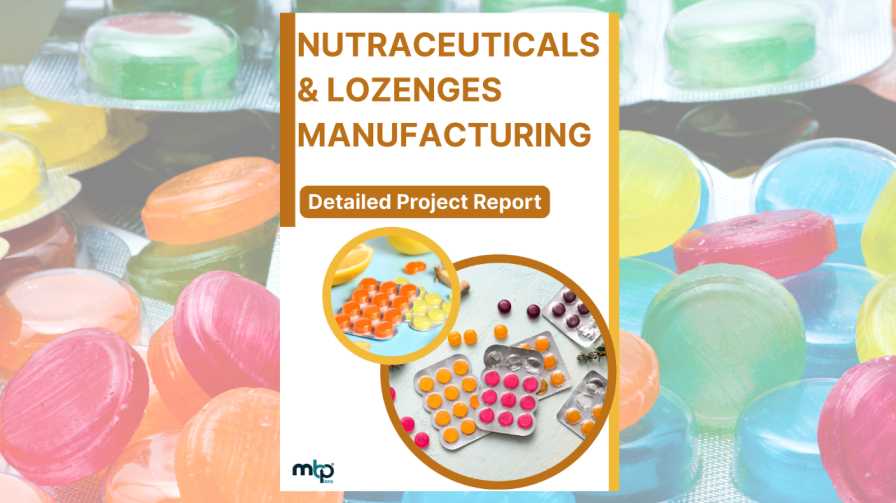
Build a Nutraceutical and Lozenges Manufacturing line with a bank-ready DPR or fund-ready Business Plan—market & pricing, material routes, process/ops design, compliance/claims guidance, and 5-year financials. Delivery: 12–15 working days.
Nutraceutical manufacturing refers to the production of food-derived products that provide health benefits beyond basic nutrition, including prevention and management of diseases, enhancement of immunity, and overall wellness improvement. Nutraceuticals bridge the gap between food and pharmaceuticals and are widely consumed in the form of dietary supplements, functional foods, functional beverages, and medical nutrition products. These products are formulated using bioactive compounds such as vitamins, minerals, amino acids, herbal extracts, probiotics, enzymes, omega fatty acids, and antioxidants.
Nutraceuticals play a critical role in modern preventive healthcare systems, as consumers increasingly focus on lifestyle disease management, immunity building, and long-term wellness. Unlike conventional medicines, nutraceuticals are generally intended for regular consumption and are positioned as safe, natural, and scientifically backed health solutions. The rising prevalence of lifestyle-related disorders such as diabetes, obesity, cardiovascular diseases, and digestive issues has significantly accelerated demand for nutraceutical products worldwide.
Nutraceutical products can be broadly classified based on product form and application. By product type, the category includes dietary supplements, functional foods, functional beverages, and medical nutrition products. By dosage form, nutraceuticals are available as tablets, capsules, powders, sachets, gummies, syrups, soft gels, and ready-to-drink beverages. By application, nutraceuticals are used for immunity support, digestive health, bone and joint health, heart health, sports nutrition, women’s health, pediatric nutrition, and geriatric care.
The nutraceutical manufacturing process typically involves raw material sourcing, ingredient standardization, blending and formulation, granulation or liquid preparation, dosage form manufacturing (tableting, encapsulation, powder filling, or liquid filling), quality testing, packaging, and labeling. Advanced manufacturing units adopt GMP-compliant facilities, automated processing lines, and stringent quality control systems to ensure consistency, safety, and regulatory compliance. Modern technologies such as spray drying, freeze drying, microencapsulation, and controlled-release formulation are increasingly used to enhance bioavailability and product stability.
Nutraceuticals are widely distributed through pharmacies, health stores, online platforms, hospitals, fitness centers, and export channels. India has emerged as a strong nutraceutical manufacturing hub due to its robust pharmaceutical infrastructure, availability of herbal and botanical raw materials, cost-effective manufacturing capabilities, and growing domestic consumption. Government initiatives promoting preventive healthcare and AYUSH-based products further support industry growth.
Growth Drivers
This project is suitable for pharmaceutical companies, food manufacturers, herbal product companies, MSMEs, wellness brands, startups, exporters, and investors looking to enter the fast-growing health and wellness sector.
Nutraceutical manufacturing refers to the production of food-derived products that provide health benefits beyond basic nutrition, including prevention and management of diseases, enhancement of immunity, and overall wellness improvement. Nutraceuticals bridge the gap between food and pharmaceuticals and are widely consumed in the form of dietary supplements, functional foods, functional beverages, and medical nutrition products. These products are formulated using bioactive compounds such as vitamins, minerals, amino acids, herbal extracts, probiotics, enzymes, omega fatty acids, and antioxidants.
Nutraceuticals play a critical role in modern preventive healthcare systems, as consumers increasingly focus on lifestyle disease management, immunity building, and long-term wellness. Unlike conventional medicines, nutraceuticals are generally intended for regular consumption and are positioned as safe, natural, and scientifically backed health solutions. The rising prevalence of lifestyle-related disorders such as diabetes, obesity, cardiovascular diseases, and digestive issues has significantly accelerated demand for nutraceutical products worldwide.
Nutraceutical products can be broadly classified based on product form and application. By product type, the category includes dietary supplements, functional foods, functional beverages, and medical nutrition products. By dosage form, nutraceuticals are available as tablets, capsules, powders, sachets, gummies, syrups, soft gels, and ready-to-drink beverages. By application, nutraceuticals are used for immunity support, digestive health, bone and joint health, heart health, sports nutrition, women’s health, pediatric nutrition, and geriatric care.
The nutraceutical manufacturing process typically involves raw material sourcing, ingredient standardization, blending and formulation, granulation or liquid preparation, dosage form manufacturing (tableting, encapsulation, powder filling, or liquid filling), quality testing, packaging, and labeling. Advanced manufacturing units adopt GMP-compliant facilities, automated processing lines, and stringent quality control systems to ensure consistency, safety, and regulatory compliance. Modern technologies such as spray drying, freeze drying, microencapsulation, and controlled-release formulation are increasingly used to enhance bioavailability and product stability.
Nutraceuticals are widely distributed through pharmacies, health stores, online platforms, hospitals, fitness centers, and export channels. India has emerged as a strong nutraceutical manufacturing hub due to its robust pharmaceutical infrastructure, availability of herbal and botanical raw materials, cost-effective manufacturing capabilities, and growing domestic consumption. Government initiatives promoting preventive healthcare and AYUSH-based products further support industry growth.
Growth Drivers
Market Size & Outlook
Global Nutraceuticals Market:
Global Market:
India Market:
The project reports provide detailed insights into:
These reports offer a comprehensive feasibility analysis along with suitable business models and structured implementation plans.
DPR: ₹59,000 — Delivery: 12–15 working days
Add-ons: Customization ₹3,500 · Expert Call ₹2,500 · Editable Files ₹4,500 · Extra Revisions ₹1,500 (first revision free)
Delivery Mode: Secure email/download link. Support: Email for clarifications.
Is nutraceutical manufacturing a profitable business?
Yes. Rising health awareness, repeat consumption patterns, and expanding domestic and export markets ensure strong long-term profitability.
What are the major end-use segments?
Dietary supplements, functional foods, sports nutrition, medical nutrition, and wellness products.
Are bank loans and funding options available?
Yes. The project reports are structured to support MSME loans, venture funding, and institutional investment.
What approvals are required?
FSSAI licensing, GMP compliance, AYUSH approval (for herbal products), factory license, labeling compliance, and pollution control approvals are required.



No. 401, Pushpak Business Hub, Wakad, Pune, MH 411057
Terms & Conditions | Privacy Policy | Cookie Policy | Disclaimer | © Meticulous Business Plan 2026
Powered by MappedSkills Marketing