
₹59,000.00
Build a Halal Certified Cosmetic Manufacturing line with a bank-ready DPR or fund-ready Business Plan—market & pricing, material routes, process/ops design, compliance/claims guidance, and 5-year financials. Delivery: 12–15 working days.
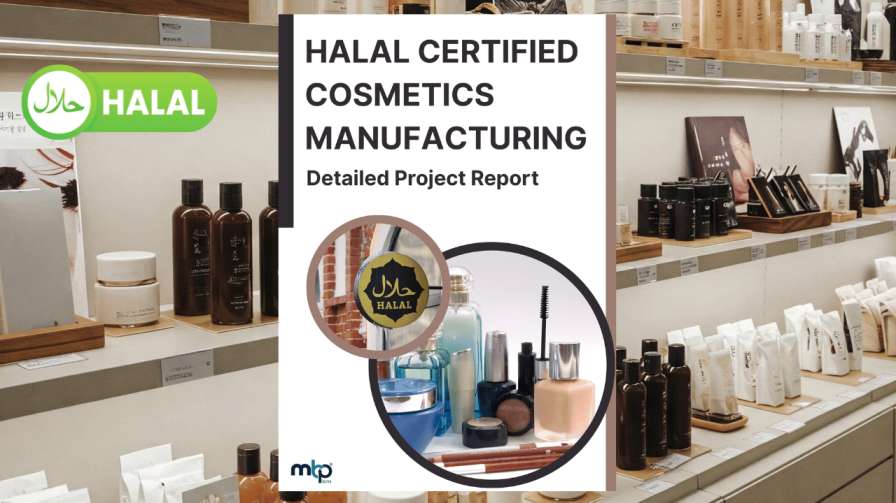
Halal certified cosmetics are beauty and personal care products developed under strict Islamic guidelines that prohibit certain ingredients (such as alcohol and pork derivatives) and require ethical sourcing and handling throughout the production chain. These products are not only compliant with religious standards but also align closely with global ethical beauty trends such as cruelty-free, natural, and clean-label formulations. Halal cosmetics encompass a broad range of item categories including skincare (creams, lotions, serums), makeup (foundations, lipsticks), haircare (shampoos, conditioners), perfumes, body care products, and child-friendly personal care items. Because of their avoidance of harmful chemicals, halal cosmetics also appeal to health- and ingredient-conscious consumers regardless of religious background. Manufacturing halal cosmetics involves careful selection and verification of raw materials, segregation of production lines where necessary, documentation of ingredient sources, and certification from recognized halal bodies. The certification process typically examines all aspects of supply chain and production hygiene to ensure full compliance. The halal cosmetics segment is experiencing strong growth due to several factors including the rise in the global Muslim population, greater awareness of ethical and religiously compliant products, and increased demand for natural and cruelty-free beauty products. Regions such as Asia Pacific, the Middle East, and North Africa are major markets, with India also seeing rapid expansion in demand due to rising urban middle-class consumption and online retail penetration. Growth Drivers
This project is ideal for cosmetic manufacturers, personal care brands, agri-ingredient suppliers, MSMEs, export-oriented businesses, and investors looking to enter the ethical and halal beauty segment.
Halal certified cosmetics are beauty and personal care products developed under strict Islamic guidelines that prohibit certain ingredients (such as alcohol and pork derivatives) and require ethical sourcing and handling throughout the production chain. These products are not only compliant with religious standards but also align closely with global ethical beauty trends such as cruelty-free, natural, and clean-label formulations.
Halal cosmetics encompass a broad range of item categories including skincare (creams, lotions, serums), makeup (foundations, lipsticks), haircare (shampoos, conditioners), perfumes, body care products, and child-friendly personal care items. Because of their avoidance of harmful chemicals, halal cosmetics also appeal to health- and ingredient-conscious consumers regardless of religious background.
Manufacturing halal cosmetics involves careful selection and verification of raw materials, segregation of production lines where necessary, documentation of ingredient sources, and certification from recognized halal bodies. The certification process typically examines all aspects of supply chain and production hygiene to ensure full compliance.
The halal cosmetics segment is experiencing strong growth due to several factors including the rise in the global Muslim population, greater awareness of ethical and religiously compliant products, and increased demand for natural and cruelty-free beauty products. Regions such as Asia Pacific, the Middle East, and North Africa are major markets, with India also seeing rapid expansion in demand due to rising urban middle-class consumption and online retail penetration.
Growth Drivers
Market Size & Outlook
Global Market:
The global halal cosmetics market size was valued at USD 47.76 billion in 2024. The market is projected to be worth USD 53.12 billion in 2025 and reach USD 115.03 billion by 2032, exhibiting a CAGR of 11.67% during the forecast period.
India Market:
The India halal cosmetics market size reached USD 1.19 Billion in 2024. Looking forward, expects the market to reach USD 2.35 Billion by 2033, exhibiting a growth rate (CAGR) of 7.90% during 2025-2033.
Kick-off (optional) — 45-min Expert Call add-on to align tech route, yields, and channel focus.
Research & Modeling — Market, CEA ops blueprint, and financials tailored to your plan.
Draft Delivery — Review together; 1st revision free.
Final Handover — DPR/Business Plan PDF (and Editable Files if selected).
DPR: ₹59,000 — Delivery: 12–15 working days
Business Plan: ₹59,000 — Delivery: 12–15 working days
Add-ons: Customization ₹3,500 · Expert Call ₹2,500 · Editable Files ₹4,500 · Extra Revisions ₹1,500 (first revision free)
Delivery Mode: Secure email/download link. Support: Email for clarifications.
Is halal cosmetics manufacturing profitable?
Yes. Strong global demand and ethical beauty trends make this a high-growth opportunity.
What are the major end-use segments?
Skincare, haircare, makeup, fragrances, and personal hygiene products.
Are bank loans and funding available?
Yes. Projects in halal beauty can qualify for MSME loans and start-up funding.
What certifications are required?
Halal certification from recognized authorities, FSSAI (for India), labeling compliance, and quality standards are required.
No. 401, Pushpak Business Hub, Wakad, Pune, MH 411057
Terms & Conditions | Privacy Policy | Cookie Policy | Disclaimer | © Meticulous Business Plan 2026
Powered by MappedSkills Marketing