
₹59,000.00
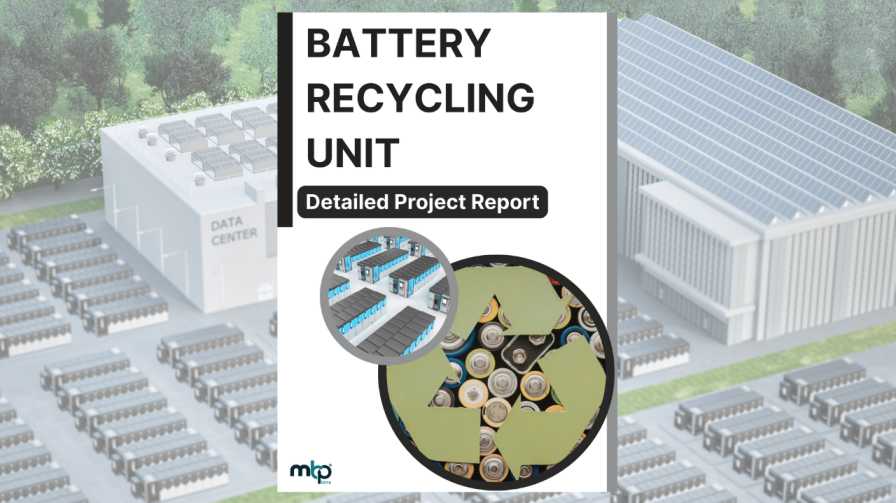
Build a Battery Recycling Business line with a bank-ready DPR or fund-ready Business Plan—market & pricing, material routes, process/ops design, compliance/claims guidance, and 5-year financials. Delivery: 12–15 working days.
Battery recycling refers to the systematic collection, processing, and recovery of valuable materials from used and end-of-life batteries to reduce environmental pollution, conserve natural resources, and support circular economy practices. Batteries contain hazardous substances such as lead, lithium, cadmium, nickel, and electrolytes, which can cause severe environmental and health risks if disposed of improperly. Recycling enables safe handling of these materials while recovering metals that can be reused in new battery manufacturing and other industrial applications.
Battery recycling units process various types of spent batteries generated from automotive, industrial, consumer electronics, renewable energy storage systems, and electric vehicles. With the rapid growth of electric mobility, renewable energy installations, and electronic device usage, the volume of waste batteries is increasing significantly. Battery recycling has therefore become a critical component of sustainable industrial and environmental management.
Batteries can be broadly classified based on chemistry and application. By type, recycling units handle lead-acid batteries, lithium-ion batteries, nickel-cadmium batteries, nickel-metal hydride batteries, and alkaline batteries. Lead-acid batteries are widely used in automotive and industrial applications, while lithium-ion batteries dominate electric vehicles, consumer electronics, and energy storage systems. Each battery type requires a specific recycling process and technology due to differences in material composition and safety requirements.
The battery recycling process typically involves battery collection, sorting, discharging, dismantling or shredding, separation of components, material recovery, and refining. Lead-acid battery recycling includes breaking, separation of lead, plastic, and acid, smelting, and purification. Lithium-ion battery recycling involves controlled discharging, mechanical shredding, physical separation, hydrometallurgical or pyrometallurgical processing, and recovery of lithium, cobalt, nickel, manganese, and copper. Advanced recycling plants increasingly use environmentally safer hydrometallurgical processes to improve metal recovery efficiency and reduce emissions.
Recovered materials such as lead ingots, lithium compounds, cobalt salts, nickel, copper, and recycled plastics are supplied to battery manufacturers, metal processors, and allied industries. Strict pollution control measures, effluent treatment systems, air emission controls, and hazardous waste handling protocols are essential to ensure regulatory compliance. Battery recycling units operate under stringent environmental, safety, and occupational health regulations due to the hazardous nature of materials involved.
India is emerging as a significant battery recycling market due to rising vehicle ownership, rapid EV adoption, expanding renewable energy storage capacity, and government policies promoting waste management and resource recovery. Organized recycling units play a vital role in reducing dependence on imported raw materials and strengthening domestic supply chains for critical minerals.
Growth Drivers
This project is suitable for renewable energy companies, waste management firms, automotive battery recyclers, EV ecosystem players, metal recovery companies, MSMEs, and investors seeking entry into sustainable and high-growth recycling industries.
Battery recycling refers to the systematic collection, processing, and recovery of valuable materials from used and end-of-life batteries to reduce environmental pollution, conserve natural resources, and support circular economy practices. Batteries contain hazardous substances such as lead, lithium, cadmium, nickel, and electrolytes, which can cause severe environmental and health risks if disposed of improperly. Recycling enables safe handling of these materials while recovering metals that can be reused in new battery manufacturing and other industrial applications.
Battery recycling units process various types of spent batteries generated from automotive, industrial, consumer electronics, renewable energy storage systems, and electric vehicles. With the rapid growth of electric mobility, renewable energy installations, and electronic device usage, the volume of waste batteries is increasing significantly. Battery recycling has therefore become a critical component of sustainable industrial and environmental management.
Batteries can be broadly classified based on chemistry and application. By type, recycling units handle lead-acid batteries, lithium-ion batteries, nickel-cadmium batteries, nickel-metal hydride batteries, and alkaline batteries. Lead-acid batteries are widely used in automotive and industrial applications, while lithium-ion batteries dominate electric vehicles, consumer electronics, and energy storage systems. Each battery type requires a specific recycling process and technology due to differences in material composition and safety requirements.
The battery recycling process typically involves battery collection, sorting, discharging, dismantling or shredding, separation of components, material recovery, and refining. Lead-acid battery recycling includes breaking, separation of lead, plastic, and acid, smelting, and purification. Lithium-ion battery recycling involves controlled discharging, mechanical shredding, physical separation, hydrometallurgical or pyrometallurgical processing, and recovery of lithium, cobalt, nickel, manganese, and copper. Advanced recycling plants increasingly use environmentally safer hydrometallurgical processes to improve metal recovery efficiency and reduce emissions.
Recovered materials such as lead ingots, lithium compounds, cobalt salts, nickel, copper, and recycled plastics are supplied to battery manufacturers, metal processors, and allied industries. Strict pollution control measures, effluent treatment systems, air emission controls, and hazardous waste handling protocols are essential to ensure regulatory compliance. Battery recycling units operate under stringent environmental, safety, and occupational health regulations due to the hazardous nature of materials involved.
India is emerging as a significant battery recycling market due to rising vehicle ownership, rapid EV adoption, expanding renewable energy storage capacity, and government policies promoting waste management and resource recovery. Organized recycling units play a vital role in reducing dependence on imported raw materials and strengthening domestic supply chains for critical minerals.
Growth Drivers
Market Size & Outlook
Global Market:
India Market.
The project reports provide detailed insights into:
These reports offer a comprehensive feasibility analysis along with suitable business models and structured implementation plans.
DPR: ₹59,000 — Delivery: 12–15 working days
Add-ons: Customization ₹3,500 · Expert Call ₹2,500 · Editable Files ₹4,500 · Extra Revisions ₹1,500 (first revision free)
Delivery Mode: Secure email/download link. Support: Email for clarifications.
Is battery recycling a profitable business?
Yes. High demand for recovered metals, regulatory push, and limited organized recyclers make this a profitable and sustainable business.
What are the major end-use industries?
Battery manufacturers, EV companies, metal refineries, automotive sector, and energy storage system producers.
Are bank loans and funding options available?
Yes. The project reports are structured to support MSME loans, green financing, and institutional funding.
What approvals are required?
Pollution Control Board consent, hazardous waste authorization, factory license, fire safety approval, and compliance with battery waste management rules are mandatory.




No. 401, Pushpak Business Hub, Wakad, Pune, MH 411057
Terms & Conditions | Privacy Policy | Cookie Policy | Disclaimer | © Meticulous Business Plan 2026
Powered by MappedSkills Marketing