Meticulous Business Plans (MBP) is a global professional business planning company that has delivered more than 5000 reports across the globe.
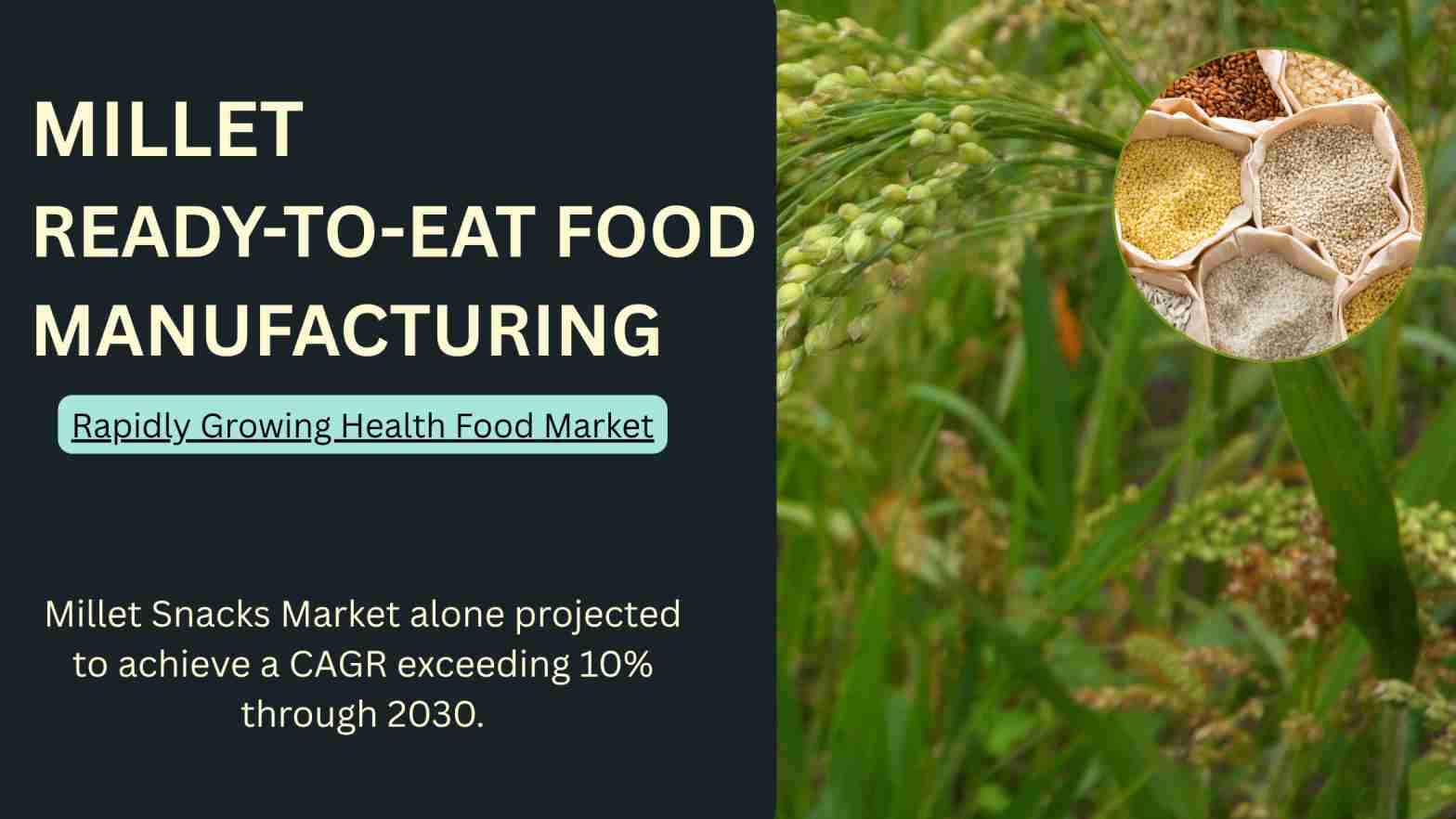
Our Expert’s team is working on the project of setting up a millet based ready to eats manufacturing unit, one of the most important segments within the food industry and the team has prepared Business Planning Reports on the title.
MBP expert’s team has studied the market for awareness, demand, and supply of millet based ready to eats products, and wanted to share some helpful information about the project.
Let’s be honest. A few years ago, millets were your grandmother’s food. Something that rural India ate when nothing else was available. Then something changed.
The UN declared 2023 the International Year of Millets. India’s Prime Minister called millets “Shree Anna” the King of Grains. Nestlé, ITC, Britannia, and Tata all launched millet products within months of each other. And suddenly, the grain that had been quietly growing on rainfed fields across Rajasthan, Karnataka, and Andhra Pradesh became a global superfood headline.
But here’s what’s even more interesting: the business of turning millets into ready-to-eat products is still wide open.
Millets are a family of small-seeded grasses cultivated for thousands of years across Asia and Africa. The major commercial types in India include:
Millets contain 3-5 times more dietary fibre than refined grains and offer 20-30% higher protein bioavailability. Their low glycemic index (GI 54 and below) has increased adoption among the 537 million global diabetic population.
That’s not marketing. That’s nutrition science. And it’s precisely why health-conscious urban consumers, diabetics, fitness enthusiasts, and parents looking for better snacks for their kids are reaching for millet products off the shelf.
The ready-to-eat millet segment is far broader than most people imagine:
Extruded Snacks: Millet puffs, chips, and namkeen made from ragi, jowar, or bajra. High-volume, fast-moving.
Instant Mixes: Ready-to-cook dosa, idli, khichdi, and pongal mixes. Huge demand from urban households and working professionals.
Breakfast Cereals: Millet flakes, multigrain muesli, fortified porridges. One of the fastest-growing breakfast sub-segments.
Health Bars & Energy Bites: High-protein bars incorporating foxtail or pearl millet targeting the fitness and sports nutrition market.
Millet Pasta & Noodles: Functional alternatives to refined-wheat noodles; gaining shelf space in modern retail.
Beverages: Ragi malt drinks, millet-fortified plant-based beverages — a niche but rapidly growing category.
More than 600 new millet-based packaged foods were launched globally between 2022 and 2024, including millet-based chips, cookies, instant mixes, noodles, beverages, baby foods, and protein snacks. Millet snacks are growing at 18–22% annually.
The Millet Based Packaged Food Market was valued at USD 52.84 million in 2025 and is expected to grow at a CAGR of 10.2% from 2026 to 2032, reaching nearly USD 104.28 million by 2032.
The broader millet market tells an even bigger story. The global millets market size was valued at USD 15.3 billion in 2024, with expectations to reach USD 23.4 billion by 2034, growing at a CAGR of 4.4%.
The India Ready-to-Eat Food Market was valued at USD 4.98 billion in 2024 and is expected to reach USD 10.63 billion by 2032, growing at a CAGR of 10.07%. Millet-based RTE products are one of the fastest-growing pockets within this broader market.
The Ready-to-Eat Food subsegment within millets is the dominant end-use category, with the Millet Snacks Market alone projected to achieve a CAGR exceeding 10% through 2030.
What’s particularly exciting is the export angle. The government introduced new export promotion schemes in 2024, aiming to increase millet export volumes by 200,000 metric tons by 2026, including financial incentives for exporters and support for participating in international trade fairs.
Millet cultivation spans over 36 million hectares globally, with India alone contributing over 41% of total global millet production. That means Indian manufacturers have a built-in raw material advantage abundant, locally sourced grain at competitive prices.
Andhra Pradesh, Telangana, Karnataka, Maharashtra, Rajasthan, and Gujarat are the key millet-growing belts. If you’re setting up a unit near one of these regions, your supply chain practically builds itself.
Setting up a millet RTE unit doesn’t require a massive, complex factory. Here’s a simplified process flow:
Companies like 24 Mantra Organic, Tata Soulfull, Slurrp Farm, Sresta Natural Bioproducts, ITC (under its Mission Millets initiative), and Organic Tattva have already built strong brands in this space. Britannia opened a dedicated millet manufacturing facility in Gujarat in 2024. Slurrp Farm raised $7 million in Series B funding to scale millet-based products.
But the market is far from saturated. Regional players with strong distribution in Tier 2 and 3 cities, or those targeting the B2B institutional supply market (schools, hospitals, mid-day meal programmes), have enormous headroom.
The investment required can be as low as INR 50 lakh for a basic extrusion and packaging unit, scaling up to INR 5 crore for a fully automated multi-product facility.
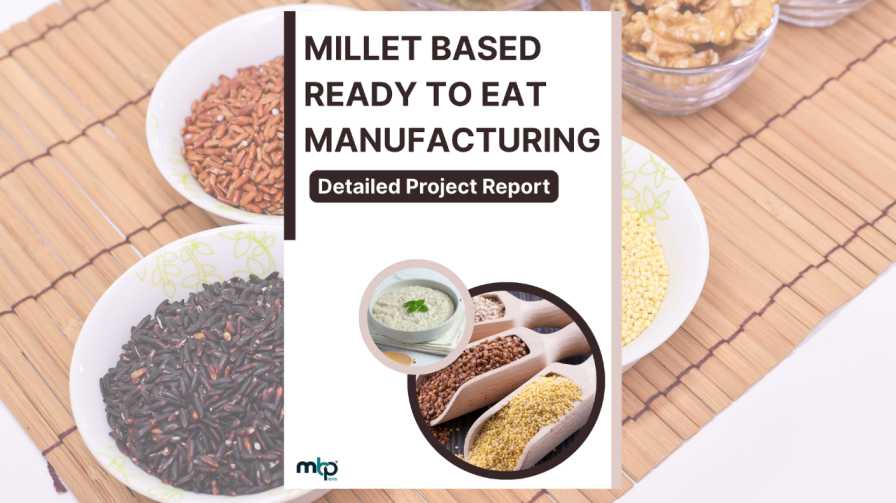
In these reports, we have analysed and explained the business opportunity for millet based ready to eats manufacturing unit and it can become a profitable and sustainable business if executed with proper planning, technology selection, and market strategy.
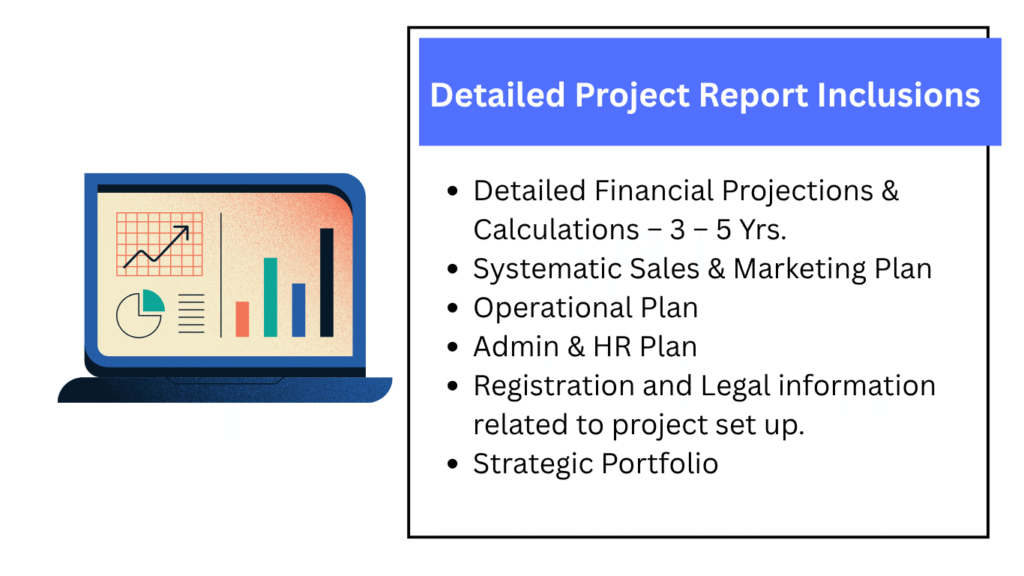
The Business Planning Reports on millet based ready to eats manufacturing unit, Business will help you in understanding the Industrial Overview, Market Feasibility, Technical Feasibility, Legal Feasibility, Sales Feasibility, Infrastructure Feasibility, etc. Also, emphasis on Market Position, Demand, Market Size, Statistics, Market Dynamics and Trends. These reports provide a comprehensive business feasibility analysis; Types of Business Models, and Business Plan, which helps you to decide to start up a business.
Meticulous Business Plans (MBP) is global professional business planning company and delivered more than 5000 reports across the globe.
We have experience in working with clients from US, Europe, UK, Middle East, Africa & APAC.
Our team have fair understanding of global market across the industry & domain.
The world has become highly digitalized and information is available from multiple sources and this has created confusions about authenticity of the information and also it is not available at one place.
No. 401, Pushpak Business Hub, Wakad, Pune, MH 411057
Terms & Conditions | Privacy Policy | Cookie Policy | Disclaimer | © Meticulous Business Plan 2026
Powered by MappedSkills Marketing