₹59,000.00
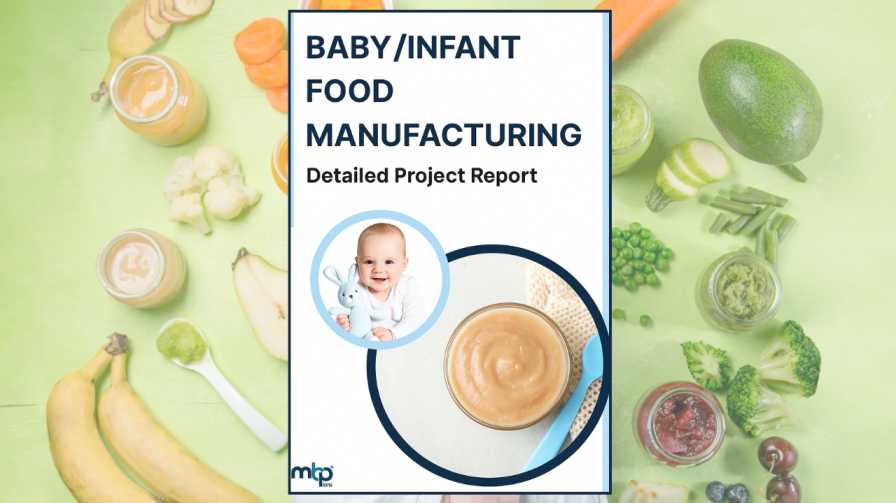
Build a Infant Baby Food Manufacturing line with a bank-ready DPR or fund-ready Business Plan—market & pricing, material routes, process/ops design, compliance/claims guidance, and 5-year financials. Delivery: 12–15 working days.
📄 Download Free Sample Report →
Baby and infant food manufacturing refers to the production of nutritionally balanced, safe, and easily digestible food products specially formulated for infants and young children, typically between the ages of 6 months and 3 years. These products are designed to support healthy physical growth, brain development, immunity, and overall nutritional needs during early childhood. Due to the sensitive consumer group, baby food manufacturing is one of the most highly regulated segments within the food processing industry.
Baby food products are developed using carefully selected raw materials such as cereals, pulses, fruits, vegetables, milk solids, and essential micronutrients including iron, calcium, vitamins, and minerals. The formulations are designed to be low in salt, sugar, and additives, while ensuring high digestibility and nutrient density. Texture, taste, and nutrient composition are adjusted based on age-specific feeding stages to meet developmental requirements.
Baby and infant foods can be broadly classified based on product type and age group. By product type, the segment includes infant cereals (milk-based and cereal-based), infant formula, fruit and vegetable purees, baby snacks, finger foods, teething foods, and ready-to-eat meals. By age group, products are typically categorized into Stage 1 (6–8 months), Stage 2 (9–12 months), and Stage 3 (12–36 months), each with different texture, formulation, and nutritional specifications.
The manufacturing process generally involves raw material cleaning, cooking or steaming, drying (spray drying, roller drying, or freeze drying), milling, blending with vitamins and minerals, homogenization, quality testing, and hygienic packaging. Advanced technologies such as vacuum cooking, aseptic processing, spray drying, nitrogen flushing, and automated filling systems are used to preserve nutrients, ensure microbial safety, and extend shelf life. Cleanroom environments and strict hygiene protocols are essential throughout the production process.
Baby foods are distributed through retail outlets, pharmacies, hospitals, pediatric clinics, and e-commerce platforms. Rising urbanization, increasing disposable incomes, and growing awareness among parents about early childhood nutrition have significantly boosted demand for packaged baby food products. Working parents and nuclear families increasingly rely on convenient, ready-to-feed options that offer consistent quality and nutritional assurance.
India offers strong growth potential for baby and infant food manufacturing due to its large infant population, improving healthcare infrastructure, and increasing focus on child nutrition. Government programs aimed at reducing malnutrition and anemia have further supported demand for fortified infant foods. Export opportunities also exist for Indian manufacturers targeting Asia, Africa, and Middle Eastern markets.
Baby food manufacturing units must comply with stringent regulatory requirements. In India, products must adhere to FSSAI regulations specific to infant nutrition, including ingredient standards, nutritional labeling, advertising restrictions, and safety limits. Export-oriented units must also comply with Codex Alimentarius and destination-country regulations. Regular quality audits, traceability systems, and laboratory testing are mandatory.
Growth Drivers
Market Size & Outlook
Global Market:
India Market:
Industry & Market
Product Portfolio & Processing Routes
Technical & Operations
QA/QC & Specifications
Compliance & Regulatory Framework
Financial Model (5 Years)
Is infant baby food manufacturing a profitable business?
Yes. It is a high-value, trust-based FMCG segment with strong long-term demand and repeat consumption.
Is this business highly regulated?
Yes. Infant foods are strictly regulated, which the DPR addresses in detail to ensure compliance.
Can I start this business on a small scale?
Yes, but with strict hygiene, QA systems, and limited product SKUs initially.
What licenses are mandatory?
An FSSAI license under infant nutrition category is mandatory, along with food safety compliance.
Are medical or health claims allowed?
No. Only approved nutritional claims are allowed. The DPR clearly guides compliant labeling.
How long does it take to break even?
Typically 2–3 years, depending on scale, branding, and distribution strategy.
Does the DPR support bank loans and investors?
Yes. It is bank-ready and suitable for loans, subsidies, and investor evaluation.
No. 401, Pushpak Business Hub, Wakad, Pune, MH 411057
Terms & Conditions | Privacy Policy | Cookie Policy | Disclaimer | © Meticulous Business Plan 2026
Powered by MappedSkills Marketing