Home / Agriculture Technology / Advanced Hydroponics Business — DPR

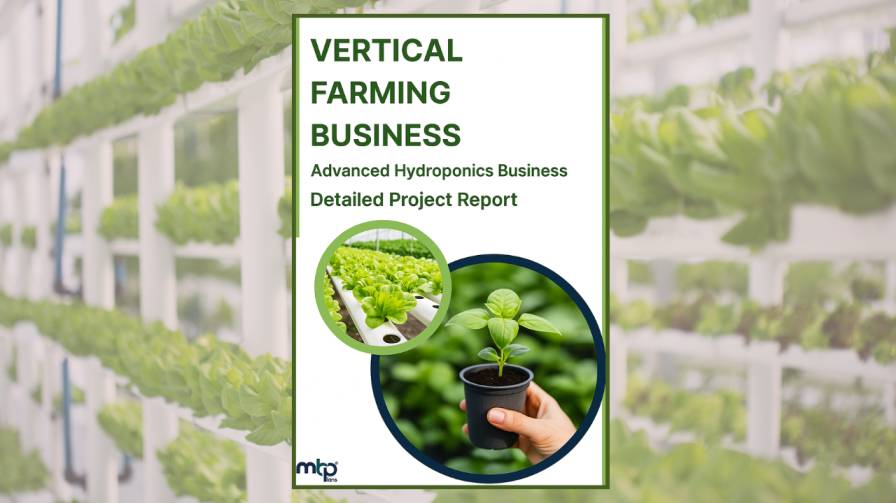
Advanced Hydroponics Business — DPR

59,000.00

Short Description

Launch a Vertical Farming venture with a bank-ready DPR or a fund-ready Business Plan. Includes market sizing, pricing & channels, CEA tech/ops design, compliance, and 5-year financials. Delivery: 12–15 working days.

Detailed Description

Vertical farming and advanced hydroponics refer to modern agricultural production systems that grow crops in vertically stacked layers or controlled indoor environments using soilless cultivation techniques. These systems rely on nutrient-rich water solutions, artificial lighting, climate control, and automation to optimize plant growth while minimizing land, water, and resource usage. Vertical farming enables year-round, pesticide-free, and high-density crop production, making it a critical solution for urban food security and sustainable agriculture.

Advanced hydroponics systems include methods such as Nutrient Film Technique (NFT), Deep Water Culture (DWC), Aeroponics, Drip Hydroponics, and Aquaponics. Crops commonly grown using vertical farming include leafy greens (lettuce, spinach, kale), herbs (basil, mint, coriander), microgreens, strawberries, tomatoes, cucumbers, and specialty vegetables. Based on system design, vertical farming can be classified into indoor vertical farms, container farms, greenhouse-based hydroponics, and fully automated smart farms.

The production process involves seed germination, transplantation into hydroponic channels or vertical racks, controlled nutrient dosing, LED lighting management, temperature and humidity regulation, and automated harvesting. Advanced technologies such as IoT-enabled sensors, AI-driven crop monitoring, automated nutrient dosing systems, climate control software, and energy-efficient LED grow lights are widely used to maximize yield and consistency. Compared to traditional farming, vertical farming uses up to 90% less water, eliminates soil-borne diseases, and significantly reduces transportation and post-harvest losses.

Vertical farming products are supplied to supermarkets, restaurants, hotels, cloud kitchens, food processors, pharmaceutical and nutraceutical companies, and export markets. The growing demand for fresh, residue-free, locally produced food, coupled with shrinking arable land and climate uncertainty, has accelerated adoption of vertical farming worldwide. Urbanization and rising population density further strengthen the long-term outlook for this sector.

India is witnessing rapid growth in vertical farming due to increasing urban food demand, water scarcity, rising awareness of pesticide-free produce, and strong startup activity. Government support for smart agriculture, agri-tech innovation, and sustainable farming practices has further enhanced the sector’s growth potential.

Growth Drivers

  • Increasing demand for fresh, pesticide-free, and locally grown produce
  • Rapid urbanization and limited availability of arable land
  • Water scarcity and need for resource-efficient farming systems
  • Rising adoption of smart agriculture and agri-tech solutions
  • Growth of organized retail, HoReCa, and direct-to-consumer food models
  • Climate change impact on traditional farming practices
Market Size & Outlook
Global Market:
  • The global vertical farming market size was valued at USD 8.52 billion in 2025 and is projected to grow from USD 10.61 billion in 2026 to USD 70.89 billion by 2034, exhibiting a CAGR of 26.80% during the forecast period.
  • North America dominated the global market with a share of 41.40% in 2025.
India Market:
  • As per analysis, the India Vertical Farming Market is projected to grow from USD 0.79 Billion in 2025 to USD 4.27 Billion by 2035, exhibiting a compound annual growth rate (CAGR) of 18.58% during the forecast period (2025 - 2035).

This business is suitable for agri-entrepreneurs, agri-tech startups, urban farmers, MSMEs, food retailers, exporters, institutional growers, and investors seeking scalable and technology-driven agriculture projects.

Description

Vertical farming and advanced hydroponics refer to modern agricultural production systems that grow crops in vertically stacked layers or controlled indoor environments using soilless cultivation techniques. These systems rely on nutrient-rich water solutions, artificial lighting, climate control, and automation to optimize plant growth while minimizing land, water, and resource usage. Vertical farming enables year-round, pesticide-free, and high-density crop production, making it a critical solution for urban food security and sustainable agriculture.

Advanced hydroponics systems include methods such as Nutrient Film Technique (NFT), Deep Water Culture (DWC), Aeroponics, Drip Hydroponics, and Aquaponics. Crops commonly grown using vertical farming include leafy greens (lettuce, spinach, kale), herbs (basil, mint, coriander), microgreens, strawberries, tomatoes, cucumbers, and specialty vegetables. Based on system design, vertical farming can be classified into indoor vertical farms, container farms, greenhouse-based hydroponics, and fully automated smart farms.

The production process involves seed germination, transplantation into hydroponic channels or vertical racks, controlled nutrient dosing, LED lighting management, temperature and humidity regulation, and automated harvesting. Advanced technologies such as IoT-enabled sensors, AI-driven crop monitoring, automated nutrient dosing systems, climate control software, and energy-efficient LED grow lights are widely used to maximize yield and consistency. Compared to traditional farming, vertical farming uses up to 90% less water, eliminates soil-borne diseases, and significantly reduces transportation and post-harvest losses.

Vertical farming products are supplied to supermarkets, restaurants, hotels, cloud kitchens, food processors, pharmaceutical and nutraceutical companies, and export markets. The growing demand for fresh, residue-free, locally produced food, coupled with shrinking arable land and climate uncertainty, has accelerated adoption of vertical farming worldwide. Urbanization and rising population density further strengthen the long-term outlook for this sector.

India is witnessing rapid growth in vertical farming due to increasing urban food demand, water scarcity, rising awareness of pesticide-free produce, and strong startup activity. Government support for smart agriculture, agri-tech innovation, and sustainable farming practices has further enhanced the sector’s growth potential.

Growth Drivers

  • Increasing demand for fresh, pesticide-free, and locally grown produce
  • Rapid urbanization and limited availability of arable land
  • Water scarcity and need for resource-efficient farming systems
  • Rising adoption of smart agriculture and agri-tech solutions
  • Growth of organized retail, HoReCa, and direct-to-consumer food models
  • Climate change impact on traditional farming practices

Market Size & Outlook

Global Market:

  • The global vertical farming market size was valued at USD 8.52 billion in 2025 and is projected to grow from USD 10.61 billion in 2026 to USD 70.89 billion by 2034, exhibiting a CAGR of 26.80% during the forecast period.
  • North America dominated the global market with a share of 41.40% in 2025.

India Market:

  • As per analysis, the India Vertical Farming Market is projected to grow from USD 0.79 Billion in 2025 to USD 4.27 Billion by 2035, exhibiting a compound annual growth rate (CAGR) of 18.58% during the forecast period (2025 – 2035).

The project reports provide detailed insights into:

  • Vertical farming and hydroponics industry overview
  • Crop selection and yield feasibility analysis
  • Technology and system design selection
  • Infrastructure, utilities, and automation planning
  • Legal, environmental, and food safety compliance
  • Sales feasibility and market positioning

These reports offer a comprehensive feasibility analysis with structured business models and implementation strategies.

  • This report functions as a practical, step-by-step execution guide for setting up a vertical farming or advanced hydroponics unit. It covers farm design, technology selection, nutrient management, energy optimization, cost modeling, operational planning, and market linkage development.
  • Kick-off (optional) — 45-min Expert Call add-on to align tech route, yields, and channel focus.

  • Research & Modeling — Market, CEA ops blueprint, and financials tailored to your plan.

  • Draft Delivery — Review together; 1st revision free.

  • Final Handover — DPR/Business Plan PDF (and Editable Files if selected).

  • DPR: ₹59,000Delivery: 12–15 working days

  • Add-ons: Customization ₹3,500 · Expert Call ₹2,500 · Editable Files ₹4,500 · Extra Revisions ₹1,500 (first revision free)
    Delivery Mode: Secure email/download link. Support: Email for clarifications.

Is vertical farming a profitable business?

Yes. High yield per square meter, premium pricing for fresh produce, and year-round production support strong profitability when managed efficiently.

What crops are most suitable for vertical farming?

Leafy greens, herbs, microgreens, strawberries, and select vine crops with short growth cycles.

Are bank loans and funding options available?

Yes. Project reports support MSME loans, agri-infrastructure funding, startup investments, and government-supported agri-tech schemes.

What approvals are required?

Local municipal approvals, electricity and water connections, food safety compliance, and business registration are typically required.