₹59,000.00
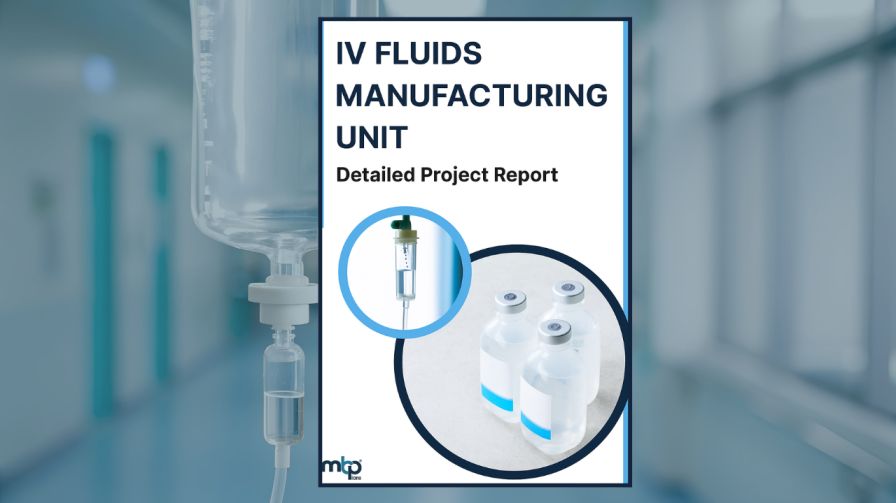
Launch an IV Fluids (LVP) plant with a bank-ready DPR or a fund-ready Business Plan—market sizing, tender/trade channels, sterile process/ops design, compliance, and 5-year financials. Delivery: 12–15 working days.
Intravenous (IV) fluids manufacturing refers to the production of sterile liquid solutions administered directly into the bloodstream to restore or maintain fluid balance, electrolyte levels, and nutritional support when oral intake is not possible or insufficient. IV fluids are a critical component of modern healthcare delivery and are routinely used in hospitals, clinics, emergency care units, intensive care units, surgical procedures, trauma care, and home healthcare settings. Due to their direct administration into the vascular system, IV fluids are manufactured under extremely stringent regulatory and quality standards to ensure sterility, safety, and therapeutic effectiveness.
The IV fluids product portfolio includes solutions such as normal saline, dextrose solutions, Ringer’s lactate, dextrose saline combinations, and specialized electrolyte formulations. Based on formulation type, IV fluids are broadly categorized into crystalloids and colloids. Crystalloids include saline and glucose-based solutions used for hydration and electrolyte correction, while colloids contain larger molecules and are used in volume expansion and critical care settings. Based on usage, IV fluids are used for dehydration management, shock treatment, surgical recovery, drug administration, nutritional therapy, chemotherapy support, and emergency medical care.
Manufacturing of IV fluids involves highly controlled aseptic processes. Core operations include preparation of purified water using Water for Injection (WFI) systems, formulation and mixing of pharmaceutical-grade ingredients, filtration, sterilization, filling, sealing, and packaging. Advanced technologies such as Blow-Fill-Seal (BFS) and Form-Fill-Seal (FFS) systems are widely adopted, as they minimize human intervention and significantly reduce the risk of microbial contamination. Production is carried out in validated cleanroom environments, supported by in-house microbiology labs and quality assurance systems.
India has emerged as a significant manufacturing and export hub for IV fluids due to strong pharmaceutical infrastructure, cost-effective production capabilities, skilled workforce, and compliance with international quality certifications such as WHO-GMP, ISO, and US FDA. Growing healthcare access, expansion of hospital infrastructure, and rising medical tourism are further supporting the growth of IV fluids manufacturing in India.
Growth Drivers
Market Size & Outlook
Global Market:
India Market:
Option A — Detailed Project Report (DPR) (bank-ready feasibility)
Industry & Market: hospital/institutional & government tender demand; trade/private hospitals; product mix (NS, RL, D5, DNS, Mannitol, etc.); pack sizes & price bands.
Positioning & Competition: BFS vs FFS lines, private label potential, trade vs tender margins, export cues.
Technical & Operations (sterile):
Water systems: Purified Water (PW) and Water for Injection (WFI) generation & loop basics; clean steam overview.
Compounding: SS316L tanks, conductivity/osmolarity checks, in-line mixing and dosing controls.
Filtration: 0.22 μm sterilizing-grade filters; integrity testing.
Filling: Blow-Fill-Seal (BFS) or Form-Fill-Seal (FFS)—process flow, in-situ sterilization/asepsis concepts.
Sterilization/Release: terminal sterilization (where applicable), in-process controls, quarantine & QA release.
Cleanrooms & HVAC: classified areas, HEPA-filtered air, differential pressure & environmental monitoring.
Utilities & Layout: PW/WFI/clean steam, compressed air/N₂ (as applicable), CIP/SIP overview, manpower, GMP material/personnel flow.
QA/QC & Validation: sterility & endotoxin (LAL), particulate, assay, pH/osmolality/conductivity; IQ/OQ/PQ, media fills, cleaning validation, stability.
Financial Model (5 years): capex/opex by section, yields & scrap, energy profile, break-even, cash flow, sensitivity (power tariff, RM/pack cost, realization).
Compliance & Risk: drug manufacturing licence pathway (India), cGMP/Schedule M alignment, documentation system, EHS, risk mitigations (contamination control, utility downtime).
Implementation Plan: phased setup, procurement & commissioning timeline, KPIs, governance.
Option B — Business Plan (strategy & fundraising)
Company & Offering: portfolio (NS, RL, D5, DNS, specialty fluids), pack sizes, pricing ladders.
GTM & Channels: government & institutional tenders, group purchasing, distributors, trade/retail, export reps; service SLAs.
Operations & Team: QA/RA/production/engineering org chart, hiring roadmap, vendor strategy (resins, bottles, caps, labels, filters).
Financial Forecasts (3–5 years): unit economics, P&L, cash flow, scenarios.
Growth & Risk Plan: capacity ramp-up, additional lines (ampoules/small volume), export markets, mitigations.
Format: PDF (print-ready). Editable Files available as add-on.
Is IV fluids manufacturing a viable business?
Yes. IV fluids are essential healthcare products with consistent demand across hospitals, emergency care, and critical treatment settings.
What are the major end-use sectors?
Hospitals, clinics, emergency care units, ICUs, surgical centers, home healthcare, and export markets.
Are bank loans and funding options available?
Yes. The project reports are structured to support MSME loans, pharmaceutical sector financing, and investor funding proposals.
What approvals are required?
Drug manufacturing license, CDSCO approval, WHO-GMP certification, pollution control approvals, and sterile manufacturing validation are required.

No. 401, Pushpak Business Hub, Wakad, Pune, MH 411057
Terms & Conditions | Privacy Policy | Cookie Policy | Disclaimer | © Meticulous Business Plan 2026
Powered by MappedSkills Marketing