
Meticulous Business Plans (MBP) is a global professional business planning company that has delivered more than 5000 reports across the globe.
Our Expert’s team is working on the project of setting up an egg powder manufacturing/processing unit, one of the most important segments within the food industry and the team has prepared Business Planning Reports on the title.
Research expert’s team has studied the market for awareness, demand, and supply of egg powder products and wanted to share some helpful information about the project.
Egg powder is dehydrated egg in granular or fine powdered form. Fresh eggs — whole, yolk-only, or albumen (white-only) — are broken, pasteurized, and then processed through spray drying or freeze drying to remove virtually all moisture content (down to 2–4%). The result is a shelf-stable, nutrient-dense powder that retains the protein, fat, and functional properties of a fresh egg without requiring refrigeration. One kilogram of whole egg powder is the equivalent of roughly 90–95 fresh eggs in terms of cooking applications.
Egg powder manufacturing converts fresh shell eggs into a dehydrated powder while preserving functional properties such as emulsification, foaming, and binding. Egg powder offers longer shelf life, reduced refrigeration needs, and improved microbial safety compared to liquid eggs.
We can classified egg powder into three major types.
"The global dehydrated egg market is not slowing down. Rising food processing industries in Asia, Africa and the Middle East are creating a demand gap that local entrepreneurs are perfectly positioned to fill."
The global egg powder market was valued at approximately $1.2 billion in 2023 and is projected to grow at a CAGR of 5.8% through 2032. This is not a speculative boom — it is driven by structural shifts in how the world eats.
Egg powder is widely used in bakery, pasta, confectionery, protein supplements, ready-to-eat foods, and institutional catering. Its stability and ease of transportation make it highly suitable for export and large-scale food manufacturing.
The manufacturing process starts with egg breaking and separation, followed by filtration and pasteurization to eliminate pathogens. The liquid egg is spray-dried into powder, cooled, sieved, and packed under moisture-controlled conditions.
Earlier egg powder plants used roller drying methods, which caused protein denaturation and flavour loss. Modern plants rely on spray drying technology, which ensures better solubility, functional performance, and nutritional retention.
Understanding the production process is essential before you invest a single rupee or dollar. Here is the complete flow of a standard spray-drying operation:
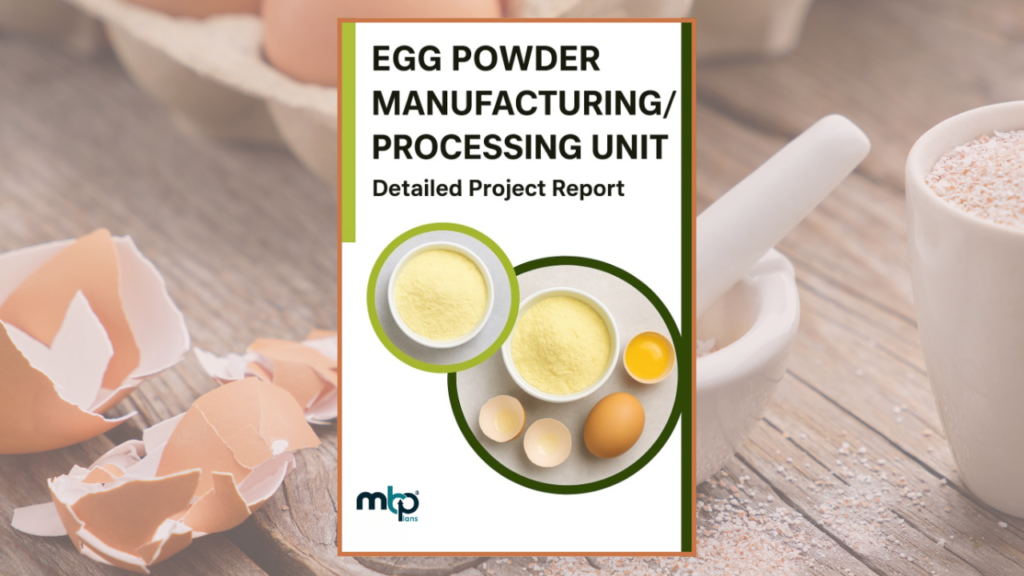
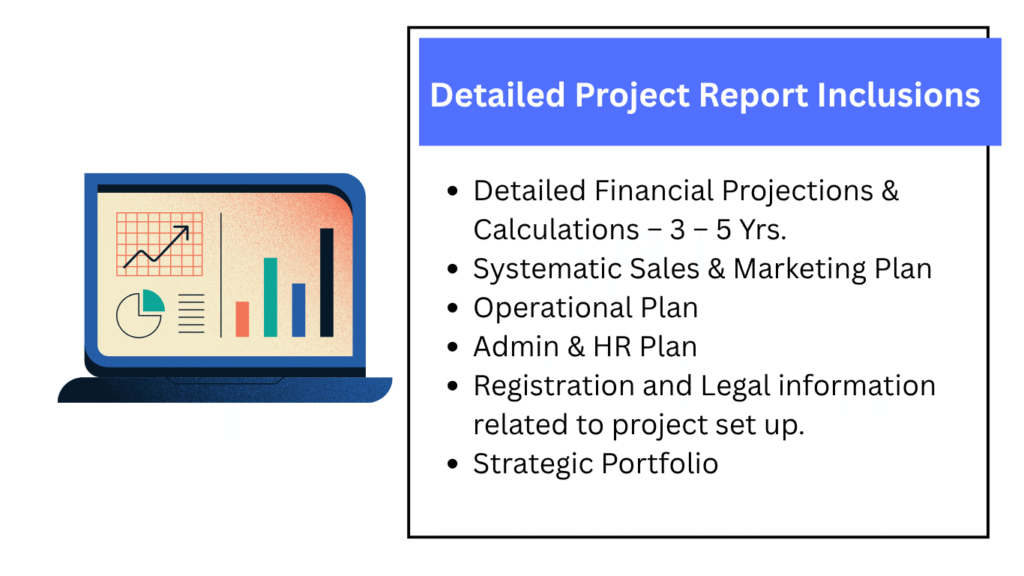
In these reports, we have analysed and explained the business opportunity for egg powder manufacturing/processing unit, and it can become a profitable and sustainable business if executed with proper planning, technology selection, and market strategy.
Detailed Project Reports on egg powder manufacturing/processing unit will help you in understanding the Industrial Overview, Market Feasibility, Technical Feasibility, Legal Feasibility, Sales Feasibility, Infrastructure Feasibility, etc. Also, emphasis on Market Position, Demand, Market Size, Statistics, Market Dynamics and Trends. These reports provide a comprehensive business feasibility analysis; Types of Business Models, and Business Plan, which helps you to decide to start up a business.
Meticulous Business Plans (MBP) is global professional business planning company and delivered more than 5000 reports across the globe.
We have experience in working with clients from US, Europe, UK, Middle East, Africa & APAC.
Our team have fair understanding of global market across the industry & domain.
The world has become highly digitalized and information is available from multiple sources and this has created confusions about authenticity of the information and also it is not available at one place.
A micro-scale operation using a small spray dryer (20–50 kg/hr evaporation) with a leased shed can be set up for ₹35–55 Lakhs total investment including working capital. A commercial scale plant typically needs ₹1.15–2.5 Crores depending on capacity and equipment origin.
Properly processed and nitrogen-flushed whole egg powder has a shelf life of 24–36 months in a cool, dry environment. Egg white powder can last up to 48 months. This extended shelf life is one of the biggest competitive advantages over fresh eggs.
Yes, significantly so. Export prices (FOB) for Indian whole egg powder are typically $4.50–7.00/kg, compared to domestic wholesale of ₹220–320/kg. EIC registration and HACCP certification are the primary requirements for export clearance.
Approximately 9–9.5 kg of fresh shell eggs produce 1 kg of whole egg powder. The shell (11% of total weight) and moisture (74%) are removed during processing. Efficiency of your spray dryer significantly impacts this yield ratio.
Yes, and it is often a smarter entry point. Egg white (albumen) powder has the fastest-growing demand due to the protein supplement boom. It also has a higher selling price per kg and a simpler drying process since there is no fat content to manage. Many successful processors started with albumen-only and later added whole egg capacity.
Key schemes include: PMFME (PM Formalisation of Micro Food Enterprises) offering 35% capital subsidy up to ₹10 Lakhs; MOFPI (Ministry of Food Processing Industries) providing 35–50% grants under PLI and infrastructure schemes; and NABARD's RIDF loans for agro-processing ventures in rural areas. State-level food processing policies often offer additional incentives.
OR fill up the inquiry form.
No. 401, Pushpak Business Hub, Wakad, Pune, MH 411057
Terms & Conditions | Privacy Policy | Cookie Policy | Disclaimer | © Meticulous Business Plan 2026
Powered by MappedSkills Marketing