₹59,000.00
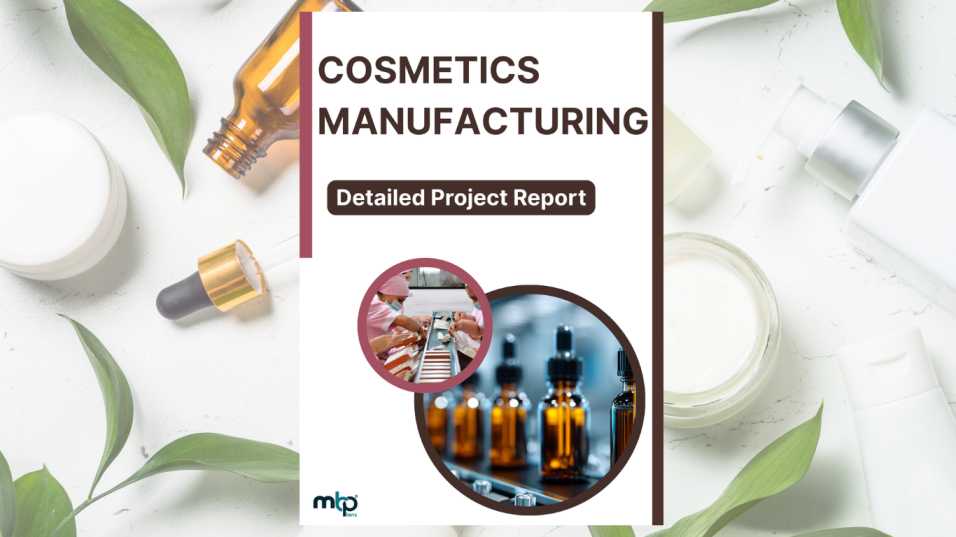
Build an Cosmetics Manufacturing Business line with a bank-ready DPR or fund-ready Business Plan—market & pricing, material routes, process/ops design, compliance/claims guidance, and 5-year financials. Delivery: 12-15 working days
📄 Download Free Sample Report →
Cosmetics manufacturing plant refers to the industrial production of personal care and beauty products such as creams, lotions, gels, shampoos, moisturizers, face packs, sunscreens, serums, and hair-care preparations. These products are widely used for skin care, hair care, hygiene, grooming, and cosmetic enhancement, making the cosmetics industry one of the most dynamic and consumer-driven sectors globally.
Cosmetic products are manufactured by blending water phase, oil phase, active ingredients, emulsifiers, stabilizers, preservatives, fragrances, and functional additives into stable formulations with the required texture, appearance, and efficacy. Depending on the product type, the process may involve heating, mixing, homogenization, emulsification, cooling, filling, and packaging under hygienic and controlled conditions. Modern cosmetic plants use SS316L equipment, jacketed vessels, vacuum systems, CIP/SIP modules, and automated filling lines to maintain consistency and quality.
Cosmetic formulations can be broadly classified into the following categories: skincare products such as creams, lotions, moisturizers, and sunscreens; hair-care products such as shampoos, conditioners, oils, and serums; hygiene products such as face washes and body washes; and decorative or color cosmetics such as lip products, compact powders, and makeup items. This wide classification allows manufacturers to serve both mass-market and premium consumer segments.
These products are extensively used by households, salons, retail chains, dermatology-based brands, wellness companies, and export markets. They are preferred because consumers increasingly look for products that improve appearance, support skin health, offer protection from UV and environmental damage, and align with modern lifestyle and wellness trends.
The manufacturing process typically includes raw material dispensing, phase preparation, heating, blending, emulsification, homogenization, cooling, filling, sealing, labeling, and packaging. Advanced facilities use automated control systems, transfer pumps, load cells, and cleanroom practices to ensure product consistency, safety, and regulatory compliance. Strict quality control is essential because cosmetics must meet standards for microbiological safety, stability, packaging integrity, and consumer usability.
Cosmetics products are strongly linked to rising personal care consumption, premiumization, herbal and natural product demand, salon and dermatology growth, and private-label manufacturing opportunities. India has become a major cosmetics manufacturing hub with expanding domestic consumption and contract manufacturing capabilities, while global demand continues to rise across skincare, haircare, and beauty categories.
Growth Drivers
Market Size & Outlook
Global Market:
India Market:
The project reports provide detailed insights into:
These reports offer a comprehensive feasibility analysis along with suitable business models and structured implementation plans.
Is cosmetics manufacturing profitable?
Yes. High consumer demand, repeat purchases, private-label opportunities, and strong brand expansion potential make it a profitable business.
What are the major end-use sectors?
Households, salons, retail stores, dermatology brands, e-commerce, and export markets.
Are bank loans and funding options available?
Yes. The project reports are structured to support MSME loans, term loans, and investor funding proposals.
What approvals are required?
Manufacturing license, quality compliance, pollution control approvals, product testing, and labeling compliance are typically required.
No. 401, Pushpak Business Hub, Wakad, Pune, MH 411057
Terms & Conditions | Privacy Policy | Cookie Policy | Disclaimer | © Meticulous Business Plan 2026
Powered by MappedSkills Marketing