₹59,000.00
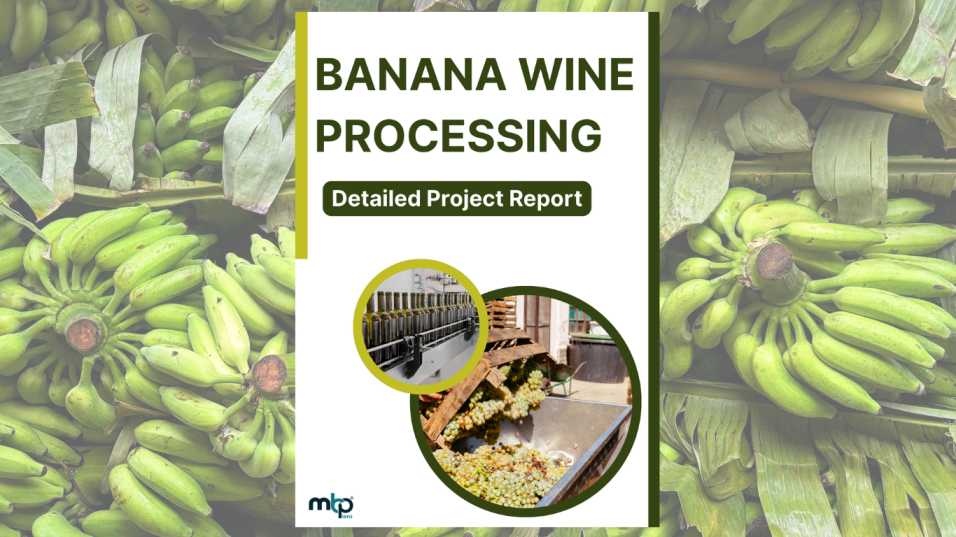
Build an Banana Wine Manufacturing line with a bank-ready DPR or fund-ready Business Plan—market & pricing, material routes, process/ops design, compliance/claims guidance, and 5-year financials. Delivery: 12-15 working days
📄 Download Free Sample Report →
Banana Wine Manufacturing Plant refers to the production of fermented alcoholic beverages made from ripe bananas, where the fruit is processed into juice or mash and converted into wine through controlled fermentation. This type of beverage is gaining attention because banana is a widely available tropical fruit, and banana wine offers a distinctive flavor profile while also helping utilize surplus or undergraded bananas that may otherwise go to waste.
Banana wine is typically produced by peeling and mashing ripe bananas, mixing the pulp with water and sugar, and then fermenting the mixture with wine yeast under hygienic conditions. After fermentation, the liquid is clarified, filtered, matured, and bottled to produce a stable and marketable beverage. The process can vary depending on desired sweetness, alcohol level, and product style, but the core steps remain fruit preparation, fermentation, clarification, and packaging.
The product can be broadly classified based on sweetness level, alcohol content, and packaging format. By style, banana wine may be produced as sweet wine, semi-sweet wine, or dry wine; by alcohol strength, it may be light or medium-bodied; and by packaging, it can be sold in glass bottles, premium gift packs, or small retail packs for niche consumers. This flexibility allows producers to target different consumer segments and price points.
Banana wine is used as a specialty beverage, regional beverage, tourism product, and value-added fruit-based alcoholic drink. It is preferred by consumers looking for novel fruit wines with a tropical taste, and it also appeals to producers seeking product differentiation in a growing beverage market. Because bananas are available in high volumes in many tropical and subtropical regions, this product also offers a practical route for fruit value addition.
The manufacturing process typically includes raw banana selection, peeling, washing, pulping or mashing, juice extraction, sugar adjustment, yeast addition, fermentation, filtration, clarification, maturation, bottling, labeling, and storage. A modern banana wine facility uses food-grade tanks, fermenters, filtration systems, bottling lines, and quality control tools to ensure consistency, safety, and shelf stability. Strict hygiene, controlled fermentation, and product testing are important for maintaining flavor and alcohol consistency.
Banana wine products are increasingly relevant in tourist markets, specialty liquor outlets, premium retail, and local craft beverage segments. Rising interest in fruit wines, the need for value-added fruit processing, and the availability of banana raw material are supporting this category. In India, the wine market is expanding steadily, creating room for niche fruit-based wines such as banana wine.
Growth Drivers
Market Size & Outlook
Global Market:
India Market:
The project reports provide detailed insights into industrial overview and market feasibility, technical and manufacturing feasibility, fermentation and bottling equipment planning, regulatory approvals and quality compliance, sales feasibility and market positioning, and infrastructure, utilities, and operational planning.
Is banana wine manufacturing profitable?
Yes. Banana wine can be profitable because it adds value to low-cost raw material and targets a premium niche beverage market.
What are the major end-use sectors?
Specialty liquor retail, hospitality, tourism, premium beverage buyers, and niche export markets.
Are bank loans and funding options available?
Yes. The project reports are structured to support MSME loans, term loans, and investor funding proposals.
What approvals are required?
Alcohol manufacturing licenses, excise compliance, food safety approvals, pollution control approvals, and product labeling compliance are typically required.



No. 401, Pushpak Business Hub, Wakad, Pune, MH 411057
Terms & Conditions | Privacy Policy | Cookie Policy | Disclaimer | © Meticulous Business Plan 2026
Powered by MappedSkills Marketing