Home / Agriculture Technology / HDPE Pond Liners & Mulch Films Manufacturing – DPR

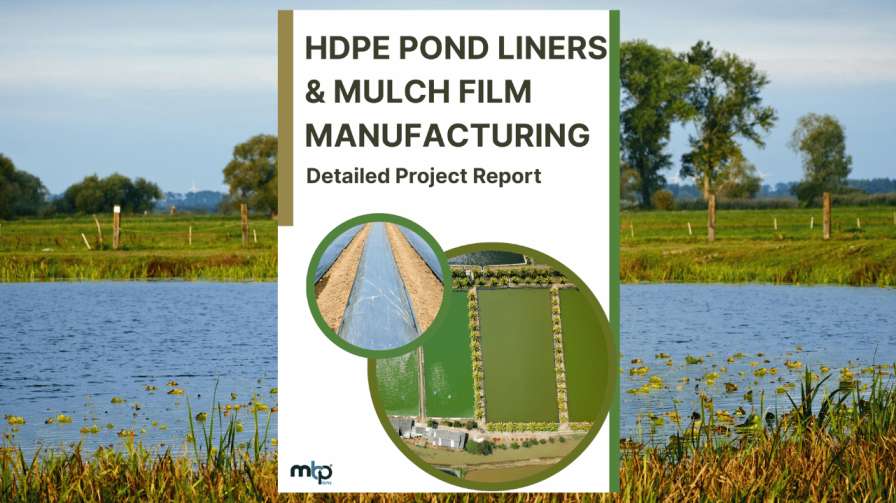
HDPE Pond Liners & Mulch Films Manufacturing - DPR

59,000.00

Short Description

Build a HDPE liner and mulch film manufacturing line with a bank-ready DPR or fund-ready Business Plan—market & pricing, material routes, process/ops design, compliance/claims guidance, and 5-year financials. Delivery: 12–15 working days.

Detailed Description

HDPE pond liners and mulch films are high-performance plastic sheets used to manage water, soil, and crop productivity in agriculture and environmental applications. HDPE liners are thick, impermeable sheets used to line ponds, reservoirs, canals, and waste treatment facilities to prevent leakage and contamination. Mulch films are thin agricultural films laid over soil to retain moisture, control weeds, regulate temperature, and improve crop yields. These products are widely used in aquaculture farms, irrigation systems, rainwater harvesting projects, landfill lining, greenhouse cultivation, and horticulture. HDPE geomembranes provide excellent resistance to chemicals, UV radiation, and mechanical stress, making them ideal for long-term outdoor applications. Mulch films enhance soil health, reduce water consumption, and increase agricultural productivity. The growing need for water conservation, rising adoption of modern farming practices, and expansion of aquaculture and greenhouse farming are driving strong demand for HDPE liners and mulch films globally. Growth Drivers

  • Increasing water scarcity and demand for efficient irrigation
  • Expansion of aquaculture and protected farming
  • Government subsidies for micro-irrigation and plasticulture
  • Rising focus on crop yield and soil moisture conservation
  • Infrastructure development in wastewater and landfill management
Market Size & Outlook Global Market:
  • The global HDPE and LLDPE geomembrane market size was estimated at USD 1.36 billion in 2023 and is expected to grow at a CAGR of 5.6% from 2024 to 2030.
  • HDPE accounted for the largest market share of 69.56% in 2023 as it offers a wide range of chemical resistance during exposure in the construction, water treatment, mining, and oil and gas sectors.
 India Market:
  • The HDPE and LLDPE geomembrane market in India is growing at a CAGR of 6.6% over the forecast period.

This project is suitable for plastic manufacturers, agri-input companies, aquaculture suppliers, MSMEs, infrastructure contractors, and investors looking for scalable, sustainability-driven businesses.

Description

HDPE pond liners and mulch films are high-performance plastic sheets used to manage water, soil, and crop productivity in agriculture and environmental applications. HDPE liners are thick, impermeable sheets used to line ponds, reservoirs, canals, and waste treatment facilities to prevent leakage and contamination. Mulch films are thin agricultural films laid over soil to retain moisture, control weeds, regulate temperature, and improve crop yields.

These products are widely used in aquaculture farms, irrigation systems, rainwater harvesting projects, landfill lining, greenhouse cultivation, and horticulture. HDPE geomembranes provide excellent resistance to chemicals, UV radiation, and mechanical stress, making them ideal for long-term outdoor applications. Mulch films enhance soil health, reduce water consumption, and increase agricultural productivity.

The growing need for water conservation, rising adoption of modern farming practices, and expansion of aquaculture and greenhouse farming are driving strong demand for HDPE liners and mulch films globally.

Growth Drivers

  • Increasing water scarcity and demand for efficient irrigation
  • Expansion of aquaculture and protected farming
  • Government subsidies for micro-irrigation and plasticulture
  • Rising focus on crop yield and soil moisture conservation
  • Infrastructure development in wastewater and landfill management

Market Size & Outlook

Global Market:

  • The global HDPE and LLDPE geomembrane market size was estimated at USD 1.36 billion in 2023 and is expected to grow at a CAGR of 5.6% from 2024 to 2030.
  • HDPE accounted for the largest market share of 69.56% in 2023 as it offers a wide range of chemical resistance during exposure in the construction, water treatment, mining, and oil and gas sectors.

 India Market:

  • The HDPE and LLDPE geomembrane market in India is growing at a CAGR of 6.6% over the forecast period.
  • Industrial overview and market feasibility
  • Technical and manufacturing feasibility
  • Regulatory and compliance requirements
  • Sales feasibility and market positioning
  • Infrastructure and operational planning
  • This report is designed as a step-by-step decision and execution guide for entrepreneurs, investors, and businesses planning to set up an HDPE pond liners and mulch films manufacturing. It serves as a practical roadmap covering raw material sourcing, technology selection, process design, compliance requirements, cost structure, and market entry strategy.
  • Kick-off (optional) — 45-min Expert Call add-on to align tech route, yields, and channel focus.

  • Research & Modeling — Market, CEA ops blueprint, and financials tailored to your plan.

  • Draft Delivery — Review together; 1st revision free.

  • Final Handover — DPR/Business Plan PDF (and Editable Files if selected).

  • DPR: ₹59,000Delivery: 12–15 working days

  • Business Plan: ₹59,000Delivery: 12–15 working days

  • Add-ons: Customization ₹3,500 · Expert Call ₹2,500 · Editable Files ₹4,500 · Extra Revisions ₹1,500 (first revision free)
    Delivery Mode: Secure email/download link. Support: Email for clarifications.

Is HDPE liner and mulch film manufacturing profitable?

Yes, due to strong demand from agriculture, aquaculture, and infrastructure sectors.

What are the major end-use industries?

Agriculture, aquaculture, water management, waste management, and infrastructure.

Are loans and funding available?

Yes, MSME loans and government-supported schemes are available.

What approvals are required?

Factory registration, pollution control, and BIS quality standards are required.