
₹59,000.00
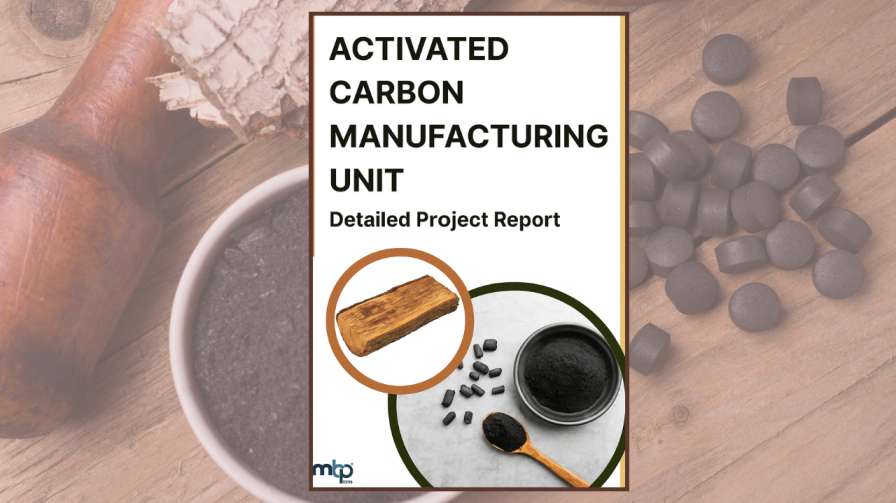
Set up an Activated Carbon plant (PAC/GAC/pellets) with a bank-ready DPR or fund-ready Business Plan—covering market, raw material choices, process/ops design, compliance, and 5-year financials. Delivery: 12–15 working days.
Activated carbon manufacturing refers to the production of highly porous carbonaceous material with exceptional adsorption capacity, used for removing impurities, contaminants, color, odor, and toxic substances from liquids and gases. Activated carbon is produced by processing carbon-rich raw materials such as coconut shells, coal, wood, bamboo, or agricultural waste through controlled carbonization and activation processes. Due to its extremely high surface area and microporous structure, activated carbon is widely used across food, pharmaceutical, healthcare, water treatment, air purification, chemical processing, and renewable energy applications.
Activated carbon is primarily valued for its ability to adsorb organic compounds, heavy metals, chlorine, volatile organic compounds (VOCs), and other pollutants. In the food and beverage industry, it is used for decolorization, purification, and refining of sugar, edible oils, alcoholic beverages, fruit juices, and syrups. In healthcare and pharmaceuticals, activated carbon is used in toxin adsorption, drug purification, and medical-grade applications. It also plays a critical role in water and wastewater treatment, air filtration systems, gas masks, industrial emission control, and energy storage systems such as supercapacitors.
Activated carbon can be broadly classified based on raw material, physical form, and application. By raw material, it includes coconut shell-based activated carbon, coal-based activated carbon, and wood-based activated carbon. By physical form, it is classified into powdered activated carbon (PAC), granular activated carbon (GAC), and extruded or pelletized activated carbon. Coconut shell-based activated carbon is particularly preferred for food, drinking water, and pharmaceutical applications due to its high microporosity, hardness, and purity.
The manufacturing process typically involves two main stages: carbonization and activation. In carbonization, raw material is heated in the absence of oxygen to produce char. Activation is then carried out either by physical activation (using steam or carbon dioxide at high temperatures) or chemical activation (using agents such as phosphoric acid or potassium hydroxide). This process develops the pore structure and enhances adsorption capacity. Advanced manufacturing units use rotary kilns, multiple-hearth furnaces, activation reactors, washing systems, drying units, and automated packaging systems to ensure consistent quality and performance.
Activated carbon is supplied in bulk as well as customized grades depending on particle size, surface area, iodine value, and application-specific requirements. Quality control testing is critical and includes parameters such as iodine number, surface area, ash content, moisture content, hardness, and adsorption efficiency. Compliance with food-grade, pharmaceutical-grade, and environmental standards is essential depending on end use.
Growth Drivers
Market Size & Outlook
Global Market:
India Market:
Option A — Detailed Project Report (DPR) (bank-ready feasibility)
Industry & Market: demand by end-use (water/wastewater, air/gas, gold recovery, food/pharma decolorization, solvent recovery), price bands & specs
Raw Material & Positioning: coconut shell / coal / wood; grade strategy (PAC/GAC/pellets), ash/iodine targets, washing (acid/neutral) choices
Technical & Operations:
Carbonization: retort/rotary kiln parameters, yields, off-gas handling/afterburner
Activation: steam/CO₂ (physical) vs chemical (e.g., phosphoric route) — pros/cons, energy & reagent needs
Post-processing: quench/wash, neutralization, drying, milling/granulation, screening, impregnation (optional), de-dusting, packing (bags/IBC)
Utilities & Layout: steam/boiler, fuel, power, water, APC (cyclone/bag filter/scrubber), ETP for chemical route, manpower, plant layout
QA/QC: iodine number, methylene blue, surface area (BET), hardness/attrition, moisture/ash/pH, particle size, adsorption tests per application
Financial Model (5 years): capex/opex by section, RM yields, energy profile, break-even, cash flow, sensitivity (RM price, energy tariff, realization)
Compliance & Risk: state pollution control consents, stack emissions/APC, boiler registration, chemical storage norms (if used), safety SOPs; risk mitigations (dust/explosion, effluent, variability)
Implementation Plan: procurement & erection timeline, commissioning roadmap, KPIs, governance
Option B — Business Plan (strategy & fundraising)
Company & Offering: grade mix (PAC/GAC/pellets), application targeting (WTP/ETP, industrial gas, gold, F&B, pharma), pack sizes/pricing ladders
GTM & Channels: OEMs/EPCs, distributors, direct to utilities/industries, export agents; qualification cycles & SLAs
Operations & Team: sourcing (shell/coal/wood), logistics, quality assurance regimen, org & hiring roadmap
Financial Forecasts (3–5 years): unit economics, P&L, cash flow, scenarios
Growth & Risk Plan: capacity ramp-up, impregnation/washed grades, international certifications, mitigations
Format: PDF (print-ready). Editable Files available as add-on.
Which plan should I choose — DPR or Business Plan?
Choose DPR for feasibility + lender/subsidy documentation. Choose Business Plan for GTM, channels, and investor narrative. Many clients opt for both.
Is activated carbon manufacturing a viable business?
Yes. Consistent demand across water treatment, food processing, healthcare, and environmental applications ensures long-term growth.
What are the major end-use industries?
Water treatment, food & beverages, pharmaceuticals, air purification, chemicals, and renewable energy.
Are bank loans and funding options available?
Yes. The project reports are structured to support MSME loans, term loans, and investor funding.
What approvals are required?
Factory license, pollution control approvals, environmental clearances, and food/pharma-grade certifications depending on application.
No. 401, Pushpak Business Hub, Wakad, Pune, MH 411057
Terms & Conditions | Privacy Policy | Cookie Policy | Disclaimer | © Meticulous Business Plan 2026
Powered by MappedSkills Marketing