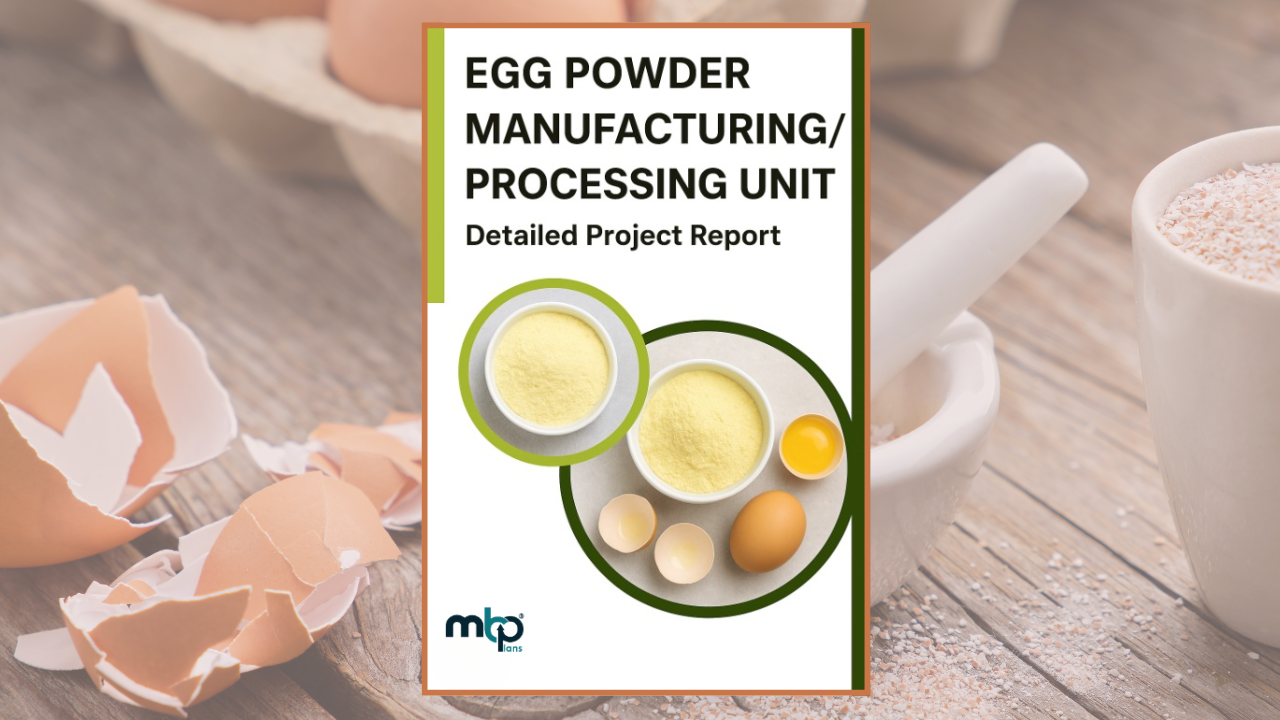
Egg powder manufacturing refers to the processing of fresh shell eggs into a dehydrated, shelf-stable powder through controlled pasteurization and drying techniques. Egg powder retains the functional and nutritional properties of fresh eggs while offering extended shelf life, ease of storage, reduced transportation cost, and improved safety. It is widely used across food processing, bakery, confectionery, ready-to-eat foods, nutraceuticals, and institutional catering applications.
Egg powder is commonly classified into whole egg powder, egg yolk powder, and egg white (albumen) powder, each serving specific industrial applications. The manufacturing process typically includes egg breaking, separation (if required), filtration, pasteurization, spray drying, cooling, and hygienic packaging. Advanced spray drying technology ensures uniform particle size, moisture control, and retention of functional properties such as emulsification, foaming, and binding.
Egg powder is extensively used in bakery products, pasta, mayonnaise, sauces, desserts, protein supplements, instant food mixes, and processed meat products. It is particularly preferred by large food manufacturers, hotels, airlines, defense services, and export markets due to its long shelf life and consistent quality. India has strong growth potential in egg powder manufacturing due to increasing poultry production, rising processed food consumption, and expanding export opportunities.
Growth Drivers
- Increasing demand for processed and convenience foods
- Expansion of bakery, confectionery, and ready-to-eat food industries
- Rising demand for shelf-stable protein ingredients
- Growth in institutional catering and food service sectors
- Increasing export demand for dehydrated egg products
Market Size & Outlook
Global Market:
- The global egg powder market size was estimated at USD 1.98 billion in 2023 and is expected to grow at a CAGR of 5.5% from 2024 to 2030.
Indian Market:
- The India Egg Powder Market was valued at USD 50.72 Million in 2025, and is expected to reach USD 64.79 Million by 2031, rising at a CAGR of 4.16%.
Detailed Project Report (DPR)
Bank-ready feasibility covering:
-
Industry & Market: demand across bakery, confectionery, noodles/pasta, mayonnaise/sauces, nutrition; domestic/export cues; price bands & pack sizes
-
Competition & Positioning: product types (whole/albumen/yolk), solubility/foaming/emulsification specs, brand gaps
-
Technical & Operations:
-
Upstream: shell egg sourcing, candling, washing, breaking, separation (albumen/yolk), filtration/standardization, pasteurization & homogenization
-
Downstream: evaporation (where applicable), spray drying (inlet/outlet temps, atomization), cyclones, powder handling, nitrogen flushing & packing
-
QA/QC: moisture/protein/fat, microbiology (Salmonella control), shelf-life studies, allergen handling, traceability
-
Utilities & Layout: steam/thermic, chilled water, compressed air, clean rooms, CIP, manpower planning, plant layout
-
Financial Model (5 years): capex/opex by section, yield & loss factors, break-even, cash flow, sensitivity (egg price, energy tariff, realization)
-
Compliance & Risk: FSSAI & labeling, basic HACCP/GMP outline, pollution control norms, export readiness (documentation), risk mitigations
-
Implementation Plan: procurement & setup timeline, KPIs, governance & SOPs
Is egg powder manufacturing a profitable business?
Yes. Strong demand from food processing, bakery, and export markets ensures consistent growth and profitability.
What are the major end-use industries?
Bakery, confectionery, ready-to-eat foods, protein supplements, food service, and export markets.
Are bank loans and funding options available?
Yes. The project reports are structured to support MSME loans, term loans, and investor funding proposals.
What approvals are required?
FSSAI licensing, factory license, food safety compliance, export certifications, and pollution control approvals are required.